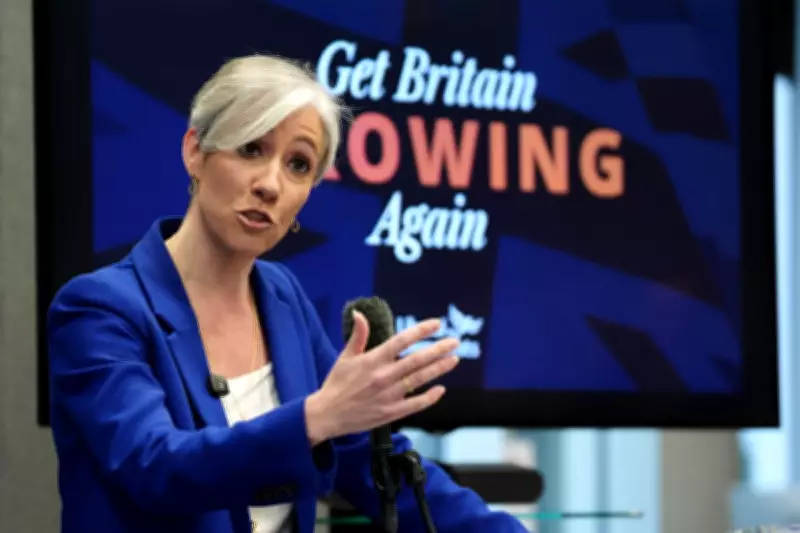
The Liberal Democrats have called for a dramatic overhaul of the UK's economic governance, proposing that the Treasury be dismantled and relocated to Birmingham. Under these plans, a new "Department for Growth" would be established to take charge of the nation's fiscal and economic direction.
Radical Shake-Up of Economic Management
In a speech delivered on Tuesday morning, Lib Dem deputy leader Daisy Cooper launched a scathing critique of the Treasury, labelling it as "anti-growth" and advocating for a fundamental restructuring of the British state. Cooper argued that the country is trapped in a "doom loop of low economic growth," with the Treasury excessively focused on short-term concerns at the expense of long-term prosperity.
Functions of the Proposed Department for Growth
The envisioned Department for Growth would assume a comprehensive range of responsibilities designed to revitalise the economy. These would include setting taxes, overseeing economic strategy, establishing fiscal rules, and approving major infrastructure projects. The department would operate with a clear mandate to enhance long-term prosperity, improve living standards, and ultimately resolve the ongoing cost-of-living crisis.
Overseen by the Chancellor of the Exchequer, this new entity would also merge with the existing Department for Business and Trade. Concurrently, a separate "Department for Public Expenditure" would be created to manage and oversee spending across all government departments, ensuring a distinct focus on budgetary control.
Symbolic Move to Birmingham
A key aspect of the proposal is the relocation of the department's headquarters to Birmingham. The Liberal Democrats stated that this move is intended to "send a strong signal" of their commitment to narrowing the economic and political divide between London and the rest of the United Kingdom. By decentralising this core economic function, the party aims to demonstrate a tangible shift in focus towards regional development and national rebalancing.
Historical Context and Expert Endorsement
This proposal is not without precedent. The idea of fragmenting the Treasury's powers has been debated for decades. A notable historical attempt occurred in the 1960s when Prime Minister Harold Wilson established the Department for Economic Affairs to handle long-term economic planning. Although it persisted for five years before being reabsorbed into the Treasury, it became largely inactive after just two years, widely perceived as having lost an internal Whitehall power struggle.
More recently, the call to break up the Treasury has gained traction among economic experts. In January 2024, former Bank of England chief economist Andy Haldane publicly supported similar reforms, highlighting a growing consensus among some analysts that the current structure may hinder growth.
International Comparisons
The Liberal Democrats have pointed to international models to bolster their case. They cite countries such as Australia and Ireland, where the functions of taxation and public expenditure are managed by separate governmental departments. These examples are presented as evidence that alternative, potentially more effective, systems of economic governance are feasible and operational elsewhere.
Daisy Cooper emphasised that the creation of a dedicated Department for Growth would "focus minds" on the imperative of sustainable economic expansion. The party's plan represents one of the most significant proposed reforms to UK economic policymaking in recent years, challenging the entrenched centralisation of fiscal authority in Whitehall.