Lula's Rio Carnival Tribute Sparks Legal Debate Amid Election Campaign
Brazilian President Luiz Inácio Lula da Silva received a spectacular tribute during Rio de Janeiro's Carnival celebrations, but the glowing parade has ignited significant legal controversy as the veteran politician prepares for his fourth non-consecutive term bid. The elaborate samba school performance at the Sambadrome on Sunday evening has drawn accusations from political opponents who claim it constitutes illegal early campaigning, setting the stage for potential electoral court battles.
A Presidential Tribute Amid Carnival Celebrations
The top samba school Academicos de Niteroi dedicated their entire parade to celebrating Lula's remarkable journey from childhood poverty in Brazil's northeast region to his current position as one of Latin America's most prominent leaders. The performance featured elaborate floats, vibrant costumes, and specially composed songs that offered nothing but praise for the 80-year-old president, whose poll numbers have remained nearly evenly divided for several months.
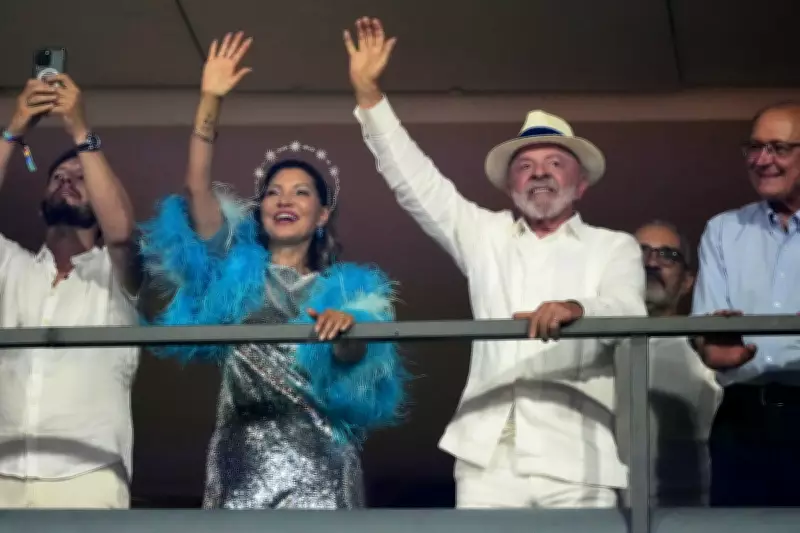
President Lula, Vice President Geraldo Alckmin, and their spouses attended the parade despite warnings from legal analysts about potential consequences. The presence of government officials at such an event could trigger lawsuits in Brazil's electoral court both before and after the October presidential election, creating unnecessary legal exposure for the administration.

Organizers Defend Tribute Amid Growing Controversy
Tiago Martins, the parade's chief organizer, explained that Academicos de Niteroi directors initially wanted to focus this year's theme on Brazil's northeast region, continuing the approach they used in 2025. They later determined that President Lula's personal story perfectly suited this purpose, despite recognizing the potential legal complications.
"Lula deserves a tribute like this, just like any other Brazilian who does a lot for our people," Martins told The Associated Press during preparations in Niteroi, a city located just outside Rio de Janeiro. He firmly denied that any elements of the parade—including lyrics, floats, or costumes—were intended as campaign material, insisting the performance represented a genuine cultural tribute rather than political promotion.
Martins revealed that Academicos de Niteroi executives traveled to Brasilia months in advance to present their vision to President Lula, who accepted the honor. The president, first lady Rosângela da Silva, and their guests watched the entire spectacle from the Rio de Janeiro city hall box alongside Mayor Eduardo Paes. Lula wore a distinctive white suit and a hat featuring a blue stripe, a traditional reference to Carnival revelers that added to the festive atmosphere.
Political Risks and Electoral Implications
During the parade, many revelers enthusiastically sang along to Lula's historic campaign jingle, "ole, ole, ole, ola... Lula, Lula," which had been incorporated into an Academicos de Niteroi song. One significant concern for the president's team—the possibility of massive booing from the stands—never materialized, even when Lula left the boxes to take photographs on the Sambadrome floor.
However, João Santana, who served as Lula's campaign manager during his 2006 reelection bid, expressed skepticism about any potential electoral gains from the tribute. He warned that the Brazilian president might actually alienate moderate and evangelical voters who typically reject connections between Carnival celebrations and political campaigning. Santana also agreed that Lula was facing unnecessary legal risks through his association with the parade.
"The president and the first lady have dangerously approached this parade," Santana stated in a video published Thursday. "This could all backfire."
Legal Precedents and Electoral Court Scrutiny
This is not the first time Carnival parades have honored President Lula, as progressive figures like him traditionally comprise the majority celebrating Brazil's most famous cultural event. In 2003, during his first presidential year, the prominent samba school Beija Flor featured a float depicting Lula as a courageous politician fighting hunger. Nine years later, the São Paulo-based samba school Gavioes da Fiel also centered its parade on the left-wing leader.

However, never before has such a Carnival tribute occurred during a presidential election year with Brazil's electoral court closely monitoring developments. The primary legal question involves whether the administration permitted an inappropriate connection between the tribute and the upcoming election. This concern gains particular traction if evidence emerges that the president or Cabinet members attended the parade while misusing public resources such as government-sponsored planes and hotel accommodations.
"Lula is not getting a single vote because of that tribute; everyone knows he's popular in the samba world," said Thomas Traumann, a Rio-based political analyst and consultant. "There could be fines, the loss of free-air time during the campaign. That matters in a close election."
Opposition Challenges and Electoral Landscape
As of now, Lula's closest rival in his reelection bid is Senator Flávio Bolsonaro, the 44-year-old son of former President Jair Bolsonaro. While recent polls show Lula maintaining his position as front-runner, the latest numbers suggest an increasingly tight race that could be influenced by legal developments surrounding the Carnival tribute.
Martins and Academicos de Niteroi remain wary of potential penalties and fines for both themselves and President Lula. The school had already instructed its more than 3,000 revelers to refrain from making "L" hand gestures—a historic reference to the left-wing leader—during the 80-minute parade. Participants were also explicitly forbidden from telling the 80,000 spectators at the Sambadrome to vote for the president.
Some right-leaning politicians had attempted to block Niteroi's parade entirely, arguing it provided Lula with an unfair advantage through early campaigning that his rivals cannot access. They also emphasized that samba schools receive public funding, creating additional ethical concerns.
"Samba schools are not meant to campaign for anyone," lawmaker Kim Kataguiri posted on social media before the parade. "I filed a complaint to stop your money from being used to finance electoral campaigns disguised as tributes. Do you want to pay tribute to politicians? So do it with your own money!"
Electoral Court Decisions and Future Implications
Brazil's top electoral court rejected these complaints on Thursday, with judges ruling they cannot censor a samba school before a parade takes place. However, they indicated they might review the case if evidence emerges of actions violating electoral law during the actual performance.
Within months, leadership of the electoral court will pass to Supreme Court Justice Kássio Nunes, who was appointed by Lula's political foe and predecessor Jair Bolsonaro—a known Carnival critic during his presidency. Justice Nunes will also oversee Brazil's presidential election in October, adding another layer of complexity to the ongoing legal debate surrounding the Carnival tribute.