Secret Diplomatic Cable Names Adams and McGuinness as IRA Council Members
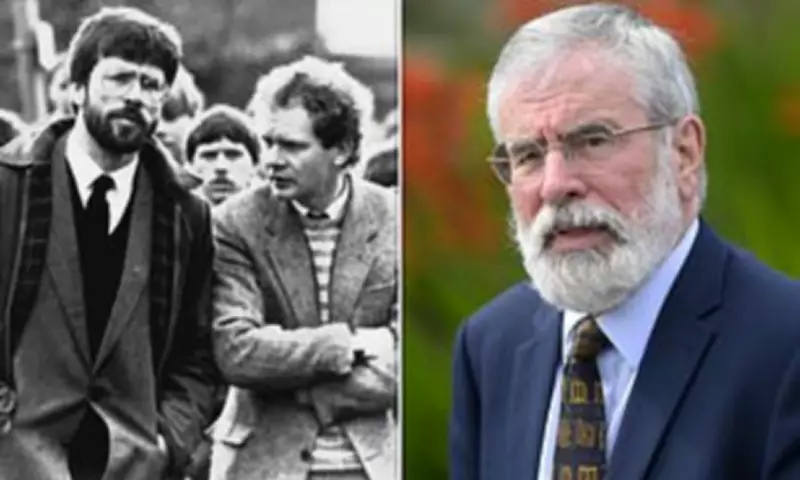
Gerry Adams was identified as a member of the IRA's army council nearly three decades ago by former Prime Minister Sir John Major, according to explosive documents recently unearthed from the National Archives. Both Mr Adams and the late Martin McGuinness, who later served as deputy first minister in Northern Ireland, were explicitly named as members of the IRA's war council in a confidential 1997 US State Department diplomatic cable.
Historic Allegations Surface Ahead of High Court Claim
The former Sinn Féin president, who has consistently denied membership in the Provisional IRA, was also described as a senior IRA commander in a separate British government memorandum from the 1980s. These documents have emerged just days before a landmark High Court civil claim against Mr Adams, alleging he played a "senior and pivotal role" in the Provisional Irish Republican Army.
The IRA's army council directed the notorious paramilitary organization in carrying out terrorist activities and multiple bombings across Northern Ireland and mainland Britain. This council oversaw a reign of terror from the 1970s through the late 1990s, including horrific bombings that killed and maimed civilians, including children.
Major's Direct Statement to US Secretary of State
In the March 5, 1997 diplomatic cable, Sir John Major informed then-US Secretary of State Madeleine Albright that both Mr Adams and Mr McGuinness had served on the IRA army council for many years. The cable recorded Major stating: "Adams and McGuinness were both on the army council and had been so for many years. The idea that the military wing acts without the knowledge of the political side is fanciful. They all knew and all set the strategy together."
This communication occurred shortly before Major left Downing Street, documenting a February 19, 1997 meeting held at Number 10. The revelations come as three claimants in an upcoming civil case, all victims of IRA attacks on mainland Britain, seek to prove Mr Adams was "responsible for the orchestration of planned bombings."
Victims Seek Symbolic Justice Through Civil Claim
The claimants allege Mr Adams is liable for damages due to his alleged affiliation and leadership role within the IRA, suing for a symbolic £1 in compensation. If successful, the case could prompt calls for criminal prosecution. The plaintiffs represent a twenty-five year span of alleged Adams influence, covering attacks from London in 1973 to Manchester in 1996—the largest bomb detonated in Britain since World War II.
Jonathan Ganesh, seriously injured in the 1996 Docklands bombing, explained: "We aren't suing for financial compensation. It's a symbolic amount for all those people who were killed and injured. We contend that Mr Adams was in the IRA and was the leading figure in it."
Archival Evidence Points to Command Roles
A separate confidential memorandum from the 1980s, circulated within the Foreign Office and Northern Ireland Office, identified Mr Adams as a senior IRA commander involved in PIRA "violent activities." The document, supporting a US decision to reject Mr Adams' 1988 visa application, stated: "The consular officer's determination concerning Adams arose from the alien's support for and involvement in the violent activities of the provisional Irish Republican Army."
The memo further detailed: "In addition to Adams' advocacy of violence and his associational ties with the PIRA, there is reason to believe that Adams' advocacy of violence has included his personal involvement in and leadership, organisation and direction of groups committing terrorist acts." It specifically noted Mr Adams was identified as commanding officer of a PIRA Belfast brigade battalion during 1971-1972 and was believed to have become chief of staff of the PIRA's army council in the late 1970s.
Legal Battles and Persistent Denials
Mr Adams has consistently and strenuously denied IRA membership or involvement in terrorist activities. He successfully sued the BBC last year, winning €100,000 (£84,000) in damages over claims he sanctioned the murder of British agent Denis Donaldson. His Irish lawyer Paul Tweed described the current allegations as "totally untrue and defamatory."
Lawyers for next week's case have compiled thousands of pages of documents attempting to prove Mr Adams was a senior PIRA figure, drawing from National Archives in London and Washington, along with contemporaneous interviews, newspaper reports, and military intelligence testimony. Mr Adams recently failed in a legal bid to overturn anonymity for two witnesses in the case, with Mr Justice Swift finding their safety concerns "genuinely held."
Political Context and Reconciliation Efforts
Mr Adams famously shook the late Queen's hand during her 2012 historic state visit to Northern Ireland, acknowledging her role in peace process reconciliation. He has always maintained he was only involved in political struggle against British rule through Sinn Féin, the IRA's political wing. A spokesman for Mr Adams noted: "A significant number of former British Army and intelligence services witnesses will give evidence... Some among those groups see republicans as the enemy they failed to defeat, rather than people with whom they can build a shared and peaceful future."
The forthcoming civil case represents a significant legal challenge that could reshape historical understanding of Northern Ireland's Troubles era, as archival evidence and victim testimony converge in a London courtroom.