McSweeney's Departure Intensifies Pressure on Starmer's Leadership
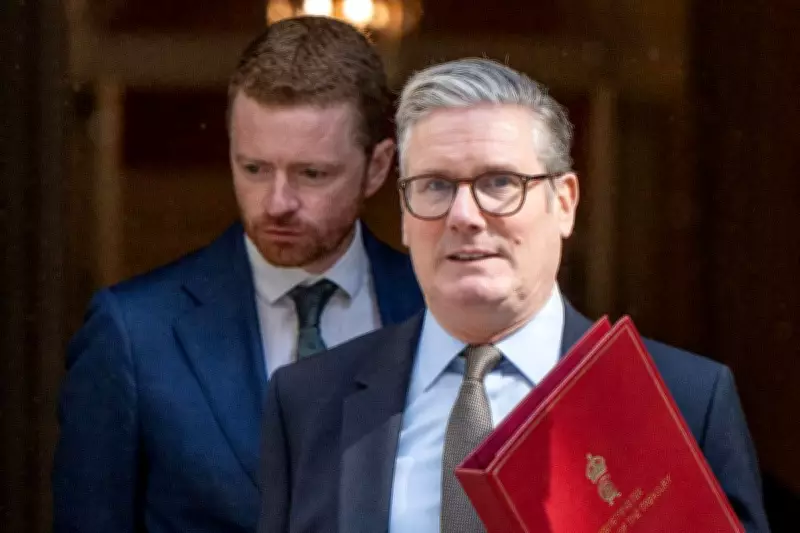
The resignation of Morgan McSweeney, Keir Starmer's chief of staff, has escalated the political crisis surrounding the prime minister, pushing him a step closer to a potential exit from Downing Street. McSweeney stepped down following controversy over his recommendation to appoint Peter Mandelson as the UK's ambassador to Washington, a move that has exposed deep fissures within the Labour government.
The Contradiction in Responsibility
There exists a fundamental problem for Keir Starmer in McSweeney's resignation statement. If providing advice to appoint Peter Mandelson constitutes grounds for resignation, why does acting upon that advice not warrant similar consequences? In Westminster, advisers merely counsel while ministers ultimately decide. This distinction highlights the growing accountability crisis facing Starmer's administration.
Cabinet minister Pat McFadden's assertion that McSweeney's departure "wouldn't make any difference at all" appears increasingly disconnected from political reality. While McFadden could hardly have stated otherwise publicly, the resignation significantly undermines Starmer's authority at a critical juncture.

Diminishing Political Capital
The prime minister appears to be exhausting available options to maintain his political buoyancy. Recent maneuvers include blocking Andy Burnham's return to the Commons and acquiescing to Angela Rayner's demand for an independent committee to determine which Mandelson documents can be withheld on national security grounds. Now, with his chief adviser assuming the scapegoat role, Starmer's defensive strategies are proving ineffective.
Labour MPs' demands for McSweeney's dismissal were fundamentally targeted at Starmer himself. This follows a longstanding political tradition where criticizing the king's advisers proves easier and appears more loyal than directly challenging the monarch. However, leaders ultimately bear responsibility for both their appointed advisers and the decisions they implement.
The Weight of Responsibility
Morgan McSweeney's resignation statement emphasized that "in public life responsibility must be owned when it matters most, not just when it is most convenient." This principle applies equally to the prime minister as to his departing chief of staff. Indeed, the phrasing of McSweeney's statement suggests he may intend to bring his boss down alongside him.
Political advisers typically function as lightning rods for criticism, but their departure leaves leaders exposed to the full force of political storms. Starmer cannot plausibly imply he received poor advice without appearing weak, just as his claim that Lord Mandelson "lied and lied and lied again" to him undermines his authority.
The Endgame Approaches
As one Labour former special adviser observed, Starmer consistently gives the impression when things go wrong that it's "always someone else's fault." This perception has accelerated the countdown to his premiership's conclusion. Should Labour place third in the forthcoming Gorton and Denton by-election in eighteen days—as current polling suggests—this will likely trigger final maneuvers.
Starmer may attempt a final strategic move, potentially emulating Tony Blair's 2006 gambit when facing the curry house plot. Blair announced the upcoming Labour conference would be his last, effectively establishing a twelve-month deadline for his departure from Number Ten, though he ultimately left after nine months in June 2007.
Desperate Measures Remain
Given Starmer's apparent unwillingness to surrender power, he might respond to Labour's anticipated by-election defeat by declaring he will leave office within a year, ostensibly to facilitate a "stable and orderly transition"—the same phrase used during the Blair-Brown handover. This could theoretically grant him another year in power, provided the party permits it.

The alternative involves allowing Angela Rayner to dictate subsequent events. Unless Starmer proactively establishes his departure timetable, he remains vulnerable to whichever Labour MP becomes the eighty-first to sign Rayner's nomination papers, triggering a leadership election at an inopportune moment. With McSweeney representing his penultimate line of defense now eliminated, Starmer confronts increasingly desperate political circumstances with diminishing options for recovery.