A senior minister has sparked fresh uncertainty about the future of the state pension 'triple lock' today, emphasising that the government's priority should be enhancing private pension provision rather than solely relying on the controversial state mechanism.
Triple Lock Under Scrutiny
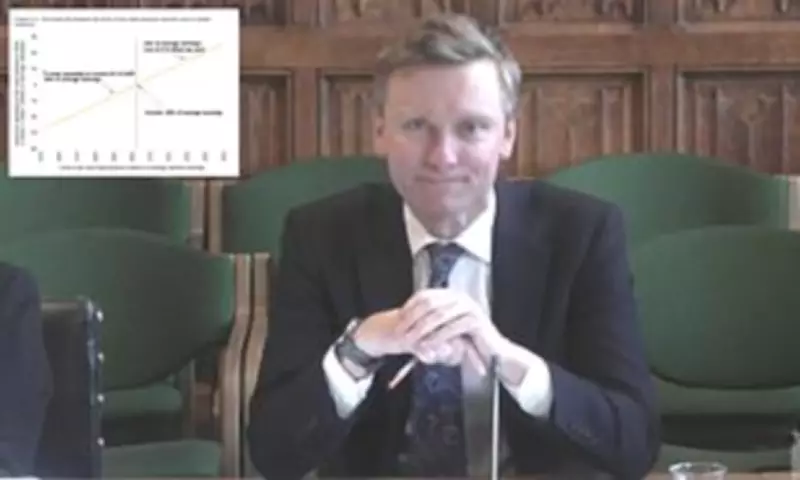
Torsten Bell, a minister seen as closely aligned with Chancellor Rachel Reeves, told the Work and Pensions Committee that while Labour remains committed to maintaining the triple lock throughout this Parliament, the policy reflects a desire to increase payments only 'slightly' relative to average earnings. He confirmed this objective is being 'delivered' with state pension expenditure set to rise by £30 billion over the current parliamentary term.
Private Pension Gaps Identified
Mr Bell suggested the 'biggest gaps' in retirement provision currently exist within private pensions, an area where the government would be looking 'really hard' for solutions. He pointed to concerning projections indicating private pension income could actually be lower in 2050 than in 2025, creating significant adequacy challenges for future retirees.
The minister also criticised previous governments for being too 'relaxed' about the impact of state pension increases, particularly on those unable to work until older ages. He stressed that more weight would be placed on the needs of those not benefiting from wider improvements in life expectancy, especially in constituencies where longevity has stagnated or declined.
Historical Context and Future Projections
The triple lock mechanism, introduced in 2011, guarantees the state pension rises annually by the highest of inflation, average earnings, or 2.5 percent. This has resulted in increases significantly outpacing the rest of the economy, particularly during recent inflation spikes, with pensions due to rise by 4.8 percent from next month.
However, think-tanks including the Institute for Fiscal Studies have raised serious concerns about the growing burden on Treasury finances. A government review published last March indicated that if life expectancy returned to its expected 2014 trajectory, the state pension age could reach 71 by the late 2050s.
Alternative Proposals Considered
Various proposals for reforming the system have been floated, including:
- Setting the state pension at a fixed proportion of average earnings
- Moving to a more limited 'double lock' mechanism
- Accelerating increases to the state pension age
With the triple lock maintained, estimates suggest the pension age would need to reach 74 by 2068–69 to keep spending at around 6 percent of GDP. The pension age is already scheduled to reach 67 between next month and 2028, with current legislation setting it to reach 68 from 2044-46.
Minister's Personal Views and Historical Perspective
Mr Bell, who previously headed the Resolution Foundation think-tank, has criticised the triple lock in the past, describing it as 'not a sensible mechanism.' He traced current problems back to the 1980s when the state pension was 'decoupled' from earnings, causing pensioner incomes to fall behind during periods of rapid wage growth.
'If I was looking at the changes in 2011 for example and some of the comments I saw from then-ministers after very fast accelerations of state pension age... I would say they weren't weighing seriously enough those consequences in the way they went about it,' Mr Bell told the committee.
Addressing Inequality Concerns
Committee chair Debbie Abrahams challenged the minister about life expectancy increasing much more slowly for lower income households, noting it had actually fallen in her Oldham constituency. Mr Bell acknowledged these distributional concerns, stating the government would take 'very seriously the consequences' of any pension age changes on vulnerable groups.
The minister concluded by emphasising ongoing work through the Pension Commission to ensure people have 'adequate' retirement income, suggesting the debate must consider both state and private provision holistically rather than focusing exclusively on the triple lock mechanism.