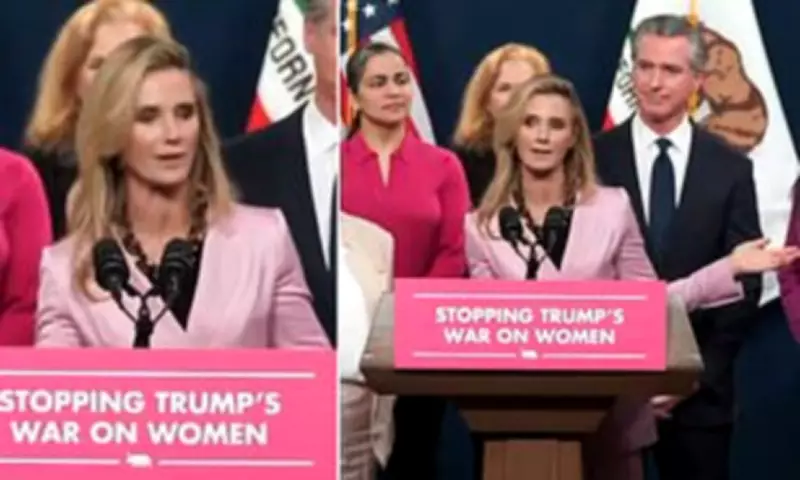
Jennifer Siebel, the wife of California Governor Gavin Newsom, delivered a sharp rebuke to reporters during a press conference focused on Planned Parenthood funding this Wednesday. The 51-year-old took the stand to express her frustration, scolding journalists for what she deemed the "wrong" questions at the event.
Siebel's Direct Confrontation with the Media
Governor Newsom was seen standing at the podium, flanked by his wife and supporters dressed in pink, as he fielded inquiries from the press that largely steered clear of women's health topics. After the governor concluded his responses, the group behind him erupted into chants of "Planned Parenthood, protect women!" prompting Newsom to chuckle lightly.
A Passionate Plea for Focused Reporting
Siebel then approached the microphone, having whispered something into the governor's ear moments earlier. "We just find it incredulous that we have Planned Parenthood here and women are 51 percent of the population," she stated emphatically. "And the majority of these questions—all of these questions—have really been about other issues."

She continued her critique, highlighting the perceived oversight by the media. "It's just fascinating. You have this incredible women's caucus and all these allies, and you're not asking about it. This happens over and over again. You wonder why we have such a horrific war on women in this country, and that these guys are getting away with it. You don't seem to care. So I just offer that with love."
Context and Broader Implications
The incident underscores ongoing tensions between political figures and the press regarding issue prioritisation, particularly in the realm of reproductive rights and women's health advocacy. Siebel's remarks reflect a broader sentiment among supporters that media coverage often diverts attention from critical social issues, even at events specifically designed to address them.
This confrontation at the Planned Parenthood funding conference adds to the public discourse on how women's health topics are framed and questioned in political settings, raising questions about journalistic focus and advocacy in press interactions.