Socialist Triumph in Portugal's Presidential Election Amid Far-Right Surge
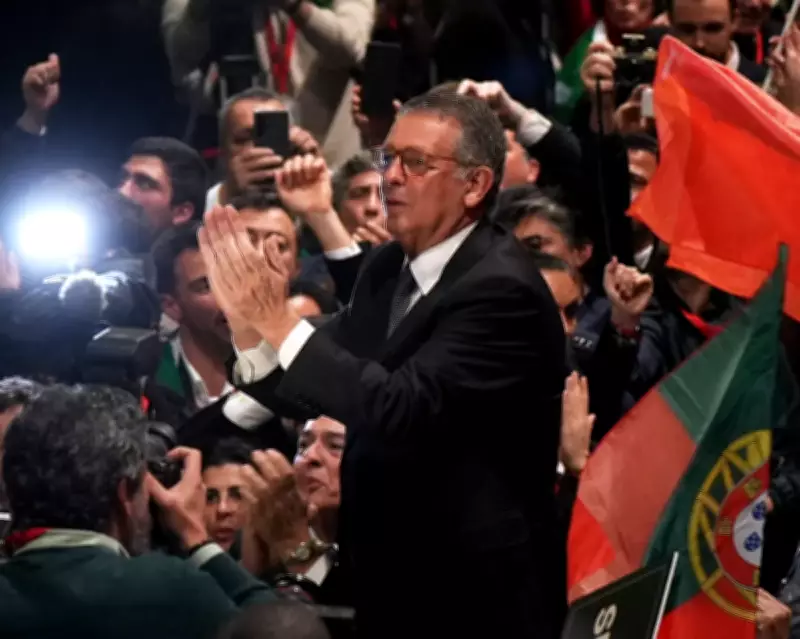
Moderate socialist António José Seguro secured a decisive victory in Portugal's presidential election on Sunday, capturing 66.8% of votes in the second-round runoff. His far-right opponent, André Ventura of the populist Chega party, nevertheless achieved a remarkable 33.2% vote share, marking the highest percentage ever recorded by Portugal's far-right movement.
Cross-Party Coalition Against Chega
The election, which determined the successor to outgoing President Marcelo Rebelo de Sousa, witnessed an unprecedented cross-party effort to prevent a Chega victory. Senior right-wing figures publicly endorsed the centre-left candidate Seguro, creating a broad coalition determined to keep Ventura from entering the presidential palace. "The response the Portuguese people gave today, their commitment to freedom, democracy, and the future of our country, leaves me naturally moved and proud of our nation," declared the victorious Seguro during his acceptance speech.
Chega's Anti-Immigration Campaign and Growing Influence
Ventura, a former football pundit, columnist, seminarian, and novelist who founded Chega seven years ago, framed the result as a significant breakthrough. "The message from the Portuguese people is clear," he asserted, claiming Chega had become the dominant party on Portugal's right and would "soon be governing Portugal." Throughout the campaign, Ventura accused "the entire political system" of conspiring against him.

The far-right, anti-establishment party once again centered its campaign on immigration, deploying billboards nationwide with messages including "This isn't Bangladesh" and "Immigrants shouldn't be allowed to live on welfare." Chega's electoral performance substantially exceeded its 22.8% showing in last May's general election, even surpassing the 31.2% that propelled the governing centre-right Democratic Alliance to victory and installed Luís Montenegro as prime minister.
European Reactions and Democratic Resilience
European leaders swiftly congratulated Seguro on his victory. French President Emmanuel Macron expressed eagerness to collaborate with his Portuguese counterpart to advance "a Europe that decides for itself, and is more competitive, more sovereign, and stronger!" European Commission President Ursula von der Leyen praised Portuguese citizens for exercising their voting rights "in the face of the devastation caused by the storms, demonstrating remarkable democratic resilience." She emphasized that "Portugal's voice in defending our shared European values remains strong."
Storm Disruption and Voting Challenges
The second-round campaign unfolded against the backdrop of two major storms that prompted the declaration of a state of calamity, extended through February 15. Ventura had advocated postponing the election by one week, calling it "a matter of equality among all Portuguese," but the national electoral authority insisted the vote proceed as scheduled. Officials stated that "a state of calamity, weather alerts or overall unfavourable situations are not in themselves a sufficient reason to postpone voting in a town or region."
Nevertheless, approximately 20 severely affected constituencies postponed voting for a week due to Storm Leonardo's aftermath. This delay impacted roughly 37,000 registered voters, representing about 0.3% of the electorate, and was deemed unlikely to alter the overall outcome. In some flooded areas, including Cartaxo, voters resorted to boats to reach polling stations.
Presidential Powers and Political Positioning
Portugal's presidency, while largely ceremonial, retains important constitutional powers, including authority to dissolve parliament under specific circumstances. Ventura had promised a more "interventionist" presidency with expanded executive powers, whereas Seguro positioned himself as a moderate willing to cooperate with Montenegro's centre-right minority government while rejecting Ventura's populist, anti-immigrant rhetoric.

Parallel Far-Right Gains in Spain
The far-right demonstrated strength beyond Portugal's borders, with Spain's Vox party doubling its seat count to finish third in regional elections in Aragón. The conservative People's Party (PP), despite losing two seats, won the election but will again require Vox's support to govern the region. The Spanish Socialist Workers' Party of Prime Minister Pedro Sánchez finished second while losing five seats.
Sánchez, whose administration faces multiple corruption allegations, congratulated PP candidate Jorge Azcón while maintaining that socialists represented "the only progressive alternative." PP leader Alberto Núñez Feijóo interpreted the results as evidence of Sánchez's declining support, asking "How many more collapses does Sánchez need before he understands that enough's enough?"
Vox leader Santiago Abascal indicated willingness to collaborate with the PP provided it adopts stricter immigration policies. Disagreements on this issue previously caused Vox to abandon coalition governments with the PP in five regions during 2024. "If the PP wants to change its policies, it can count on us," stated Abascal. "But if the PP wants to continue with the policies that led us to quit the regional governments, then it best look towards the socialist party."