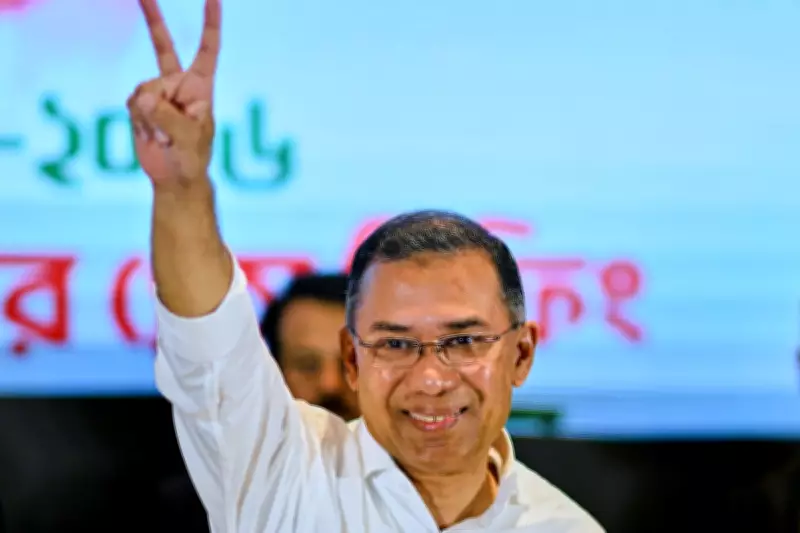
In a landmark political transition, Bangladesh's incoming leader Tarique Rahman has pledged to foster a more democratic nation, confronting significant challenges posed by weakened institutions and a fragile economy. This commitment follows his Bangladesh Nationalist Party's (BNP) decisive victory in Thursday's parliamentary election, securing a majority in the 350-member Parliament.
A New Political Era Dawns
The election, overseen by an interim government led by Nobel Peace Prize laureate Muhammad Yunus, proceeded largely peacefully and marked a profound shift in the South Asian country of over 170 million people. It was the first electoral contest since the mass uprising in 2024 that ousted former Prime Minister Sheikh Hasina, who has since been living in exile in India and convicted of crimes against humanity related to hundreds of deaths during the unrest.
Rahman's Immediate Priorities
Addressing reporters in his first press conference in the capital, Dhaka, Rahman outlined his administration's urgent focus areas. "We are about to begin our journey in a situation marked by a fragile economy left behind by the authoritarian regime, weakened constitutional and statutory institutions, and a deteriorating law and order situation," he stated. The new government is expected to be sworn in within days.

Rahman, the son of former Prime Minister Khaleda Zia who passed away in December, emphasised national unity as a cornerstone of his leadership. "To ensure that no evil force can reestablish autocracy in the country, and to ensure that the nation is not turned into a subservient state, we must remain united and uphold the will of the people," he asserted, promising not to undermine Bangladesh's sovereignty.
Opposition and Historical Context
The political landscape now features an 11-member alliance led by the Jamaat-e-Islami party, the country's largest Islamist group, poised to form the opposition. This development underscores the BNP's resurgence as one of Bangladesh's longstanding political forces, alongside Hasina's now-banned Awami League party.
Hasina's 15-year rule had been increasingly criticised as authoritarian, with the BNP refusing to participate in elections under her administration in recent years. Her departure and the subsequent conviction have paved the way for this electoral reset, which Rahman aims to leverage for democratic consolidation and institutional repair.