South Australian Premier Reassures Gun Lobby on Firearm Laws Amid Federal Reform Push
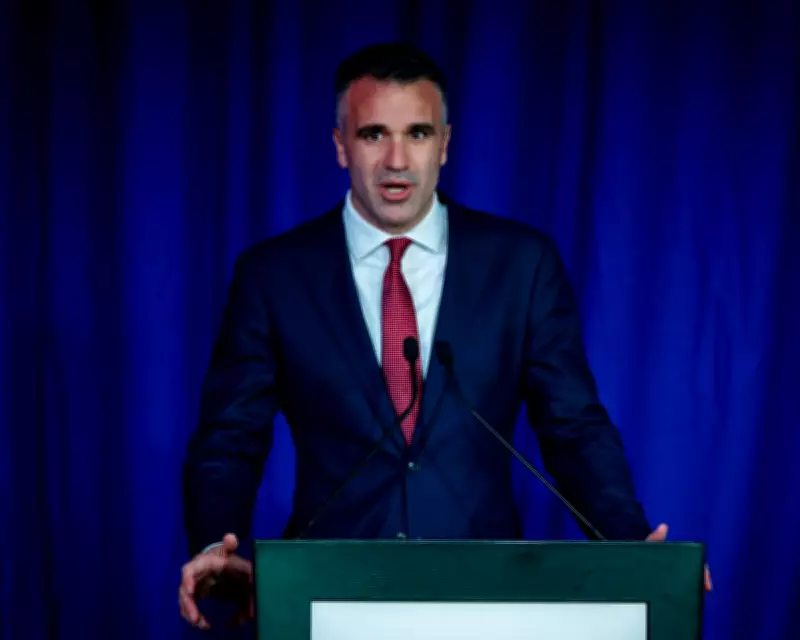
South Australian Premier Peter Malinauskas has provided firm assurances to gun lobbyists that his government has no immediate intentions to tighten firearm regulations within the state. This commitment comes despite his previous agreement to support a nationwide crackdown on gun control following the devastating Bondi beach massacre in December.
Election-Eve Letter Signals Policy Position
In a letter dated 21 February, just one day before the government entered caretaker mode ahead of the state election on 21 March, Malinauskas communicated directly with the Sporting Shooters' Association of Australia. The premier explicitly stated that South Australia currently maintains some of the most stringent firearms legislation in the country and there are "currently ... no plans to amend" these existing regulations.
"South Australia already has some of the strictest and most comprehensive firearms laws in the country," Malinauskas wrote in the correspondence obtained by media outlets. "These laws are designed to protect the broader community while recognising that the overwhelming majority of firearms owners in South Australia are responsible, law-abiding citizens who comply with their obligations."

National Unity on Gun Control Falters
This position represents a significant setback for Prime Minister Anthony Albanese's aspirations for uniform nationwide gun control reform. Multiple states appear to be retreating from the commitments made during the national cabinet meeting convened after the tragic shooting incident at a Hanukah event at Bondi beach, which resulted in 15 fatalities and numerous injuries.
Initially, the federal government secured agreement from premiers and chief ministers to pursue stricter gun controls across Australia, including implementing caps on the number of firearms an individual could legally possess. At that December meeting, Malinauskas had argued that while South Australia already possessed the toughest firearms laws nationally, his government remained prepared to further strengthen these regulations if necessary.
Contrasting Statements Create Policy Confusion
Just two months after Australia's worst-ever terror attack, and on the eve of a crucial state election, Malinauskas has articulated a markedly different stance. When pressed for clarification this week about whether a re-elected state Labor government would implement the national cabinet agreement, the premier offered a carefully worded response.
"We only have an interest in amending the gun laws to the extent that they are based on evidence and that needs to be thought through very carefully, and that's our policy," Malinauskas explained to journalists.
The premier did leave open the possibility of future legislative changes, but emphasized that any consideration of new laws would be "approached carefully, thoughtfully and with genuine consultation." He further stated that "responsible firearms owners deserve certainty, fairness and respect, and reforms must always be grounded in evidence."
State Divergence Undermines National Approach
The federal government had initially expressed optimism that states and territories would agree to "ambitious" reforms by March this year, with legislation passing through their respective parliaments no later than 1 July. Prime Minister Albanese and Home Affairs Minister Tony Burke had emphasized in December that "gun laws are only as strong as the weakest state" and that "having laws that are national and consistent, is vital to their effectiveness."
However, following New South Wales recalling parliament before Christmas to pass new gun laws including firearm caps, other jurisdictions have largely pursued independent directions:

- Queensland recently passed legislation restricting gun ownership to Australian citizens but declined to implement caps on firearms per individual
- Tasmania currently opposes caps but faces pressure from opposition parties and its own police commissioner to include them in forthcoming legislation
- South Australia already limits gun ownership to citizens and permanent residents while requiring license renewals every five years
Stakeholder Reactions and Election Implications
Stephen Bendle, convener of the Australian Gun Safety Alliance, expressed hope that Malinauskas' position might evolve following Saturday's election, where Labor is anticipated to secure a decisive victory. "We would be hopeful that South Australia listens to the community and don't listen to the commercial interests of the gun lobby and make the reforms that they agreed to at national cabinet," Bendle stated.
Conversely, Sporting Shooters' Association of Australia chief executive Tom Kenyon welcomed the premier's commitment to an "evidence-based approach" to firearm regulation. "We note that many of the measures proposed by the federal government are already in place in South Australia or have been remedied by recent federal legislation," said Kenyon, a former state Labor MP who served alongside Malinauskas. "There is no evidence that firearms limits make the public safer."
This developing situation highlights the complex challenges facing nationwide policy coordination on contentious issues like gun control, particularly during election periods when political considerations may influence legislative priorities.