Anas Sarwar's High-Stakes Gamble: Scottish Labour Leader Demands Starmer's Resignation
Even the closest allies of Anas Sarwar acknowledge that he has placed his political future on the line by demanding Sir Keir Starmer's resignation as Prime Minister. This bold move, which many fear has already backfired, was executed on Monday morning following intense discussions with his inner circle over the preceding three days.
The Tipping Point: Voter Anger and Failed Cut-Through
Senior party figures encouraged Sarwar to act, reporting that activists were encountering overwhelming anger about the Labour government's handling of the Peter Mandelson scandal during door-knocking campaigns. The decisive moment came last Thursday when Sarwar delivered what was considered a strong performance at First Minister's Questions, focusing on the Queen Elizabeth University Hospital infections scandal.
"Last week was the straw that broke the camel's back," revealed one party insider. "They really felt they had Swinney on the ropes regarding the hospital scandal, yet instead of questions about why John Swinney isn't resigning, all they were hearing was demands for Keir Starmer to resign."

Despite Sarwar's parliamentary performance, activists reported that the message failed to resonate with voters, drowned out by public fury directed at Starmer's government. This frustration culminated in what supporters describe as a necessary drastic action to separate Scottish Labour from Westminster's controversies.
A Divided Party: Holyrood Versus Westminster
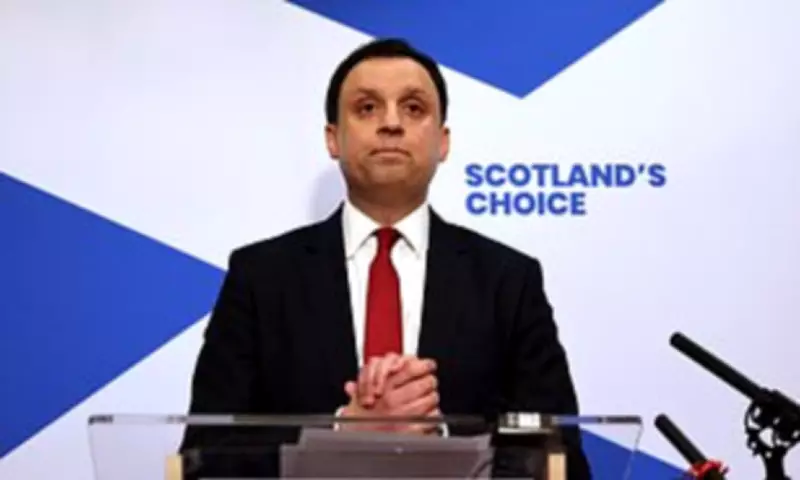
The resignation demand has exposed a significant rift between Scottish Labour's Holyrood and Westminster factions. While Sarwar made his announcement at Glasgow's Trades Hall with senior Scottish Labour figures including general secretary Kate Watson in attendance, support from Westminster colleagues has been conspicuously absent.
Only two Scottish MPs—left-wing agitator Brian Leishman and the previously low-profile Euan Stainbank—have publicly backed Sarwar's position. Most Westminster Scottish Labour MPs maintain primary loyalty to the UK party leader, with reports indicating that MP Johanna Baxter became emotional during a Parliamentary Labour Party meeting, accusing Sarwar of "treacherous behaviour."
Even figures traditionally aligned with Sarwar, including former Scottish Secretary Ian Murray, have opposed the move and expressed support for the Prime Minister. Prominent peers Baroness Helena Kennedy and Lord George Foulkes have been particularly critical, with Foulkes suggesting the strategy has already backfired badly.
Strategic Rationale and Internal Criticism
Sarwar's team insists the public resignation call demonstrates honesty and trustworthiness to voters, arguing that being upfront about his views deserves credit compared to behind-the-scenes briefing. However, this approach has drawn fierce internal criticism regarding both substance and presentation.
John McTernan, Tony Blair's former director of political operations, accused Sarwar of using "the language of a Scottish nationalist" after the Scottish Labour leader stated he was putting Scotland's interests first. Some party members believe Sarwar should have focused on demanding policy shifts—such as reversing the ban on North Sea drilling—rather than calling for Starmer's resignation.
While some interpret Sarwar's move as evidence that Scottish Labour is no longer a "branch office" of UK Labour, others view it as a strategic miscalculation that could weaken the party's position ahead of crucial elections.
Election Implications and Leadership Consequences
Sir Keir Starmer is widely regarded as having received only a temporary reprieve and will likely face renewed leadership challenges after May's elections. This creates an unprecedented situation for Scottish Labour, which must now campaign in Holyrood elections while publicly opposing the sitting Prime Minister from their own party.
"I think he has shot himself in the foot," said a former Scottish Labour strategist. "I don't see what he says for the next three months: 'Vote Labour but I hate the Prime Minister?' I think he was trying to prove he is more powerful than he actually is."

Senior party figures now speculate that Sarwar might resign before Starmer if Scottish Labour performs poorly in the Holyrood elections. One source noted cynically, "The only thing I took from yesterday was he's not going to get his seat in the House of Lords when he loses."
Even Sarwar's closest allies admit he appears increasingly isolated following this political gamble. "It's at that stage now, you've got to throw everything at it and see what happens in May," said one supporter. "But yeah it's do or die, isn't it?"
The coming months will determine whether Sarwar's high-risk strategy proves politically astute or becomes a career-ending miscalculation that deepens existing divisions within Scottish Labour.