President Donald Trump is facing renewed scrutiny over his acceptance of lavish gifts from foreign entities, with the top Democrat on the Senate Finance Committee demanding detailed explanations about a Rolex table clock and custom gold bar received from Swiss businessmen.
Senator Wyden's Formal Inquiry
Oregon Senator Ron Wyden has formally requested that the Trump administration provide comprehensive information regarding the timing and circumstances of these gifts, which were accepted shortly before the president announced a significant reduction in tariffs on Swiss goods. According to a letter obtained by Bloomberg, Wyden is investigating whether these actions constituted violations of federal law or constitutional provisions.
The Sequence of Events
In August, President Trump imposed a substantial 39 percent tariff on Swiss imports, which represented the highest tariff rate applied to any Western nation at that time. This decision reportedly stunned Swiss officials, given that the United States serves as the primary export destination for key Swiss products including pharmaceuticals, luxury watches, and precious metals.

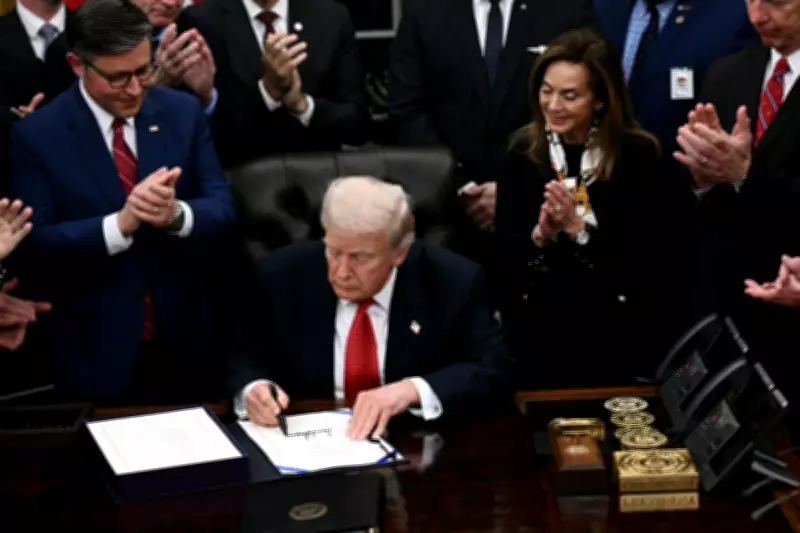
During November, a delegation of Swiss business leaders visited the White House for discussions with President Trump regarding these trade barriers. Shortly after this meeting, two distinctive items appeared on the president's Resolute Desk in the Oval Office.
A Rolex table clock, which does not appear to be commercially available to the general public, was prominently displayed alongside a custom gold bar valued at more than $130,000 according to Senator Wyden's office.
Tariff Reduction Following Gifts
Less than two weeks after these gifts appeared in the Oval Office, President Trump announced a new trade agreement that substantially reduced Swiss tariffs from 39 percent to 15 percent. This dramatic policy shift has raised serious questions about potential conflicts of interest and whether the acceptance of valuable gifts improperly influenced presidential decision-making.
In his formal correspondence, Senator Wyden explicitly stated: "Trump's acceptance of gifts of significant monetary value just days before lowering tariffs on goods from Switzerland creates a blatant conflict of interest and possible constitutional violations."
Constitutional Concerns and White House Response
The investigation centers on potential violations of both foreign and domestic emoluments clauses, which represent some of America's oldest anti-corruption safeguards. Under the Foreign Emoluments Clause, federal officials are expressly prohibited from accepting presents, offices, titles, or payments from foreign heads of state without explicit congressional consent.
Senator Wyden's inquiry specifically questions whether Swiss negotiators informed United States Trade Representative Jamieson Greer about these gifts either before or after presenting them to President Trump. Additionally, the senator seeks clarification about which administration official ultimately recommended the substantially reduced tariff rate.
The White House has vigorously defended the president's actions, with spokesperson Kush Desai stating: "Switzerland secured a trade deal and lower tariffs by reducing their unfair trade barriers and committing to invest billions in the United States. The only special interest guiding President Trump's decision-making is the best interest of the American people, and any suggestion otherwise is completely unfounded."
Pattern of Lavish Gift Acceptance
This incident forms part of a broader pattern of President Trump accepting extravagant gifts from foreign governments and business leaders during his presidency. Over the past year alone, documented gifts include:

- A gold crown presented by South Korean President Lee Jae Myung
- A 24-karat gold and glass plaque from Apple CEO Tim Cook
- The inaugural "FIFA Peace Prize" from FIFA President Gianni Infantino
- A gold pager from Israeli officials
- A portrait from Russian President Vladimir Putin depicting both leaders together
- A $400 million luxury Boeing 747 jet from Qatar intended to serve as the new Air Force One before being transferred to the presidential library
President Trump's well-documented appreciation for personalized, luxurious gifts has consistently raised ethical questions about presidential conduct. Multiple lawmakers and nonprofit organizations have expressed concern that such acceptance creates perceptions of potential quid-pro-quo arrangements or preferential treatment for specific nations.
Broader Implications for Trade Policy
Senator Wyden has emphasized the dangerous precedent this situation establishes for international trade negotiations, writing: "This affair also creates a perception that lavishing gifts on the President, rather than negotiating with the United States Trade Representative, is the best way for trading partners to engage with the United States."
The White House maintains that all gifts received comply with both American and Swiss legal requirements, with officials asserting they were properly cleared by White House legal counsel and designated as donations to President Trump's future presidential library.
This investigation unfolds against the backdrop of President Trump's recent comments in Davos, where he revealed that he initially imposed the higher tariff rate because he was "rubbed the wrong way" by former Swiss President Karin Keller-Sutter. According to Reuters reporting, Swiss officials subsequently struggled to convince the president to reduce tariffs before the delegation of businessmen helped ease diplomatic tensions.
The Senate Finance Committee's inquiry represents a significant examination of presidential ethics, gift acceptance protocols, and the intersection between personal relationships and international trade policy formulation.