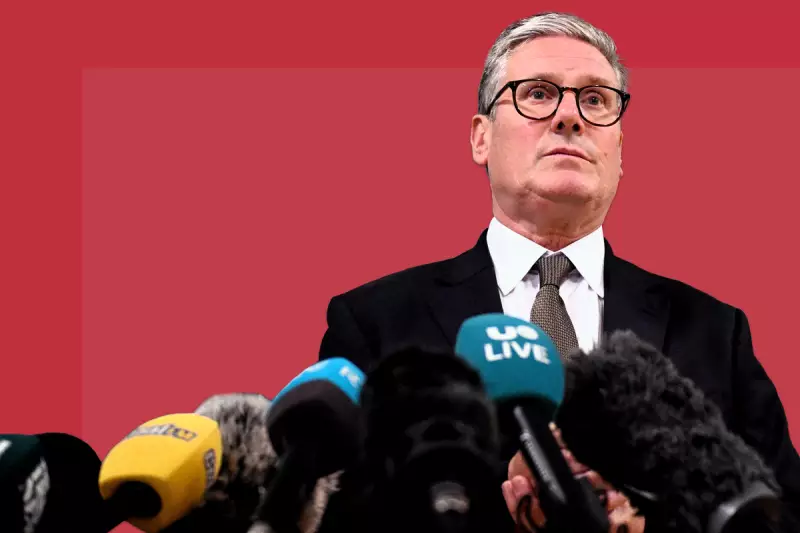
Prime Minister Keir Starmer's government has taken a controversial step that critics argue significantly weakens the media's ability to hold power to account. In a move announced just before Parliament's Christmas recess, Downing Street has decided to cancel a major part of its daily briefings for political journalists.
The Bombshell Announcement
The decision was communicated to the parliamentary press corps, known as the 'lobby', by Tim Allan, the Prime Minister's fourth Director of Communications since taking office on 4 July 2024. Allan, a veteran of the Tony Blair era appointed in September 2025 to salvage the government's struggling media strategy, outlined a plan that includes scrapping the 'afternoon lobby' briefing entirely.
This daily session allows journalists based in Westminster to question a Downing Street spokesperson on the day's developments and government affairs. Furthermore, the more crucial 'morning lobby' briefing will no longer occur every day. The government proposes replacing some of these sessions with an increased number of press conferences featuring ministers.

Why This Represents a Democratic Problem
This is far from a mere procedural tweak within the Westminster bubble. Experts and media figures contend it represents a serious dilution of democratic accountability. Lobby briefings are a unique forum: they are on the record, have no fixed time limit, and allow any journalist present from any publication to raise questions on virtually any topic.
By more than halving these opportunities, the government is drastically curtailing routine, granular scrutiny. For decades, successive administrations have grumbled about the process but tolerated it as a necessary pillar of a transparent democracy. Notably, even figures like Alastair Campbell under Blair or Lee Cain under Boris Johnson, who had notoriously fraught relations with the press, never attempted to cancel the briefings altogether.
Press Conferences Are No Substitute
The government's suggested alternative—more press conferences—is widely seen as inadequate. Such events typically allow only a handful of pre-selected journalists to ask questions, limiting the range and depth of interrogation. This concern was highlighted recently when, around the Budget, the government invited only a small, chosen group of media outlets to a press conference with the Chancellor, attempting to exclude others—a tactic viewed as a 'divide and rule' approach to the press corps.
This move feeds into a growing narrative about the Starmer administration's approach to scrutiny and liberty. It follows twin, contentious announcements: a plan to cancel the 800-year-old right to jury trial for many offences, and the cancellation of next year's local elections, which the government was projected to lose. Combined with ongoing debates over arrests for social media posts and the Online Safety Act, these actions have led critics to frame this Labour government as increasingly authoritarian.
While Sir Keir has repeatedly defended the state of free speech in the UK, pointing to figures like Donald Trump operating freely, opponents argue that if he truly believes in a robust democracy, he must reverse this 'ham-fisted' attempt to limit essential press scrutiny.