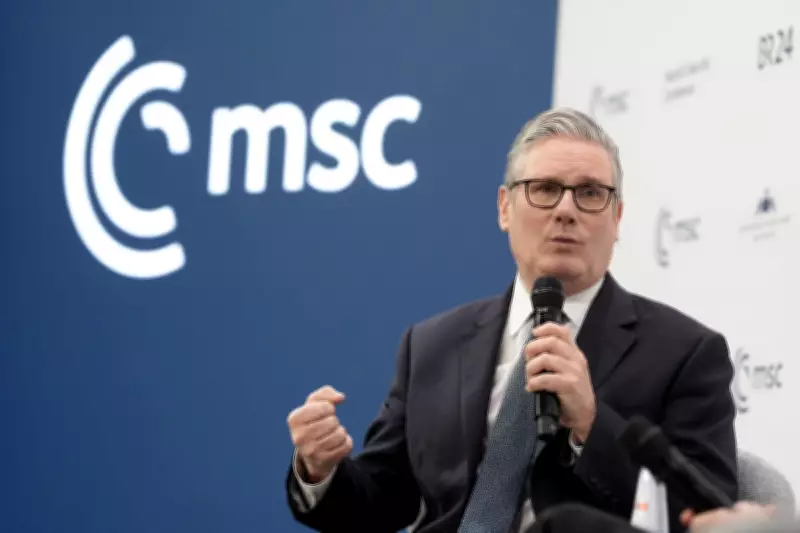
Prime Minister Sir Keir Starmer has declared that he concluded a tumultuous week in a significantly stronger position than when it began, despite facing a series of political controversies and high-profile departures from his government. Speaking at the Munich Security Conference, Sir Keir asserted that his Labour Party and administration remain "completely united" on critical issues such as defence, support for Ukraine, and fostering closer ties with the European Union.
Defending Leadership Amidst Turmoil
Sir Keir's premiership has been rocked by multiple scandals, including the contentious appointments of Lord Peter Mandelson and Lord Matthew Doyle, both of whom have associations with sex offenders. Additionally, three senior figures have resigned from Downing Street, and Scottish Labour leader Anas Sarwar publicly called for the Prime Minister to step down. Despite these challenges, Sir Keir remains defiant, stating that his party is cohesive on key policies.
Unity on Defence and European Relations
During a panel discussion at the conference, Sir Keir was questioned about whether the recent turmoil has left him vulnerable to political challenges from Reform UK and the Conservative Party. He firmly rejected this notion, emphasising the strength of his position. "I ended the week much stronger than I started it," he said. "And that's a very good place to be, and my party and my Government is completely united on the question of Ukraine and defence and security and the need for stronger relations with Europe on defence, on security and on economy as well."

He further highlighted the importance of maintaining the UK's leadership role on the international stage, warning against the influence of what he described as Nigel Farage's "pro-Putin" party. Sir Keir suggested that Reform UK is the only faction in Parliament not aligned with the UK's support for Ukraine, arguing that their potential governance would undermine global coalitions and the country's reputation.
Scandals and Resignations Shake Downing Street
The week's events have raised serious questions about Sir Keir's judgment. The appointment of Lord Mandelson as British ambassador to Washington, despite his links to convicted paedophile Jeffrey Epstein, sparked outrage and led to Mr Sarwar's call for resignation. Although this attempt to oust Sir Keir failed, with Cabinet members publicly backing him, further controversy emerged over Lord Doyle's appointment to the House of Lords after he campaigned for a paedophile councillor.
In addition to these scandals, the departure of Sir Chris Wormald, the head of the civil service, has prompted criticism of negative briefings within the government. Senior Labour women have also voiced concerns, suggesting that the string of incidents has exposed a "boys' club" culture in Downing Street. Sir Chris's exit marks the third senior resignation in a week, following those of Sir Keir's chief of staff Morgan McSweeney and communications director Tim Allan.
Looking Ahead with Confidence
Despite the ongoing political strife, Sir Keir remains optimistic about his leadership and the government's direction. He reiterated that there is "real strength" in the positions he has outlined, particularly regarding international alliances and domestic unity. As the Prime Minister navigates these challenges, his ability to maintain party cohesion and public trust will be crucial in the coming months.