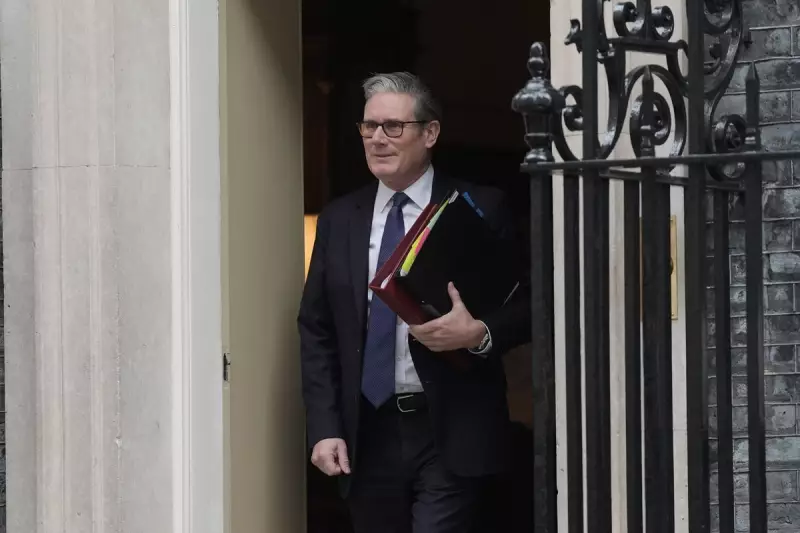
Prime Minister Sir Keir Starmer is set for a challenging session of Prime Minister's Questions on Wednesday 14 January 2026, following his government's latest significant policy reversal.
Another Major Policy Shift
The Labour government has signalled a major climbdown on its flagship digital identity scheme, confirming it will no longer be mandatory for right-to-work checks. This marks the latest in a series of U-turns for Sir Keir's administration, coming just days after a decision to offer extra support to pubs facing steep business rate increases.
The timing of the announcement is particularly awkward, following Health Secretary Wes Streeting's remarks at a London conference where he urged ministers to aim for getting policies "right first time."
Opposition Seizes on 'Retreat'
While opposition parties welcomed the decision on digital ID, they were quick to criticise the government's apparent inconsistency. Conservative Party chairman Kevin Hollinrake stated that "Labour's only consistent policy is retreat," arguing the public is paying the price for a government defined by reversal.
Liberal Democrat Cabinet Office spokeswoman Lisa Smart suggested Downing Street must be "bulk ordering motion sickness tablets" to cope with the frequent changes of direction.
The original policy, announced ahead of last year's Labour Party conference, was framed as a measure to tackle illegal immigration. Sir Keir had stated that people "will not be able to work in the United Kingdom" without a digital ID.
Government Insists on Consultation Process
On Tuesday, government officials pushed back against characterising the move as a U-turn. A spokesman insisted that details of the digital ID scheme were always intended to be finalised following a full public consultation, which is due to launch shortly.
The spokesman defended the principle, stating: "We are committed to mandatory digital right to work checks. Currently right-to-work checks include a hodgepodge of paper-based systems with no record of checks ever taking place. This is open to fraud and abuse."
The revised approach leaves open the possibility that digital checks could use other forms of identification, with the specific digital ID programme becoming entirely voluntary.
Public support for the digital ID scheme collapsed dramatically following Sir Keir's initial announcement, plummeting from 53% in June to just 31% by October.