Starmer Defiant on Leadership and EU Strategy Amid Political Turmoil
Prime Minister Sir Keir Starmer has emphatically declared his intention to lead the Labour Party into the next general election, while simultaneously advocating for significantly closer economic and defence links with the European Union. In a robust defence of his premiership, Starmer asserted that Britain is decisively "turning our back" on the divisive Brexit era, which he argued has hampered the nation's global influence.
"We Are Not the Britain of the Brexit Years"
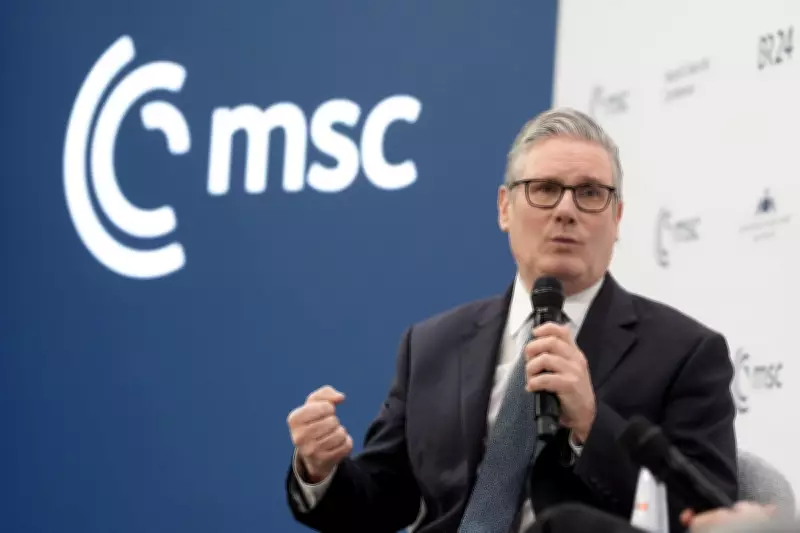
Speaking at the Munich Security Conference in an interview with the Sun on Sunday, Starmer delivered a pointed critique of the post-Brexit landscape. "We are not reversing Brexit, but we are turning our back on the Britain of the Brexit years that we've had for the last decade," the Prime Minister stated. He elaborated that this period has fostered a Britain that has "turned inward," struggling to assert itself and wield meaningful influence on either the world or European stage.
Starmer's comments come after what he described as the "worst week" of his tenure in Downing Street, marked by intense political pressure and internal party challenges. Despite this, he claimed to have "ended the week much stronger" than he began it. His vision includes moving the UK closer to the EU single market in specific sectors where mutual benefit exists, a notable policy shift just months before the tenth anniversary of the 2016 referendum result.

Addressing the Mandelson Ambassador Scandal
The Prime Minister directly addressed the controversy surrounding the appointment of Labour grandee Lord Peter Mandelson as US ambassador, conceding it was a "mistake." This admission follows two weeks of scandal that have engulfed the government, linked to Mandelson's associations with the convicted paedophile Jeffrey Epstein. The fallout prompted Scottish Labour leader Anas Sarwar to publicly call for Starmer's resignation, an attempt that ultimately failed as cabinet members rallied behind the PM.
"I won the leadership of the Labour Party when people said I wouldn't. I changed the Labour Party when people said I couldn't. I won an election when people said we wouldn't," Starmer declared, pushing back against suggestions he should quit. "And now I intend to change the country – whatever other people say." While refusing to list his errors "in rank order," he confirmed the Mandelson appointment was among them.
Further Leadership Challenges and Resignations
The political turbulence extended beyond the Mandelson affair, with fresh questions emerging about Starmer's judgement later in the week. A row erupted over the appointment of his former spin doctor, Lord Doyle, to the House of Lords, after it was revealed Doyle had campaigned for a paedophile councillor. This series of scandals led senior Labour women to criticise a perceived "boys' club" culture within Downing Street.
Additionally, the government witnessed a significant exodus of senior figures. Sir Chris Wormald, the head of the civil service, resigned amid criticism of negative briefings, becoming the third high-profile departure in a week. He followed Sir Keir's chief of staff, Morgan McSweeney, and communications director, Tim Allan, out of the door. These resignations have intensified scrutiny on the Prime Minister's leadership and the stability of his administration as he seeks to redefine Britain's post-Brexit relationship with Europe and secure his political future.