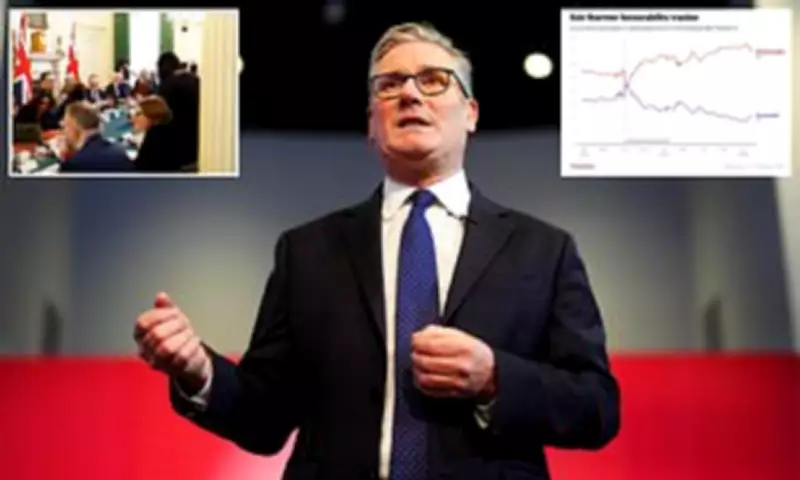
Prime Minister Keir Starmer is hoping for a temporary reprieve from the intense Labour Party turmoil today as he embarks on his latest international diplomatic mission. The Prime Minister is scheduled to arrive at the prestigious Munich Security Conference this afternoon, following a dramatic week where the Mandelson scandal nearly triggered his forced removal from Number 10 Downing Street.
Domestic Pressures Temporarily Eased
Senior aides within the Prime Minister's inner circle are cautiously optimistic that the shift in focus toward critical international security matters, combined with the fact that Members of Parliament have dispersed for a week-long parliamentary recess, might provide some breathing room. However, numerous political observers and Westminster insiders remain convinced that Sir Keir's days as Prime Minister are severely limited, with political rivals actively positioning themselves for a potential leadership challenge.
Immediate Political Threats
The looming Gorton & Denton parliamentary by-election represents a significant immediate threat, alongside the prospect of potentially disastrous local election results scheduled for May. These domestic political challenges continue to cast a long shadow over the Prime Minister's authority and future prospects.

Munich Security Conference Agenda
During his participation at the Munich Security Conference, Sir Keir is expected to launch a significant initiative advocating for enhanced Western cooperation regarding weapons development and procurement strategies. This diplomatic intervention follows recent tensions with the European Union, which has demanded substantial financial contributions from the United Kingdom for participation in its defense cooperation schemes.
The Prime Minister's schedule includes high-level meetings with German Chancellor Friedrich Merz and French President Emmanuel Macron this afternoon, followed by a major policy speech tomorrow morning. Notably, former United States President Donald Trump will not be attending the conference, though he has dispatched Secretary of State Marco Rubio as his representative.
Historical Context of US-European Relations
Last year's conference created significant controversy when US Vice President JD Vance delivered a speech strongly criticizing European nations, including the United Kingdom, regarding their approaches to free speech regulations and immigration policies. This historical context adds additional diplomatic complexity to the current gathering.
Balancing International and Domestic Priorities
Sir Keir returns to the international stage barely two weeks after concluding his diplomatic visit to China, and he remains acutely aware of growing public skepticism regarding his extensive international travel schedule. Senior advisors are reportedly developing a new strategic balance, aiming for approximately 20 percent of the Prime Minister's time dedicated to foreign affairs with the remaining 80 percent focused on pressing domestic matters.
In recent weeks, the Prime Minister has consistently emphasized the ongoing cost of living crisis during public appearances, attempting to demonstrate his connection with the everyday concerns of ordinary British citizens. One anonymous aide revealed to Politico that during the deepest moments of this week's political crisis, Sir Keir's primary objective was simply to reach the Munich conference intact.
Cabinet Silence and Survival Negotiations
The Prime Minister endured a tense 24-hour period of complete silence from his Cabinet ministers following the sudden departure of his chief of staff, Morgan McSweeney, on Sunday. Senior government figures only emerged to publicly support their leader when it became apparent that Scottish Labour leader Anas Sarwar was preparing to demand Sir Keir's resignation openly.
Political rumors continue to circulate regarding what political compromises and deals the Prime Minister might have negotiated to maintain his position, with some observers detecting signs of a policy shift toward more left-leaning positions and increased use of class-oriented political rhetoric.

By-Election Prospects and Internal Assessments
Labour Party sources have been attempting to project confidence regarding their prospects in the upcoming Gorton & Denton by-election, despite Reform Party and Green Party candidates expressing strong optimism about their chances. One Labour insider revealed to the Daily Mail that Number 10 advisors are conducting daily communication with local campaign teams on the ground.
The same source acknowledged that while the Mandelson scandal appears to have resonated with the broader British public, it does not seem to be a primary concern among voters contacted during door-to-door campaigning. "The current atmosphere feels positive," the insider added cautiously.
Polling Data and Political Realities
Another Labour Party insider highlighted recent polling data suggesting Sir Keir's personal approval ratings have shown modest improvement over the past month, though they remain at concerningly low levels. "I believe many individuals—not just parliamentary colleagues—may have peered over the political precipice and found the potential alternatives deeply unsettling," the source commented, reflecting on the recent leadership crisis.
The Munich Security Conference provides a brief international interlude, but the fundamental political challenges facing Prime Minister Keir Starmer await his return to Westminster, where his leadership will face continued scrutiny amid growing internal and external pressures.