Prime Minister Sir Keir Starmer has been accused of telling Barbara Windsor's widower he was 'too busy' to promote a treatment drive for Alzheimer's disease, in a revelation that has sparked outrage over government priorities.
GMB Appearance Highlights Funding Crisis
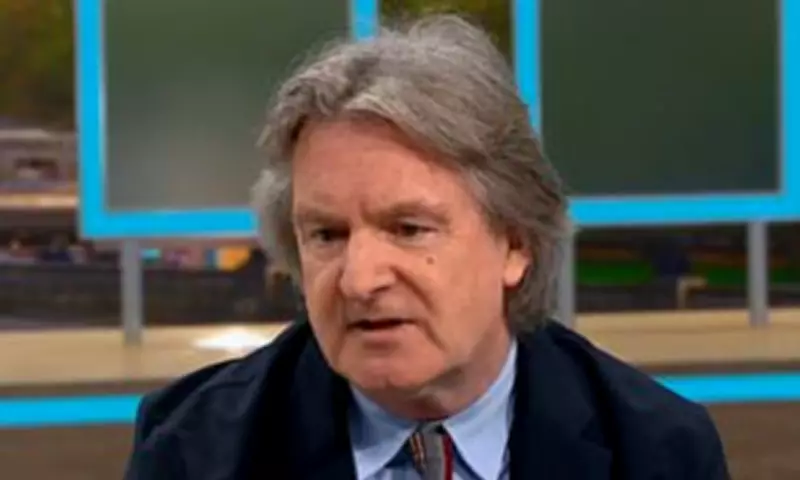
Martin Frizell, 67, appeared on Good Morning Britain today to discuss his wife Fiona Phillips's battle with Alzheimer's, diagnosed four years ago. The former This Morning editor spoke with hosts Susanna Reid and Ed Balls about Phillips's new book detailing her journey and urged greater government investment in finding a cure.
'I'm Too Busy' Allegation
Frizell explained he initially planned to skip press rounds for the book until speaking with Scott Mitchell, Barbara Windsor's husband, who has campaigned for better Alzheimer's research since Windsor died from the disease in December 2020 aged 83. Mitchell reportedly wrote to Starmer suggesting he participate in PR highlighting Britain's scientific work on treatments.

'The reply he got back was, "I'm too busy" type of thing,' Frizell revealed. 'Now, I just think it's appalling.' He then challenged former Labour politician Ed Balls: 'You're a politician, maybe you can explain why, because people keep asking me, why are we not putting more money into Britain's biggest killer?'
Dementia Deaths Outpaced COVID
Frizell highlighted how during the COVID-19 pandemic, dementia deaths exceeded COVID fatalities in the UK. Dementia is an umbrella term for severe mental decline affecting daily life, with Alzheimer's accounting for approximately 80% of the 982,000 UK cases. 'And yet remember how the world came together to find something to stop COVID. But it just seems to be that Alzheimer's is the poor relation to all the other big diseases certainly like cancer. The money is just not there,' he added.
Historical Underfunding
Ed Balls, who made a BBC documentary about Alzheimer's after his mother's diagnosis, agreed: 'You're totally right. And it's been like that for so long.' He noted that compared to cancer, Alzheimer's has been underfunded for decades, with little progress since the disease was named in 1910. Frizell pointed out that medication prescribed to his mother years ago, which doesn't always work, is still given to Fiona Phillips today.
Government Policy Criticisms
Frizell criticised recent Labour government changes affecting Alzheimer's patients and families. In July 2024, Chancellor Rachel Reeves cancelled the planned £86,000 cap on personal care costs in England, impacting families facing high dementia care expenses. In February 2025, Health Secretary Wes Streeting removed dementia diagnosis rate targets from NHS Operational Planning Guidance for 2025-6.
Frizell argued that scrapping diagnosis targets reduces early detection, which is crucial for effective treatments. 'If you're diagnosed early enough, all these treatments that are coming through, they're really only good if they can catch you early, a bit like cancer,' he said. Early diagnosis could also lower NHS costs, as one in four acute hospital beds are occupied by dementia patients.
Funding Disparity Example
To illustrate funding unfairness, Frizell shared a conversation with a top British scientist. When asked what she could achieve with £1 billion—the cost of one mile of HS2—she responded: 'I'm not sure we'd find the cure for Alzheimer's, but we'd certainly crack it. So you'd be able to live like you can now with HIV-AIDS or cancer.' She emphasized that such funding would enable hiring more researchers and advancing early diagnosis efforts.
Balls suggested the lack of progress might explain why government attention is scarce: 'If you're not making progress, it's harder to get the momentum.' The Daily Mail has approached Number 10 for comment on the allegations against Starmer.