Starmer's 14th Major Policy Reversal as Legal Challenge Forces Election Restoration
Prime Minister Keir Starmer faced fresh humiliation on Monday after being forced by Nigel Farage's Reform UK to abandon controversial plans to cancel local elections for millions of people. In what represents the 14th major U-turn of his troubled premiership, the Government announced it would proceed with votes in 30 local councils following a legal challenge that threatened court defeat.
Legal Pressure Forces Dramatic Climbdown
The shock decision came less than two hours after Sir Keir had insisted there would be no more embarrassing policy reversals during a live BBC Radio 2 interview. The Government has agreed to pay Reform's estimated £100,000 legal fees after lawyers appeared to concede that axing the elections would be ruled illegal in court.
This dramatic reversal means town halls across England now face a costly scramble to prepare polling stations and staff for elections on May 7th, less than three months away. The Ministry of Housing and Local Government confirmed the shift, stating: "Following legal advice, the Government has withdrawn its original decision to postpone 30 local elections in May."

Farage Demands Resignation Over "Democratic Victory"
Nigel Farage immediately called for Communities Secretary Steve Reed to resign over what he branded "a victory for democracy." Speaking to GB News, the Reform UK leader declared: "They knew they were going to lose in the High Court. Ministers have abandoned efforts to delay council elections in another extraordinary U-turn by Keir Starmer."
Farage emphasized the political implications, noting: "You can look at Norfolk, Suffolk, East Sussex and West Sussex and say these are Tory heartlands, but I think there's going to be a degree of punishment voting going on when these elections happen."
Political Fallout Across Party Lines
The decision spells potential trouble for both major parties, with polling suggesting Reform candidates could win many of the hundreds of additional council seats now up for grabs. Conservative leader Kemi Badenoch seized the opportunity, labeling the Government "a zombie government" engaged in "U-turn after U-turn after U-turn."
Labour insiders expressed despair at what one described as "death by a thousand self-inflicted cuts," while furious council leaders questioned whether the broader local government reorganization could still proceed smoothly. Councillor Richard Wright, chairman of the District Councils' Network, stated: "Council officers, councillors and local electorates will be bewildered by the unrelenting changes to the electoral timetable."
Election Details and Financial Implications
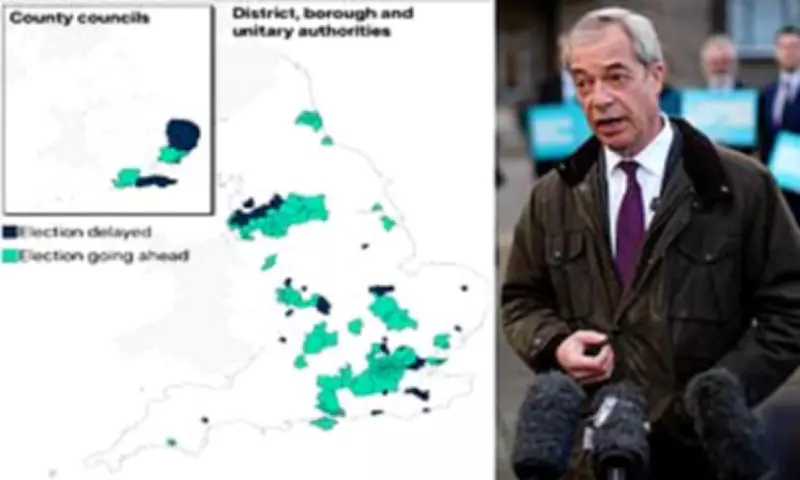
The affected elections span 30 councils across England, including:
- County councils: East Sussex, Norfolk, Suffolk, West Sussex
- District councils: Adur, Basildon, Burnley, Cannock Chase, Cheltenham, Chorley, Crawley, Exeter, Harlow, Hastings, Hyndburn, Ipswich, Lincoln, Norwich, Pendle, Preston, Redditch, Rugby, Stevenage, Tamworth, Welwyn Hatfield, West Lancashire, Worthing
- Unitary authorities: Blackburn with Darwen, Peterborough, Thurrock
Notably, 21 of these councils are currently Labour-controlled, representing more than two-thirds of the total. The Government has allocated £63 million to help councils manage the fallout from the chaotic reorganization, though questions remain about whether this will cover the sudden election preparations.
Broader Context of Starmer's Troubles
This latest reversal comes as Sir Keir teeters on the brink politically, having narrowly survived a coup attempt last week while losing key staff including chief of staff Morgan McSweeney and communications director Tim Allan. The Prime Minister had insisted during his radio interview that the public could be "absolutely" sure he would stick to his course, only for the election U-turn to emerge hours later.
The Electoral Commission had previously warned that the bar should be set "very high" for postponing local votes, while Steve Reed had argued delays were necessary to free up resources for what he called "the most ambitious reforms of local government in a generation."

With May's elections now widely seen as a litmus test for Starmer's survival prospects, this 14th U-turn represents both a legal defeat and a significant political embarrassment for a Prime Minister struggling to maintain authority and direction.