Starmer's Chief Strategist Steps Down Amid Diplomatic Appointment Crisis
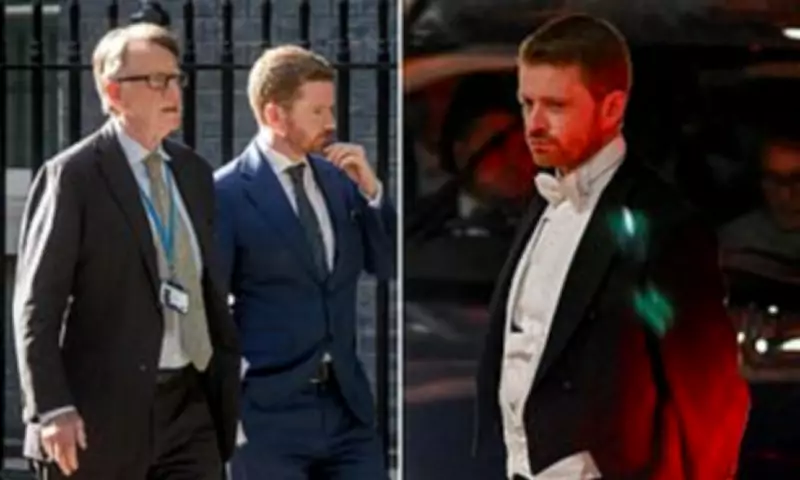
Morgan McSweeney, the influential chief of staff credited with orchestrating Keir Starmer's ascent to 10 Downing Street, has resigned from his pivotal position as a political crisis engulfs the prime minister's administration. The Cork-born strategist, long considered one of Starmer's closest confidants and a principal architect of Labour's decisive 2024 election landslide, formally stepped down on Sunday after accepting full responsibility for the controversial appointment of Peter Mandelson as Britain's ambassador to Washington.
A Sacrificial Move to Protect the Premiership
In a carefully worded statement, McSweeney declared the Mandelson appointment was wrong and had damaged our party, our country and trust in politics itself. He revealed that, when consulted, he had advised Starmer to proceed with the selection. In public life responsibility must be owned when it matters most, not just when it is most convenient, McSweeney wrote, explaining his decision to depart. Westminster insiders are interpreting his resignation as a deliberate attempt to contain the escalating fallout—a sacrificial maneuver designed to shield Starmer's premiership from mounting pressure.
Opposition parties and disillusioned Labour backbenchers have intensified their criticism following new revelations connecting Mandelson to longstanding scrutiny over his associations with the late financier Jeffrey Epstein. Although Mandelson was dismissed from the ambassadorial role last year, subsequent disclosures about his past and ongoing investigations have transformed the appointment into a political albatross for the government.
The Immense Influence of a Behind-the-Scenes Operator
McSweeney's influence within Westminster was profound; he was widely regarded as the power behind the prime minister's throne, driving strategy throughout Labour's years in opposition and helping to shape the party's policy direction and messaging in government. Prime Minister Keir Starmer has publicly thanked McSweeney for his dedicated service, praising his crucial role in rebuilding the party and securing the historic election victory. However, the loss of such a central figure at Number 10 is fueling intense speculation about Starmer's own political future as the crisis deepens.
From Irish Roots to Political Mastermind
Born in 1977 in Macroom, County Cork, Ireland, McSweeney hailed from a conventional Irish family. His father, Tim McSweeney, served as a senior partner in an accounting firm, while his mother, Carmel McSweeney, managed the local bridge club. After relocating to London as a youth, McSweeney undertook various jobs, including work on construction sites, before immersing himself completely in British politics.
His political journey commenced in earnest during the late 1990s when he joined the Labour Party in 1997, partly motivated by its support for the Good Friday Agreement. McSweeney rapidly developed his skills in political organizing through several key roles:
- Working in Labour's renowned attack and rebuttal unit at Millbank
- Campaigning in marginal constituencies during the 2005 general election
- Playing an instrumental part in Labour regaining control of Lambeth Council from opposition parties
Following Labour's 2010 general election defeat, McSweeney assumed leadership of the Labour Group Office at the Local Government Association, gaining deeper expertise in party operations and strategic planning. In 2017, he co-founded and served as director of the influential Labour Together think tank, with a mission to reposition the party away from the hard left and build support for a more centrist, electable Labour platform.
The Starmer Partnership and Ultimate Downfall
His close association with Keir Starmer solidified after Starmer secured the Labour leadership in April 2020. McSweeney initially became Sir Keir's chief of staff in opposition, helping to shape campaign strategy and implement internal party reforms. He later served as Labour's director of campaigns, and after Labour's landslide victory in the 2024 general election, he was appointed head of political strategy at 10 Downing Street before succeeding Sue Gray as chief of staff in October 2024.
Throughout this period, political commentators consistently described him as one of the most influential figures in British politics, despite his preference for operating behind the scenes. In June 2024, New Statesman ranked McSweeney as the most influential person shaping left-wing politics in the United Kingdom. His abrupt departure now leaves a significant void in Starmer's inner circle and raises serious questions about the government's stability moving forward.