Starmer's 'Man Problem' Exposed as Female MPs Demand Culture Change in Downing Street
Prime Minister Keir Starmer is facing mounting pressure from within his own party to address what critics are calling a "man problem" in his government, rather than a "women problem." The recent clear-out of key backroom figures, including Morgan McSweeney and communications chief Tim Allan, may signal a turning point, but female Labour MPs argue that deeper cultural shifts are urgently needed to transform the political landscape.
Harman's Call for Turbocharged Change
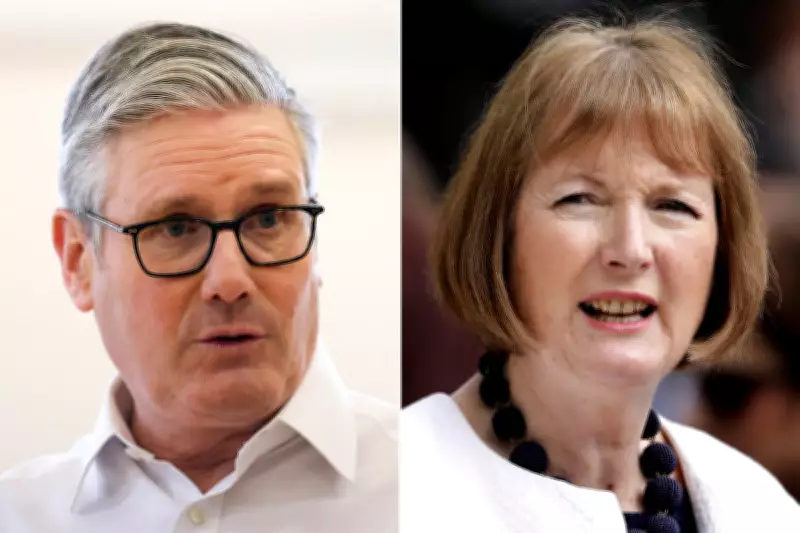
Harriet Harman, one of Labour's most respected senior figures, has emerged as a vocal advocate for reform. In a meeting with the Parliamentary Labour Party, she emphasised the necessity for a complete culture change, urging Starmer to install a woman into the reinstated position of first secretary of state. Harman described this move as a "really powerful" way to turbocharge and transform the political culture surrounding women and girls, highlighting a glaring blind spot in current decision-making processes.
The controversy surrounding Peter Mandelson's appointment has intensified these concerns. Despite his known friendship with convicted sex trafficker Jeffrey Epstein, Mandelson was given a significant role, revealing a failure by Starmer and his inner circle to prioritise victims' perspectives. Harman's intervention underscores a simmering rage over this oversight, with many questioning whether such missteps would have occurred if more women had been present in key discussions.
Revelations and Missteps from Number 10
Further details have emerged that exacerbate the situation. Former communications chief Matthew Doyle, another Labour peer and Mandelson protégé, campaigned on behalf of a friend charged with possessing indecent images of children. Starmer was forced to apologise to the Commons, admitting that Doyle, like Mandelson, did not provide a full account of his actions. This has led to speculation that vetting processes were inadequate, possibly due to a "boys' club" mentality that failed to ask critical questions.
Against this backdrop, a flotilla of female Labour MPs has made their voices heard. Natalie Fleet, MP for Bolsover, who became pregnant after being groomed and raped as a teenager, called for a national inquiry into crimes similar to those of Epstein, reminding the government that British police officers had taken bribes to cover up such behaviour. Despite promises of victim-centred policies, the government has yet to commit to such an inquiry, highlighting a pattern of hesitation that frustrates advocates.
The Struggle for Female Representation
Government minister Alison McGovern has bluntly stated that the political culture does not properly hear women, a factor she believes contributed to Mandelson's hiring. This sentiment is echoed by veteran commentators who have long criticised the lack of women at the top of decision-making structures. The glacial pace of change and ongoing abuse of women have sparked unprecedented levels of female fury, with many questioning why, a century after gaining the vote, female voices remain marginalised in politics.
However, simply appointing a lone woman to a senior role may not suffice. Angela Rayner served as deputy prime minister for over a year but was often kept in her lane, with her influence deliberately limited. Unlike figures such as John Prescott in Tony Blair's government, who enjoyed more leeway despite controversial actions, Rayner's energy and charisma were seemingly stifled by a male-dominated environment.
Broader Implications and Calls for Action
Other prominent women, including Emily Thornberry and Jess Phillips, have also been sidelined or locked out of crucial conversations under Starmer's leadership. Instead, the prime minister appears more comfortable with figures like Rachel Reeves, who are perceived as less intimidating to the establishment. This dynamic reflects a historical trend where strong women with forthright opinions are often marginalised in favour of more conformist voices.
With International Women's Day approaching, there are growing calls for symbolic actions, such as a work stoppage inspired by Iceland's 1970s protests, to highlight gender inequality. Beyond politics, statistics reveal persistent disparities: women entrepreneurs receive only 2 per cent of venture capital funding, and just six women run FTSE companies. The corporate world often favours young, "pleasing" women, leading to a significant brain drain of older, experienced female professionals.
The Need for Diverse Decision-Making
Research consistently shows that more diverse teams make better decisions, yet key sectors—from politics and business to law and tech—remain dominated by men. This imbalance leads to blind spots, as seen during the Covid-19 pandemic when amusement parks were prioritised over schools, and in the financial crisis, where IMF chief Christine Lagarde famously remarked that "Lehman Sisters" might have averted disaster.
Starmer promised transformative change upon taking office. To fulfil this pledge, he must actively incorporate more female voices into the highest echelons of power and ensure they are genuinely heard. As Eleanor Mills, founder of Noon.org.uk, concludes, it is time for deeds, not words, to drive progress toward a more equitable and effective government.