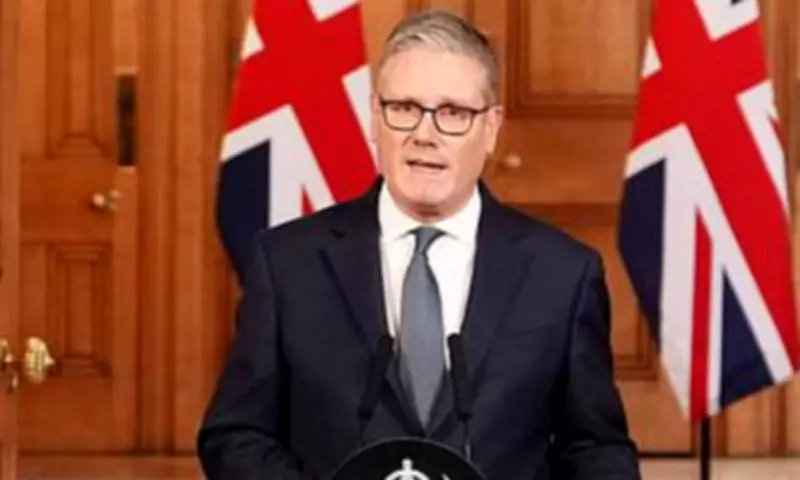
As global tensions escalate toward a potential conflict of monumental scale, expectations for Prime Minister Keir Starmer to articulate a definitive stance appear increasingly unmet. His recent address from Downing Street on Saturday left observers perplexed regarding Britain's position on the US-led military strikes targeting Iran. While condemning the Tehran regime as 'utterly abhorrent,' Starmer simultaneously emphasised that the United Kingdom 'played no role' in the assault, creating a contradictory narrative that failed to clarify governmental support.
Government Evasiveness Fuels Confusion
The ambiguity deepened when Defence Secretary John Healey, questioned repeatedly today, declined on six separate occasions to provide a straightforward answer about whether the Government endorsed the strikes. This evasiveness has led to widespread bewilderment, with many questioning whether Number Ten possesses any coherent opinion on the critical matter. The lack of clarity undermines public confidence during a period of international instability.
Strained US Relations and Diplomatic Implications
Compounding the issue, reports indicate that Sir Keir engaged in only a brief conversation with former President Donald Trump following the attacks. This limited interaction suggests a perceived lack of respect from Washington, casting doubt on the much-vaunted 'special relationship' between Britain and the United States. Diplomatic observers note that such minimal engagement could weaken the UK's influence in global security discussions.

Historical Context and Contemporary Threats
Nobody disputes the complexity of Middle Eastern geopolitics. Western attempts to destabilise despotic regimes have historically yielded disastrous outcomes, as evidenced by past interventions. However, Iran has represented a persistent and severe threat since Ayatollah Khomeini's rise to power in 1979. The nation remains a central hub for global terrorism, implicated in the deaths of countless individuals across decades of conflict.
Leadership Vacuum in Critical Moments
With the potential for regime change in Tehran emerging for the first time in decades, coherent messaging from key Western powers is essential. Despite clear indications that strikes were imminent, Sir Keir has seemingly been unable to formulate and communicate a decisive position. His Saturday statement, delivered via autocue, portrayed him less as a national leader and more as a detached commentator, lacking the gravitas expected during international crises.
Strategic and Political Considerations
Sir Keir appears to have overlooked Britain's role as NATO's second-largest member. With allies like Canada and Australia openly supporting the US strikes, there is a compelling argument for the Prime Minister to have already announced the deployment of British military assets to the Gulf region. Instead, his legalistic focus on international law minutiae and efforts to placate both restless backbenchers and Labour's Muslim voter base have resulted in perceived indecision.
The Perils of Ambiguity
Starmer's reluctance to take a firm stand in this crisis risks portraying him as a leader attempting to appease all sides simultaneously. This approach may ultimately erode trust across the political spectrum, leaving him isolated and ineffective. In times of global uncertainty, clear leadership is paramount, and the current ambiguity threatens to diminish Britain's stature on the world stage.