Poet Alleges 'Cancellation' Over Gender-Critical Views in Legal Challenge
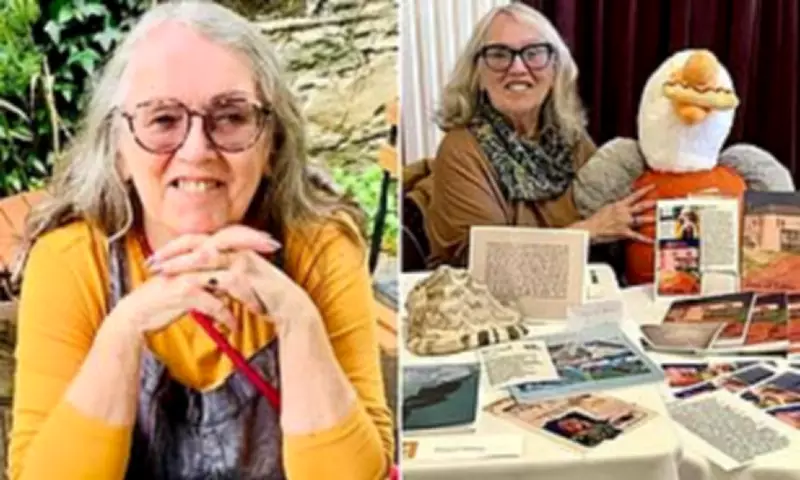
Legal papers have been filed alleging that a taxpayer-funded arts publication 'cancelled' a poet due to her 'problematic' gender-critical beliefs. Lawyers representing Abigail Ottley, a 73-year-old award-winning poet from Penzance, Cornwall, have accused Arts Council England (ACE) of failing to properly investigate her complaint against The Aftershock Review (TAR).
Publication Withdrawal and Social Media Scrutiny
The controversy began when Ms Ottley submitted a poem for TAR's first issue. On September 18, she was informed her work had been selected for publication. However, on October 14, she received notification that her poem had been withdrawn following an 'internal review.' An email from the publication stated: 'In light of concerns raised about your social media presence, we've decided not to proceed with publishing your work in this issue.'
The email continued: 'As a trauma-informed and inclusive publication, The Aftershock Review has a duty of care to ensure our contributors and readers feel safe and respected. This decision reflects our commitment to those principles and is final.' Ms Ottley, who describes herself as a trauma survivor having been groomed, raped, and shot in the eye in her early teens, told the Daily Mail the decision was 'triggering.'

Gender-Critical Beliefs and Legal Arguments
Ms Ottley holds the belief that biological sex is immutable and entirely separate from 'gender identity.' She has explained that her views were shaped by personal experiences, including what she describes as an abusive marriage with a 'cross-dresser who sought to pass as a woman.' This, she says, encouraged her gender-critical perspective, particularly regarding 'the need for women to have safe and single sex spaces.'
On social media, Ms Ottley has retweeted posts by prominent women's rights campaigners including J.K. Rowling. The pre-action letter from law firm Conrathe Gardner argues: 'While Ms Ottley has used her social media accounts to re-tweet posts by high profile campaigners for women's rights and single sex spaces, which she considers are invaluable for women's safety privacy and dignity, including for example J.K Rowling, this is not and cannot be a lawful reason to refuse to publish Ms Ottley's poetry.'
Arts Council Funding and Complaint Process
The Aftershock Review had received a £32,300 National Lottery Project Grant from ACE in early 2023, with Ms Ottley contributing to a crowdfunding campaign to help launch the publication. After her poem was withdrawn, she contacted Freedom In The Arts (FITA), an artists' network campaigning for freedom of expression.
FITA lodged a formal complaint with ACE on November 20, arguing that as a recipient of National Lottery funding, TAR was bound by Arts Council terms requiring compliance with equality law and prohibiting discriminatory conduct. The complaint raised 'serious concern' that the decision to withdraw Ms Ottley's work was based on her 'protected belief' under the Equality Act that sex is immutable.
Dismissal and Further Funding
On January 28, ACE dismissed the complaint, stating they had not found a breach of funding conditions. Notably, on the same day, the organization awarded an additional £60,000 to The Aftershock Review. Ms Ottley's solicitors issued a pre-action letter to ACE on February 24, ahead of a proposed judicial review.
The former teacher expressed her frustration: 'I am tired of women like myself having to self-censor to avoid being 'silenced' or 'excluded.' She added: 'It is outrageous that Mr Wallis should be able to pick and choose in the matter of which survivors' voices should be published and heard; likewise it is wrong that Arts Council England should permit this to happen. It is as if the traumas of gender critical people are regarded as being less worthy.'
Broader Implications for Artistic Freedom
The legal papers highlight ACE's 'Let's Create' strategy, which includes 'Inclusivity' as one of its investment principles. The pre-action letter argues: 'Here inclusivity cannot possibly mean 'inclusivity' of only those whose opinions we agree with, it must be inclusivity of a diversity of lawful ideas: including gender critical ones.'

Denise Fahmy, co-director of FITA, commented: 'The Arts Council has a duty to uphold the law impartially and to protect artistic freedom for all, not just for those whose views are currently fashionable. This case raises serious questions about whether public funding bodies are adequately safeguarding viewpoint diversity and compliance with equality law.'
An ACE spokesman said: 'We will not comment further at this stage, as legal proceedings are ongoing.' The Aftershock Review was contacted for comment but has not responded publicly to the allegations.