SNP Ministers Accused of Staggering Cover-Up Over Hospital Infections
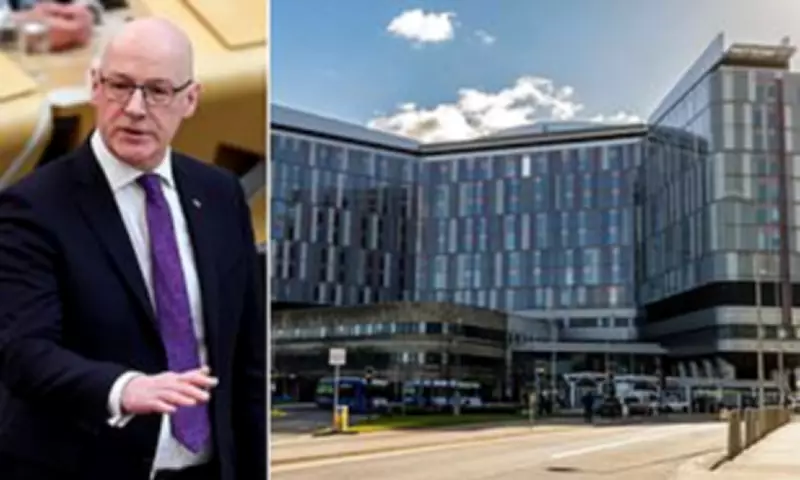
First Minister John Swinney and Health Secretary Neil Gray have been accused of orchestrating a deliberate cover-up after it emerged they knew patients were being treated for fungal infections in a contaminated cancer ward while publicly insisting Scotland's £1 billion superhospital was completely safe. Newly obtained documents reveal the ministers were informed about two confirmed cases of hospital-acquired fungal infections on February 26, yet failed to disclose this critical information to the public or parliament for weeks.
Secret Infections Revealed Through Freedom of Information
Documents obtained under Freedom of Information legislation by the Scottish Mail on Sunday show that on February 26, 2026, both Swinney and Gray were urgently notified about an amber healthcare infection alert concerning Ward 4B at the Queen Elizabeth University Hospital in Glasgow. This ward specializes in treating bone marrow transplant patients, some of Scotland's most vulnerable individuals.
The official correspondence confirms the incident related directly to "water ingress and cases of fungal infection in ward 4B" and explicitly states: "Since February 1, 2026, there have been 2 microbiologically confirmed cases of fungal infection and two possible cases." The infections were identified as Exophiala dermatitidis and Mucor velutunosus, both potentially serious fungal pathogens.

Public Declarations of Safety Contradict Private Knowledge
Despite this knowledge, when questioned about room closures on the ward during First Minister's Questions on March 5, Swinney told parliamentarians: "It is important that I put that on the record that, fundamentally, the clinical consensus is that the wards in question are safe." This statement came less than a week after he had been informed about the confirmed infections.
Similarly, Health Secretary Neil Gray confirmed to parliament on March 12 that mould had been detected from swabs taken on the ward but made no mention of patient infections. NHS Greater Glasgow and Clyde bosses also failed to disclose the infections when directly questioned by journalists on March 7 about why they had issued a healthcare infection alert.
Political Outrage and Accusations of Systematic Deception
Scottish Labour deputy leader Jackie Baillie branded the revelations "staggering" and accused SNP ministers of continuing "to lie to journalists and MSPs about this." She stated: "After years of cover-up from SNP ministers about the QEUH, and the damage that has brought with it, anyone would think this government would have learned its lessons. However, it appears that the SNP are continuing to take the same approach as they have for years – covering up serious issues and refusing to disclose crucial information to the public."
Scottish Tory health spokesman Dr Sandesh Gulhane added: "This is damning evidence of yet more secrecy and cover-up from SNP ministers. They were fully aware more patients at this hospital had acquired infections and were clearly at risk but the public and Parliament were shamefully kept in the dark."
Families Left in the Dark About Ongoing Risks
The controversy has particularly affected families who have already suffered losses at the hospital. Maureen Dynes, whose husband Tony died in 2021 after contracting two infections while being treated for lymphoma on Ward 4B, expressed her devastation: "Since Tony's death, the government and health board has told us time and again that the hospital is safe. Now we learn that patients are still getting these unusual fungal infections, in the same ward Tony was in, at the same time they are investigating problems with water and mould. History is repeating itself."
She continued: "On top of this, we are having to learn through the media about these issues. Not once was there mention of patients being infected during all of this when the NHS and Scottish Government were questioned about it. So much for culture change and transparency. I plead with the government and NHSGGC to take action now before more families suffer like mine has."

Health Board Defends Information Withholding
NHS Greater Glasgow and Clyde defended its decision not to disclose the infections, with a spokeswoman claiming they "do not provide information on individual patients or small groups of patients when numbers are below five...to ensure patient information is kept confidential." The board insisted its public statement "explained key facts about the safety of Ward 4B" and rejected "any suggestion there has been an attempt to minimise its seriousness."
A Scottish Government spokeswoman offered a more conciliatory tone: "As Ministers have previously stated, they are deeply sorry for the issues patients have experienced at the QEUH and all that families have gone through. The Scottish Government is in close contact with NHS GGC in relation to Ward 4B and receives regular updates to maintain an accurate picture of any ongoing developments."
However, opposition politicians remain unconvinced, with Dr Gulhane insisting: "Whistleblowers are still telling us that this hospital is still unsafe for patients. John Swinney and Neil Gray cannot continue to hide behind an independent inquiry. They must tell Scots the truth about what has gone badly wrong at the Queen Elizabeth University Hospital."