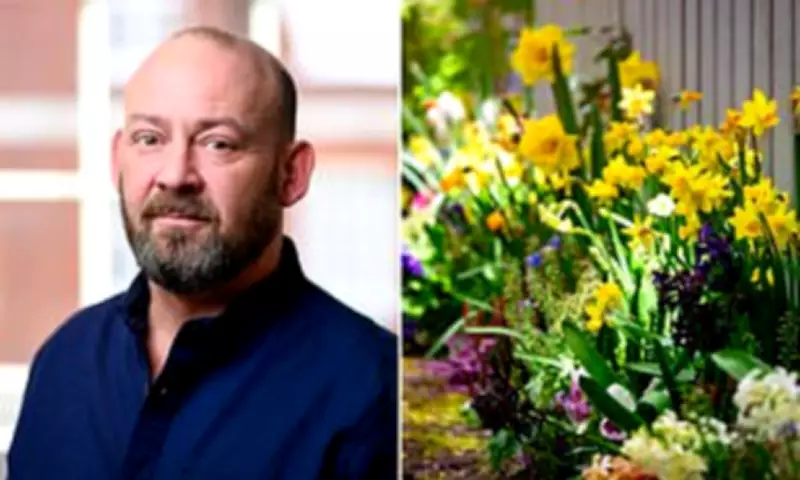
As Easter approaches, Reverend Giles Fraser prepares his annual sermon, seeking divine inspiration beyond the confines of his church. Just a few hundred yards from his parish, he wanders through the renowned Kew Gardens, leaving behind flower arrangers and choir practice for a gentle stroll among nature's awakening splendor.
The Garden as Living Testament
The blossom is now in full display—cherry, magnolia, and blackthorn creating a vibrant tapestry against the spring sky. The woodland floors are generously carpeted with delicate bluebells, their azure hues painting the earth with hope. "You can just feel the whole place bursting into colour," observes Fraser, marveling at how this natural spectacle proclaims the wonder of new life more eloquently than any pulpit discourse ever could.
Reflecting on the seasonal transformation, he notes how just months ago, everything lay hidden beneath hard, cold earth—a winter's tomb. Now, the miracle of existence has spectacularly exploded before human eyes. "Nature doesn't struggle for words to describe the miracle of resurrection," Fraser remarks, finding in this cyclical rebirth the essence of Easter's message.

Biblical Roots in the Soil
"L'chaim," Fraser says, borrowing the Hebrew toast to life favored by Jewish friends. For him, this simple phrase captures the Bible's core message. The narrative begins with Genesis, a glorious ode to existence itself, celebrating the goodness of creation as God breathes life into everything. Human beings are originally placed within a garden—an earthly paradise—before their subsequent fall.
"Adam, the first human, derives from the Hebrew word for soil, earth," Fraser explains. "In the story, God takes a handful of earth, shapes it into human form, and breathes into his nostrils the breath of life." Thus, the garden represents where everything begins, where all things come alive and flourish.
Life's Triumph Over Death
Throughout the Old Testament, Fraser observes, the Jewish people persistently struggle to assert life against overwhelming threats. Even Temple sacrifices, when properly understood, celebrate life—priests offering back to God the life-gift bestowed upon humanity. "All things come from you O Lord and of your own do we give you," he quotes, highlighting this reciprocal relationship.
The New Testament continues this celebration, directly confronting death as life's apparent contradiction. "Easter says no, even death cannot defeat God's insistence on the power of life," Fraser declares. "Life is stronger than death. That's the bones of every Easter sermon. That's why Christians celebrate. L'chaim, to life."
Gardens Across Faiths and Cultures
This message, Fraser argues, extends far beyond church walls, preached by creation itself through bluebells and blossom. He references a poignant moment in John's Gospel where the resurrected Jesus first appears to Mary Magdalene, who initially mistakes him for a gardener. "The wonderful subtlety is that Mary is also right—he is indeed a gardener," Fraser notes. "Human beings were expelled from paradise, from the Garden of Eden, and here the author of life invites them back in. The garden is the holiest of places."
This sanctity transcends Christianity. Islamic gardens, with their calm shades and running water, offer restful sanctuary. Tranquil Zen gardens encourage meditation. For centuries, monks across traditions have learned as much about God in gardens as in formal worship spaces.
Universal Spiritual Connection
One need not be religious to experience this connection. "On your knees, hands in the dirt, coaxing existence from seeds and caring for green shoots—this is the most faith-adjacent activity there is," Fraser suggests. Planting represents hope, an investment in the future. Even children nurturing cress seeds in egg boxes with wet cotton wool experience wonder at life's miracle.
"The delight they take in these sprouts reflects something deep within us, an alignment with a world that throbs with life," he says. "Here is the Bible's story sat on our kitchen windowsill." Whether tending an allotment, parkland, or a high-rise window box, gardens provide spiritual enrichment for millions.

Political and Environmental Challenges
Indeed, approximately one-third of the UK population considers themselves regular gardeners, making gardening more popular than concerts, cinema, or sports. "Those who love gardens are an untapped resource in fighting for a greener, more life-filled future," Fraser asserts. Yet political parties often betray this natural instinct.
He criticizes the Green Party for focusing more on Middle East politics than planetary health, and the Conservatives for losing their conservation instinct. "Twenty years ago, David Cameron rebranded the party using an oak tree logo, but this signaled little in conservation terms," Fraser observes.
Kew Gardens' Climate Struggle
At Kew Gardens, preparations are underway for a warmer future threatening native trees. Fraser's parish claims exceptional biodiversity, with trees and plants from across the globe, including one planted around 1762. However, scientists modeling weather patterns warn that over half of Kew's 11,000 trees may not survive this century.
In fifty years, Britain's climate may resemble southern Europe's, prompting plans to plant heat-tolerant species. "Native oaks, like that on the Conservative logo, may become a thing of the past," Fraser laments.
Hope and the Overview Effect
Despite challenges, hope persists. Fraser highlights the Artemis mission, a spacecraft named after the Greek nature goddess, heading toward the Moon—a testament to scientific achievement. Early astronauts spoke of the "overview effect," gaining profound appreciation for Earth's fragility and life's preciousness when viewing our planet from space.
"In church, we celebrate this overview effect at Easter," Fraser says. "It's a big-picture story where a man crucified on a tree two millennia ago returns from the grave to give life to all."
Finding Cosmic Stories Close to Home
"You don't need space travel to appreciate this story's cosmic nature," he concludes. "Go into your garden. Sit quietly. Consider the birds of the air and lilies of the field. Once more, life is renewed. Alleluia!"