Swinney Defends Lord Advocate's Briefings on Sensitive Cases as 'Entirely Appropriate'
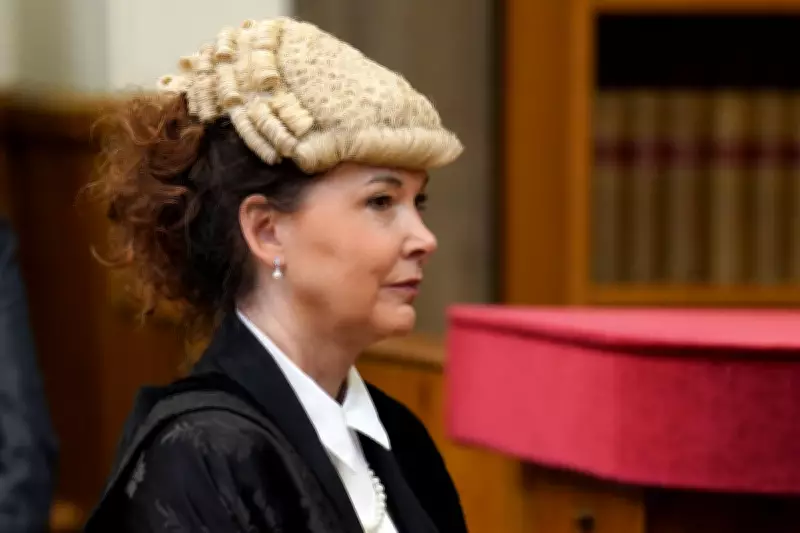
First Minister John Swinney has robustly defended the practice of Scotland's top law officer briefing him on sensitive court cases, describing it as 'entirely appropriate' and part of a long-standing governmental tradition. The controversy erupted after revelations that Lord Advocate Dorothy Bain provided Swinney with details about the embezzlement charge facing former SNP chief executive Peter Murrell nearly a year before this information became public knowledge.
Timeline of Disclosures Sparks Political Row
Fresh documents published by the Crown Office and Procurator Fiscal Service this week confirmed that Bain briefed Swinney on the Murrell case in March 2025, approximately ten months before the details emerged publicly in February 2026. This followed previous disclosures that she had also provided information in January of this year, prompting intense questioning from opposition leaders at Holyrood.
The Scottish Conservatives have accused Swinney of receiving 'secret information' about what they term a 'highly sensitive' case against Murrell, who is the former husband of ex-First Minister Nicola Sturgeon. Opposition critics have labeled this practice as giving the SNP leader an unfair political advantage.

Swinney's Justification for the Briefings
Speaking to the Press Association during a visit in Edinburgh, Swinney elaborated on his defense of the Lord Advocate's actions. 'There is a long-standing tradition from both the current Lord Advocate and her predecessors of advising the first minister of sensitive cases that the first minister may be asked to comment on in public,' he stated.
The First Minister explained that his role involves conducting media interviews 'on a daily basis' and that he is 'regularly asked questions about current and live topics.' He emphasized that the briefings serve a crucial protective function: 'The Lord Advocate takes the view, properly in my view, that the First Minister needs to be advised of the status of particular issues, so that I don't inadvertently say anything that can damage any cases that have been taken forward.'
Swinney further asserted: 'That's a long standing principle. The Lord Advocate has applied it in this particular issue and in other issues and it is an entirely appropriate course of action for the Lord Advocate to take.'
Growing Pressure to Reform the Lord Advocate's Dual Role
The confirmation of these briefings has intensified calls for the Scottish Government to reconsider the dual nature of the Lord Advocate's position. Currently, the Lord Advocate serves both as an adviser to ministers within the Scottish cabinet and as the country's most senior prosecutor, a structure that critics argue creates potential conflicts of interest.
Swinney acknowledged that the government is examining this issue, noting that the dual role was established by the Scotland Act of 1998, which he described as 'a reserved piece of legislation.' Despite this constitutional framework, he revealed that the Scottish Government has 'undertaken research work by commissioning analysis of the issues around the holding of the dual role of the Lord Advocate.'
'Ministers are currently considering that research report and we will set out what further steps will be taken in due course,' Swinney added, indicating that potential reforms may be forthcoming after careful review of the commissioned analysis.
Broader Implications for Scottish Governance
This controversy highlights ongoing tensions within Scotland's devolved governance structures, particularly concerning the intersection of legal independence and political accountability. The case raises fundamental questions about:

- The appropriate boundaries between legal proceedings and political awareness
- Transparency in governmental communications about ongoing investigations
- The practical implications of the Lord Advocate's dual responsibilities
- Public confidence in both the prosecution service and political leadership
As the Scottish Government continues its review of the Lord Advocate's role, this incident serves as a focal point for broader discussions about legal reform and governmental transparency in Scotland's evolving political landscape.