First Minister's Waspi Meeting Sparks Controversy Over Women's Rights
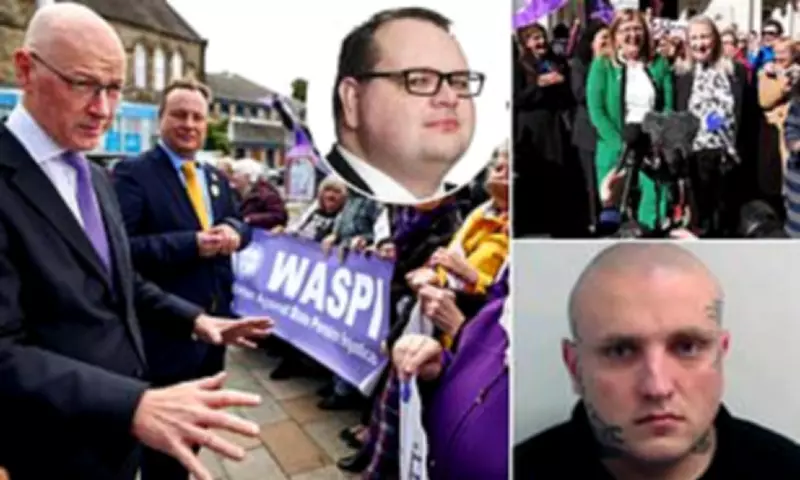
First Minister John Swinney has finally demonstrated his understanding of what constitutes a woman, according to critics who view his recent engagement with Waspi campaigners as a calculated political maneuver rather than substantive policy action. The Scottish National Party leader convened a meeting with representatives from the Women Against State Pension Inequality movement on Thursday, where he publicly reaffirmed his support for their longstanding compensation campaign.
During the gathering, Swinney declared: 'It represents a shameful situation that Labour initially promised these women the compensation they rightfully deserve, only to abandon that commitment once in government. The Scottish National Party takes pride in standing alongside Waspi women, and we will continue to advocate vigorously for the justice they are owed.'
Political Theater Versus Practical Solutions
Observers have noted the convenient timing of this meeting, occurring shortly before an election period and complete with photographic documentation. This has led to accusations that Swinney's definition of womanhood appears to be an adult human photo opportunity rather than a genuine commitment to addressing systemic inequalities.

The fundamental contradiction lies in the Scottish Government's position: while the SNP administration expresses solidarity with Waspi women regarding pension age equalization grievances, it simultaneously maintains authority to address such concerns directly. Critics argue that if Scottish ministers genuinely believe women have been treated unfairly through pension reforms, they possess the capability to provide compensation immediately.
Although pension policy remains a reserved matter under Westminster jurisdiction, the UK government has effectively distanced itself from the Waspi compensation issue. Given the Scottish Government's demonstrated willingness to involve itself in other reserved policy areas—including constitutional matters, foreign affairs, and international development—skeptics question why similar intervention isn't pursued for pension justice.
Pattern of Political Opportunism
This situation mirrors previous controversies surrounding the two-child benefit cap, where Nationalist politicians voiced strong opposition to the policy's perceived injustices but declined to allocate Scottish resources to mitigate its effects. The pattern suggests a tendency to exploit issues for political advantage while avoiding substantive responsibility for resolution.
The Waspi meeting served primarily to generate favorable imagery of the First Minister engaging sympathetically with middle-class women during an election buildup—listening attentively, smiling warmly, and nodding with solemn understanding. This carefully curated presentation aims to cultivate Swinney's public persona as a decent, honest leader championing wronged women.
Prison Policy Contradictions
However, Swinney's professed feminist advocacy reveals significant inconsistencies, particularly regarding Scotland's prison system. While posing with Waspi campaigners, his government maintains a policy permitting the Scottish Prison Service to house male prisoners who identify as transgender within female facilities on a case-by-case basis.
This approach represents a modification of previous arrangements that typically assigned prisoners according to their declared gender identity. The policy change followed public controversy surrounding Isla Bryson—a transgender double rapist initially placed in a women's prison—which contributed to Nicola Sturgeon's political difficulties.
The current framework introduces concerning subjectivity into prisoner placement decisions while failing to address fundamental safety concerns. Feminist organization For Women Scotland, which secured a landmark Supreme Court ruling clarifying the definition of 'sex' in equality legislation, is now challenging the legality of Holyrood's prison policy in court.

Balancing Rights and Safety
The Scottish Government has defended its position by arguing that restricting women's prisons to biological females exclusively would violate certain prisoners' rights. Legal representatives have raised concerns about suicide risks among transgender-identifying males if housed in men's facilities, describing such potential outcomes as 'wholly unacceptable.'
While acknowledging the genuine vulnerability of transgender prisoners in male institutions, critics contend that transferring these risks to female prisoners represents an unreasonable solution. This approach essentially makes women's safety and dignity conditional upon accommodating a small number of male prisoners, creating an unacceptable rights balancing equation.
Vulnerable Female Prisoners
Female inmates in Scotland represent one of the nation's most vulnerable populations. A 2021 University of Glasgow study revealed that four in five incarcerated women have experienced significant head injuries, with 89 percent resulting from domestic abuse situations. Nearly half have suffered sexual abuse as adults, while a majority endured childhood predation.
These women have experienced profound safety and dignity deficits throughout their lives, yet the limited protections afforded within custody are now potentially compromised in the name of compassion for others. The Scottish Government currently incarcerates fewer than twenty transgender-identifying prisoners, but as this number increases, so will the proportion placed in female facilities—escalating risks and creating opportunities for ill-intentioned males to victimize women in confined environments.
Alternative Solutions Ignored
A more equitable approach would involve establishing dedicated facilities for male offenders who identify as transgender, ensuring their safety and dignity while simultaneously protecting female prisoners from being incarcerated alongside men. However, the Scottish Government appears disinterested in such practical solutions, instead prioritizing ideological projects favored by progressive activists within civil service structures, special adviser networks, government-funded organizations, and academic institutions.
The underlying issue transcends transgender rights specifically, representing instead the pursuit of fashionable causes by intellectually shallow elites. At the center of this 'midwitocracy'—government by dilettantes—sits First Minister John Swinney, who reportedly doesn't genuinely believe men belong in women's prisons yet remains captive to the preferences of younger ministers and advisers surrounding him, lacking the principled conviction to impose his own standards on government policy.