Tarique Rahman's Dramatic Return to Power in Bangladesh
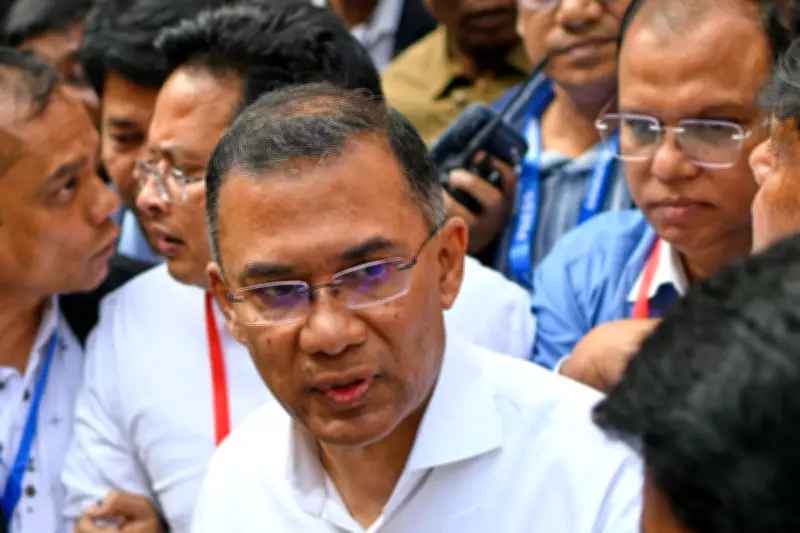
In a stunning political reversal, Tarique Rahman is poised to become Bangladesh's next prime minister, marking an extraordinary comeback for the Bangladesh Nationalist Party (BNP) leader who spent nearly two decades in self-imposed exile in London. This victory represents a significant personal and political triumph for the 60-year-old scion, who follows in the footsteps of his parents, both former leaders of the nation.
Election Victory and Political Transformation
The Bangladesh Nationalist Party, under Rahman's leadership, has declared a landslide win in the country's first election since the 2024 student-led uprising that ousted long-time premier Sheikh Hasina. While the Election Commission has yet to announce final results, multiple local media outlets have confirmed the BNP's parliamentary majority, sufficient to form a government independently.
This electoral success caps a remarkable journey for Rahman, who left Bangladesh in 2008 citing medical needs after his release from detention under a military-backed caretaker administration. His return home last Christmas was met with a hero's welcome, following the youth-driven uprising that removed his political rival from power.

Family Legacy and Political Rivalry
Rahman enters a political arena long dominated by two powerful women: his mother, Khaleda Zia, and his rival, Sheikh Hasina, now in exile in New Delhi. His father, Ziaur Rahman, was a leading independence figure who ruled Bangladesh from 1977 until his assassination in 1981.
The new prime minister-elect has pledged to recalibrate Bangladesh's international partnerships, seeking to attract investment without aligning too closely with any single power—a clear departure from Hasina's perceived closeness to New Delhi.
Policy Priorities and Democratic Reforms
Rahman has outlined several key policy initiatives:- Expanding financial aid programs for poor families
- Reducing reliance on garment exports by promoting alternative industries such as toys and leather goods
- Introducing a two-term, ten-year limit for prime ministers to prevent autocratic tendencies
- Restoring democratic institutions and establishing greater accountability
Personal Transformation and Legal Challenges
Since his return, Rahman has consciously worked to reshape his public image from that of a brash political operator during his mother's 2001-2006 premiership to a statesman focused on national reconciliation. Although he never held official government positions during that period, he was frequently accused of running a parallel power center—allegations he has consistently denied.
Under Hasina's rule, Rahman became a primary target of corruption cases and was convicted in absentia for multiple offenses. Most notably, he received a life sentence in 2018 for a 2004 grenade attack on a Hasina rally that caused numerous casualties. Rahman has always maintained his innocence, describing the charges as politically motivated, and has since been acquitted in all cases following Hasina's removal from power.
Leadership Style and Party Control
From his London exile, Rahman watched his party become increasingly marginalized through successive elections, with senior leaders imprisoned, workers disappearing, and offices closed. Since returning, he has adopted a notably restrained public persona, avoiding inflammatory rhetoric and emphasizing peace, stability, and institutional rebuilding.
Within the BNP, Rahman maintains firm control, having directly overseen candidate selection, electoral strategy, and alliance negotiations—roles he previously managed remotely from London. His daughter Zaima, a barrister, has become a visible part of his public appearances, while the family's Siberian cat Jebu has unexpectedly captured social media attention, further softening his public image.
Vision for Bangladesh's Future
Despite his dynastic political origins, Rahman emphasizes that restoring and sustaining democracy represents his highest priority. "Only by practicing democracy can we prosper and rebuild our country," he stated during a recent interview. "If we practice democracy, we can establish accountability. So we want to practice democracy, we want to rebuild our country."

The rapid pace of events since his return has left Rahman with little time for reflection. "I don't know how we have passed every minute since we landed," he remarked, acknowledging the whirlwind nature of his political resurrection. As Bangladesh prepares for this new chapter, Rahman's leadership will be tested by his ability to deliver on promises of democratic renewal, economic diversification, and national reconciliation.