Thailand's Ruling Conservative Party Advances Towards New Coalition Government
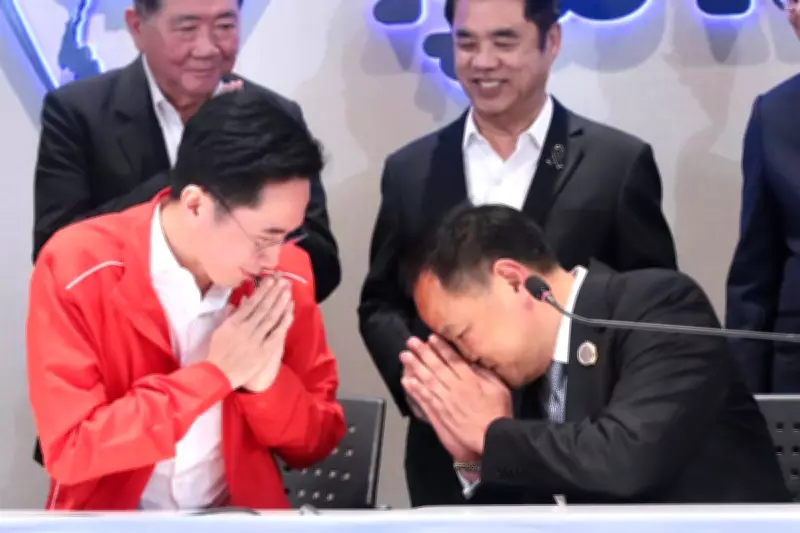
Thailand's ruling conservative Bhumjaithai Party has taken significant steps towards establishing a new coalition government following a pivotal agreement with the Pheu Thai Party. This development comes after the Pheu Thai Party, which secured third place in the country's recent general election, consented to join Bhumjaithai in a proposed ruling coalition.
Election Results and Parliamentary Mathematics
According to unofficial results released by the Election Commission, Bhumjaithai won 193 seats in the 500-member House of Representatives during Sunday's election. This strong performance positions the party to potentially return incumbent Prime Minister Anutin Charnvirakul to office with a Cabinet of his choosing.
The populist Pheu Thai Party, which maintains backing from former prime minister Thaksin Shinawatra, finished third with 74 seats. When combined, these two parties would command 267 seats, comfortably surpassing the 251 seats required for a parliamentary majority. Several smaller parties have also pledged their support to the emerging coalition.

Leadership Statements and Historical Context
Prime Minister Anutin expressed optimism about the partnership during a news conference, stating: "Bhumjaithai and Pheu Thai will look into the future. We agreed that both our parties have people with abilities great enough to lead Thailand into a stable and sustainable future."
Anutin was joined by Pheu Thai leaders including Yodchanan Wongsawat, a nephew of Thaksin who had been the party's candidate for prime minister. This collaboration marks a significant shift from previous political dynamics.
The two parties had previously partnered after the 2023 election, when Pheu Thai—then the second-largest party—led negotiations as the senior partner in their prospective government. That alliance collapsed last year following controversy surrounding then-Prime Minister Paetongtarn Shinawatra, Thaksin's daughter, over border tensions with Cambodia. Anutin subsequently secured enough parliamentary support in September to become prime minister.
Addressing past disputes on Friday, Anutin emphasized: "We must erase everything and move forward."
Coalition Expansion and Opposition Stance
Bhumjaithai has announced that six smaller parties with a combined eight seats have also pledged to join its coalition. Meanwhile, the progressive People's Party, which finished second with 118 seats, has definitively ruled out joining any Bhumjaithai-led government.
Pheu Thai's Diminished Position
Pheu Thai's electoral performance represents its worst showing in decades, marking a dramatic shift in Thailand's political landscape. Since 2001, electoral politics had been dominated by populist parties loyal to Thaksin, who served as prime minister until being ousted by an army coup in 2006, initiating prolonged power struggles against Thailand's conservative royalist-military establishment.
The party alienated some pro-democracy supporters in 2023 by breaking its campaign promise not to align with pro-military parties, instead forming a government that included them. Last year, it angered conservatives when Paetongtarn was found to be overly friendly with Cambodia's leader Hun Sen in a leaked phone call. She was subsequently removed from office for an ethics violation, creating the opportunity for Anutin to assume her position.
"For the first time in its history, (Pheu Thai) will be a mid-sized party that can at most play the role of a junior coalition partner," observed Ken Lohatepanont, a University of Michigan doctoral candidate specializing in Thai politics. Particularly stinging was the party's loss of all seats it had held in the northern city of Chiang Mai, Thaksin's hometown.
Potential Additional Partners and Economic Implications
Political analysts suggest that for Bhumjaithai to establish a more stable government, it may invite another major partner—either the fourth-place Kla Tham Party with 58 seats, or the Democrat Party, Thailand's oldest political entity with 22 seats.
Thailand's business community has welcomed Bhumjaithai's decisive victory, expressing hope that it will bring much-needed stability as the country contends with economic challenges.

Allegations of Electoral Irregularities
Negotiations to form a new government have unfolded against a backdrop of mounting allegations regarding electoral irregularities, prompting frustrated voters to stage protests in several regions. Demonstrators have called for recounts and, in some constituencies, fresh by-elections.
The Asian Network for Free Elections, one of the observer groups monitoring the polls, reported that the vote was conducted in a generally peaceful and orderly manner. However, it highlighted "procedural irregularities in several polling stations," including inadequate public information and inconsistent access for election observers.
The legal monitoring group iLaw, which also observed the election, reported receiving more than 4,000 complaints. These included cases where the number of ballots exceeded the number of eligible voters, officials denying observers access to vote counting, disputes over recount requests, and inaccuracies in the recording of final tallies.
Election results must be certified within 60 days of the election before Parliament can convene and elect a new prime minister, adding urgency to the coalition formation process.