The Queen's Subtle Protest: Thatcher's Order of Merit and Its Lasting Implications
On December 7, 1990, in a move that reverberated through the corridors of power, the late Queen Elizabeth II conferred the prestigious Order of Merit upon Margaret Thatcher, who had recently been reduced from Prime Minister to merely the Member of Parliament for Finchley. This extraordinary honour, created by King Edward VII in June 1902 to recognise exceptional service in the Armed Forces, arts, literature, and science, carries significant weight. Limited to just twenty-four living members at any given time, its illustrious recipients have included Florence Nightingale, Edward Elgar, Winston Churchill, and Clement Attlee.
The Significance of Royal Recognition
The Order of Merit is distinguished by its unique privileges and personal nature. Recipients have their portrait painted for the Royal Collection, are entertained by the monarch at a stately luncheon every five years, and crucially, the OM remains one of the very few honours bestowed directly through the sovereign's personal gift. Unlike life peerages, GCMGs, or even the British Empire Medal, which are processed through official channels, this honour bypasses bureaucratic writ.
That Elizabeth II chose to appoint this particular honour to Mrs Thatcher prompted considerable whispered speculation. Their relationship had always been characterised more by correctness than cordiality, with little common ground between them. The Iron Lady had never shied away from upstaging Her Majesty when it suited her political purposes. Consequently, the honour was widely interpreted as the daintiest of royal revolts—a subtle arching of the eyebrow—against the deeply unsettling circumstances surrounding Thatcher's dramatic removal from office.

A Constitutional Outrage and Its Consequences
Margaret Thatcher had secured three consecutive general election victories, commanded a parliamentary majority until her final days, and had even won an outright majority against Michael Heseltine in the recent leadership contest. She retained the confidence of her Sovereign until the end. Yet, she was deposed and humiliated in a manner her colleagues and backbenchers likely would not have inflicted upon a male counterpart.
From this constitutional outrage, we now reap the whirlwind. Over the past decade, Britain has witnessed six Prime Ministers, with a seventh probable by midsummer. The nation has somehow transformed into a political landscape reminiscent of Italy, where palace intrigues and dagger-drawn coups have become commonplace, and the cost is far from cheap. Every retired Prime Minister enjoys lifelong, round-the-clock personal protection, generous pensions, and additional perks—all funded by taxpayers.
The Erosion of Prime Ministerial Stability
Historically, Britain burned through approximately one-and-a-half Premiers per decade, with their dismissal typically entrusted to the electorate. Today, a Prime Minister seems to possess less job security than a pub pianist. This corrosive and destabilising trend, regardless of one's opinion of the current incumbent, is extraordinarily detrimental to the country's governance.
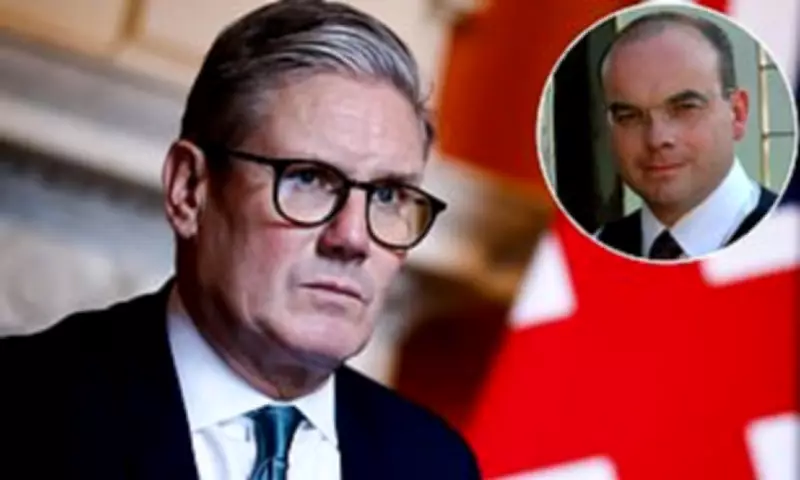
What has gone wrong? Examining Sir Keir Starmer and his recent predecessors reveals one immediate standout: their remarkably limited House of Commons experience. Winston Churchill had served four decades in Parliament when he assumed office in 1940. Anthony Eden, Harold Macmillan, and James Callaghan each had over thirty years as MPs. Thatcher herself, upon entering Downing Street in May 1979, had already dedicated two decades to the Commons and held office under three Tory predecessors.
The Decline of Parliamentary Experience
In stark contrast, David Cameron had been an MP for less than a decade in 2010. Boris Johnson had an aggregate of eleven years in 2019, Liz Truss twelve, Rishi Sunak seven, and Sir Keir Starmer nine. Command of the House of Commons is central to a Prime Minister's authority and credibility, which is why many already speculate about Starmer's precarious position. True parliamentary command requires being long-baked into the institution's very bricks.

Then there is the matter of how party leadership is attained. As late as 1963, a new Conservative Prime Minister could 'emerge' through the Royal Prerogative after due soundings. However, controversy arose when Rab Butler was twice passed over in 1957 and 1963, leading the Queen to accede to the consensus that future leaders of a governing party should be elected by its MPs. This shift would have appalled her grandfather, King George V, a great constitutional monarch unafraid to intervene in crises.
The Calibre Crisis in Modern Politics
Half a century ago this spring, MPs first gained the opportunity to elect a new Prime Minister directly. Looking back at the calibre of those who vied to succeed Harold Wilson in March 1976—figures like Tony Benn, James Callaghan, Tony Crosland, Michael Foot, Denis Healey, and Roy Jenkins—evokes a quiet sense of mourning. These were titans: war veterans, thinkers, originals, and orators who thrived on cut-and-thrust debate and handled lengthy television interviews with ease.
Sir Keir Starmer would likely not have lasted five minutes under such scrutiny. Subsequently, something odd occurred. Following leads by the Liberals in 1976, Labour in 1981, and the Tories two decades later, major parties decided their leaders should be elected by the mass membership, albeit through often Byzantine processes. Simultaneously, they dismantled ordinary members' rights to select local parliamentary candidates.
The Result: A Parliament of Careerists
The consequence is a Parliament populated by careerists, lickspittles, and individuals whose understanding of governance stems from binge-watching The West Wing. Many have never held real jobs outside the political bubble, serving only as parliamentary researchers before clamouring for coups after the first adverse opinion poll. Thus, Britain finds itself in a land that feels increasingly ungovernable.
Months ago, on the centenary of her birth, Charles Moore—Thatcher's biographer—hosted a stately salon on her life and legacy. He revealed a provocative insight: her own MPs did not bring her down because they feared she would lose the next election. Rather, they were terrified she might win it. This revelation underscores the profound shifts in political courage and calculation that continue to shape Britain's turbulent governance landscape.