Trump Renews Ableist Attacks on Newsom, Questions Fitness for Presidency
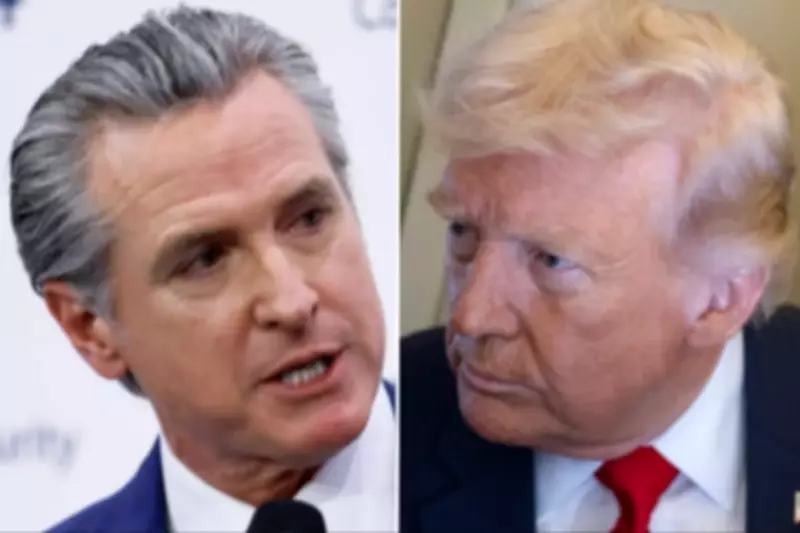
Former President Donald Trump has once again targeted California Governor Gavin Newsom with derogatory comments about his dyslexia, asserting that the learning disability should prevent the Democrat from ever becoming president. During remarks to reporters at the White House on Monday, Trump made controversial statements that have drawn widespread criticism for their offensive nature.
"Everything About Him Is Dumb": Trump's Controversial Remarks
"Honestly, I'm all for people with learning disabilities, but not for my president," Trump declared. "I think a president should not have learning disabilities." The former president went further in his criticism, referring to Newsom by the derogatory nickname "Gavin Newscum" and claiming that "everything about him is dumb."
Trump acknowledged the controversial nature of his comments, stating "I know it's highly controversial to say such a horrible thing," but proceeded with the attack regardless. During his remarks, Trump mistakenly referred to Newsom as already being "the president of the United States," a slip that the California governor later mocked on social media.
Newsom's Response and Ongoing Political Feud
Governor Newsom responded sharply to Trump's comments, writing on social media: "NO THANK YOU, WE BELIEVE IN FREE ELECTIONS!" The exchange represents the latest chapter in a long-running political feud between the two figures, who have clashed repeatedly on issues ranging from immigration policy to wildfire aid distribution.
Newsom, who has been promoting a new memoir while considering a potential presidential run in 2028, has been open about his lifelong struggle with dyslexia. The governor recently addressed his learning disability during public appearances, including at an event in Atlanta where he discussed receiving a middling SAT score.
Critics Condemn Trump's Ableist Language
Disability advocates and political critics have strongly condemned Trump's remarks as inappropriate and offensive. California journalist Carla Marinucci wrote on social media that "regarding millions of Americans with disabilities, Trump once again shows his profound ignorance."
The controversy has drawn particular attention due to Trump's history of making derogatory comments about people with disabilities. Journalist Eric Garcia, a nationally recognized commentator on disability issues who is autistic, pointed to Trump's "blatant and disgusting ableism" and compared the Newsom comments to Trump's infamous 2015 incident where he appeared to mock a disabled reporter.
Pattern of Disability-Related Controversies
Trump's latest comments follow similar attacks he made against Newsom during a rally in Kentucky last week, where he told supporters: "He admitted he has mental problems, that he's not a smart person...that he is unable to read a speech. I don't want the president of the United States to have a cognitive deficiency."
Newsom responded to those earlier remarks with a simple "Too late," a reference to ongoing concerns about Trump's own mental acuity that the former president has consistently denied. The exchange highlights how disability has become a flashpoint in the increasingly bitter political rivalry between the two figures.
Broader Political Context and Implications
The controversy emerges as both Trump and Newsom position themselves for potential presidential campaigns. Newsom has been traveling nationally to promote his memoir and build political support, while Trump continues to dominate Republican politics ahead of the next election cycle.
Conservative critics have accused Newsom of racism for his comments about SAT scores in Atlanta, to which the governor responded angrily: "You didn't give a s*** about the President of the United States of America posting an ape video of President Obama or calling African nations s***holes — but you're going to call me racist for talking about my lifelong struggle with dyslexia? Spare me your fake f****** outrage."
The escalating conflict between Trump and Newsom reflects deeper divisions in American politics, with disability rights becoming another battleground in the culture wars that continue to shape national discourse.