

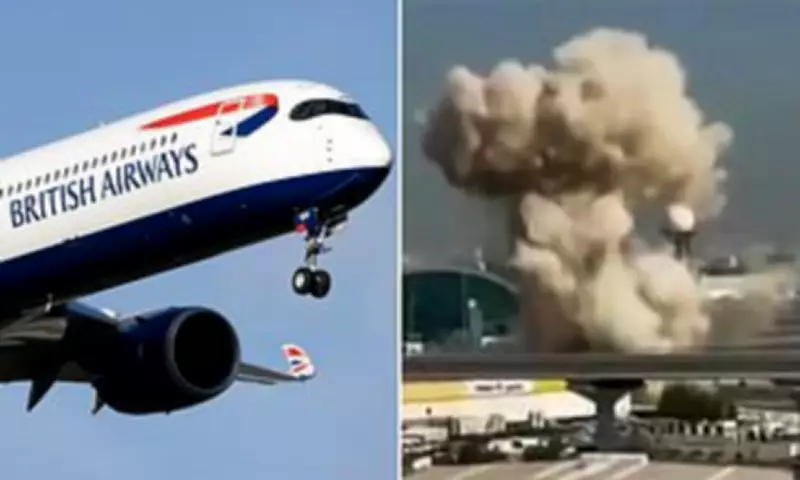
British Airways Extends Dubai Flight Suspension Until Summer
British Airways has announced the cancellation of all flights into Dubai until the summer season, attributing the decision to what it describes as "continued uncertainty" and "airspace instability" in the region. This move represents the most prolonged major airline suspension declared since the onset of the US-Israel war on Iran, which is now entering its third week of hostilities.
Widespread Regional Flight Disruptions
The airline has also suspended travel services to Amman, Bahrain, and Tel Aviv until after May 31. Additionally, flights to Doha in Qatar are on hold until the end of April, while services to Abu Dhabi have been called off until later this year. British Airways will, however, continue to operate flights to Riyadh and Jeddah in Saudi Arabia, destinations that have experienced fewer disruptions from airspace closures.
The decision follows an incident just hours prior, where an Iranian drone struck a fuel tank near Dubai Airport, igniting a substantial fire. This event led to flight diversions and road closures around the airport, with a dense black smoke plume visible from miles away. Emirates airline was compelled to divert mid-air flights, including services from Heathrow, Edinburgh, Manchester, and Dublin, which were returned to their departure points.

Escalating Security Concerns and Operational Challenges
Dubai International Airport has faced multiple attacks during the conflict. Authorities quickly utilized social media to reassure the public that Monday's drone-related incident resulted in "minimal damage" and no injuries. Notably, this marks the first instance where the Dubai government acknowledged a drone as the direct cause of damage, rather than debris from intercepted missiles.
Although Iranian drone attacks have reduced in frequency recently, strategic targets such as airports, buildings, and ports in Dubai's financial centre have been hit. Over the past weeks, Dubai has endured several assaults, with videos capturing smoke plumes rising over the city. Government data indicates that more than 63,000 British nationals have returned home from the United Arab Emirates since the conflict began.
Passenger Stranding and Airline Responses
Tens of thousands of passengers remain stranded in Dubai since the war outbreak. In response, local airlines have been incrementally increasing capacity to repatriate travelers. Flightrader24 data revealed that Emirates operated 369 flights on Sunday, reaching its highest service level since the conflict started, approximately 70% of pre-conflict operations.
Qatar Airways stated it would augment flight numbers from Wednesday, though a spokesperson emphasized that daily operations are "extremely limited under current conditions," requiring meticulous planning and subject to regulatory approvals and airspace status.
Political Context and Conflict Duration Projections
The flight cancellations occur amidst broader geopolitical tensions. Former US President Donald Trump commented on the conflict, suggesting inflated gas prices are "a very small price to pay" and predicting oil prices will "drop like a rock" post-conflict. He initially estimated the war could last up to four to five weeks but has since been vague on timelines, stating it will last as long as "necessary."
Contrastingly, sources familiar with the matter told Axios that the Middle East conflict might extend into September, a significantly longer projection than publicly discussed by Trump. This prolonged uncertainty underscores the challenges facing airlines and travelers, with British Airways' suspension reflecting the severe operational risks posed by ongoing regional instability.






