Trump's 'Drunk Uncle' Behaviour Criticised After Nicki Minaj Comments at Black History Month Event
President Donald Trump has faced severe backlash from CNN panellists after he complimented rap superstar Nicki Minaj on her "beautiful skin" and lengthy nails during a White House reception honouring Black History Month on Wednesday. The remarks prompted one commentator to compare the president's conduct to that of a "drunk uncle" at a family gathering, highlighting ongoing concerns about his approach to racial issues.
Controversial Praise During Cultural Celebration
During the event, Trump utilised the platform to list his Black acquaintances in defence of his racial record, introducing Housing and Urban Development Secretary Scott Turner—his sole African-American Cabinet member—alongside other guests. He then shifted focus to celebrities, offering praise for figures like Mike Tyson before abruptly turning his attention to Nicki Minaj.
"Do we love Nicki Minaj?" Trump asked the audience. "I love Nicki Minaj. She was here a couple of weeks ago. So beautiful. Her skin is so beautiful. I said, 'Nicki, you're so beautiful.' Her nails are like that long. I said, Nicki, are they real? She said she didn't want to get into that, but she was so beautiful and so great. And she gets it, more importantly, frankly, she gets it."

The president had earlier chuckled while acknowledging Black cultural contributions, name-checking legendary artists Chuck Berry and Muddy Waters after commenting, "From jazz to the blues – that you do get recognition for!"
CNN Panelists Decry 'Drunk Uncle' Conduct and Historical Context
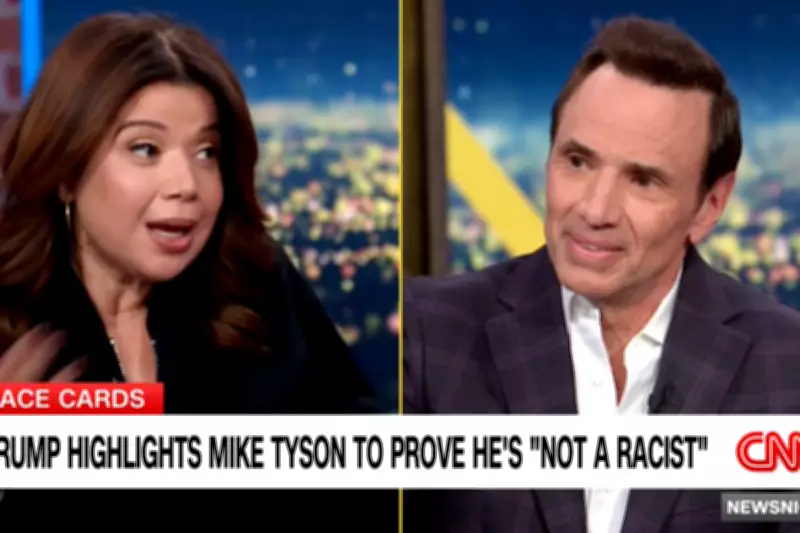
Reflecting on the address during CNN's NewsNight programme Wednesday evening, panellist Paul Mecurio expressed bewilderment at Trump's approach. "He was like your drunk uncle at Thanksgiving!" Mecurio observed. "Like, what are we doing? What was that? Why would he think that, based on his recent track record, that any of that flies?"
Fellow commentator Ana Navarro noted that citing minority friends is a common tactic employed by individuals facing discrimination accusations. Moderator Abby Phillip argued that Trump's claims were undermined by his administration's efforts to remove a slavery exhibit in Philadelphia, a move she described as speaking "very loudly."
Republican strategist Shermichael Singleton admitted concern about the Pennsylvania situation, stating, "I don't understand why this would be a priority for any lower-level Cabinet person… It's not necessary, it's very divisive." He warned that Trump risks "fragmenting" his diverse voter coalition—essential for upcoming midterm elections—if he continues alienating them with such gestures.
Long History of Racial Controversies Revisited
The discussion expanded to encompass Trump's extensive history of racially charged incidents. TW Arrighi, former communications director for South Carolina GOP Senator Lindsey Graham, referenced the recent controversy over Trump reposting a meme depicting Barack and Michelle Obama as apes, noting that the president's refusal to apologise prolonged the story unnecessarily.
Arrighi suggested Trump is genuinely upset by racism accusations but frequently "steps on" his own messaging. Navarro provided historical context, reminding the panel that questions about Trump's prejudice date back decades.
"It's not that people say that Trump is a racist," Navarro explained, "it's that the New York City Housing Department in the 1970s said he and his father were racist. It's that the Central Park Five, for whom he demanded the death penalty and has never apologised, think he's a racist. It's just that, this week, he used the death of Jesse Jackson to attack Barack Obama in the statement he put out on Truth Social."
Navarro continued, "He has got a long track record. It's calling countries like I come from 's***hole countries,' it's saying that Haitians eat cats and dogs. I mean, we could sit here all night and trace back all of the racist things he has said and done through his lifetime."
The panel's comprehensive critique underscores the persistent tensions surrounding Trump's racial rhetoric, even as he attempts to showcase cultural appreciation during designated heritage months.