Speculation is intensifying around the health and vitality of former President Donald Trump, as observers note significant changes in his public appearance and a dramatically reduced official schedule during his second term.
A Noticeable Shift in Energy and Appearance
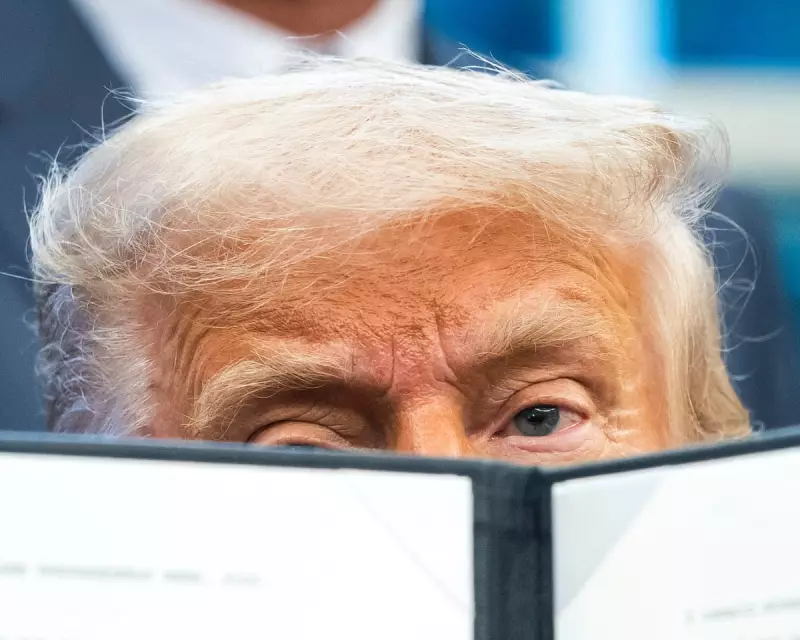
Those watching the 79-year-old president have noted he frequently looks fatigued. His characteristic tan appears more sallow and is often applied unevenly. He has been observed nodding off during televised events, including cabinet meetings in the Oval Office. His public engagements have fallen by nearly 40% compared to his first year in office, according to a New York Times analysis.
Trump's daily routine now often begins after noon, and he prefers to sit when others stand. He has largely abandoned the large, energising rallies that once defined his political brand. Furthermore, he has spent considerable time at his golf clubs and travelled across the country far less than during the equivalent period of his first term.

Unanswered Questions and Physical Signs
The White House has offered confusing and sometimes implausible explanations for visible physical issues. Trump's right hand is frequently seen with a bandage or smeared makeup, with aides claiming he bruised it from shaking too many hands. In some photographs, his ankles appear swollen.
In October, Trump revealed he had undergone an MRI scan but declined to specify why. "I have no idea what they analysed," he told reporters on Air Force One, while insisting the results were excellent. His physician stated the scan was "preventative" and focused on his heart and abdomen, but medical experts countered that MRIs are not standard preventative care and are typically used to monitor known conditions.
Trump has also publicly stated, "I took a cognitive test and I aced it," in an apparent effort to quell concerns about his mental sharpness.
Political Fortunes Fade Alongside Energy
Analysts suggest the scrutiny of Trump's health is inextricably linked to his declining political capital. After a tumultuous start to his second term, marked by sweeping attempts to reshape federal bureaucracy and institutions, his influence has waned. Recent polls show his approval ratings have cratered across most demographics and states.
This political weakness has made Republicans less willing to support potentially unconstitutional moves, such as seeking a third term. The "changing winds of public opinion" have quieted such ambitions, solidifying his status as a lame-duck president. As his power diminishes, public and political pushback has grown, making him appear less formidable.
The irony is not lost on observers, given Trump's relentless focus on President Joe Biden's age and fitness during the 2024 campaign. He even replaced Biden's official portrait in the White House with a picture of an autopen, symbolising his claim that Biden was running an administration on autopilot.
The Inevitability of an Ending
While it is irresponsible to diagnose from afar, the speculation underscores a fundamental reality: Trump is mortal and ageing. His reign as the centre of gravity in American politics will eventually end. He has reportedly become more reflective, speaking about death more often, even questioning whether he is "heaven-bound."
Ultimately, his increasing physical frailty may be a reflection of his political vulnerability. As his support weakens, so does the public perception of his strength. The recognition of his mortality is altering calculations across the political spectrum, perhaps even his own, as his second term progresses amidst growing questions about his capacity to lead.