Trump's Mandelson Endorsement Raises Eyebrows Amid Epstein Scrutiny
Donald Trump faced pointed questions in the Oval Office regarding his approval of Peter Mandelson as Ambassador, despite the former diplomat's documented connections to the disgraced financier Jeffrey Epstein. The President's dismissive response, coupled with revelations about the vetting process, has ignited a fresh wave of political controversy on both sides of the Atlantic.
Oval Office Exchange and Vetting Concerns
When pressed by journalists about Mandelson's potential downfall, Trump offered a characteristically vague reply, stating, "I don't know anything about it. It's too bad." This mirrored his comments during a UK state visit, where he expressed disappointment over Mandelson's diminished role. However, the simplicity of these statements belies a more complex narrative.
Ambassadorial appointments require rigorous vetting, including approval from the White House. While rejections are rare, they are not unprecedented. Sources within Washington's political circles suggest that Trump was advised about Mandelson's ties to Europe and business interests in China, which were considered potential obstacles. More critically, the Justice Department, under then-Attorney General Pam Bondi, possessed files detailing Mandelson's long-standing friendship with Epstein. This raises significant questions about whether the White House was adequately informed or chose to overlook these compromising associations.

Epstein Files and Diplomatic Implications
The timing of Mandelson's nomination coincided with the ongoing scrutiny of Epstein's network, making the administration's apparent silence on the matter particularly conspicuous. The fact that no concerns were formally raised with the UK government adds another layer of intrigue to this already convoluted saga. Whether this was an oversight or a calculated diplomatic manoeuvre remains unclear, but it undoubtedly warrants further investigation.
Trump's Broader Political Moves
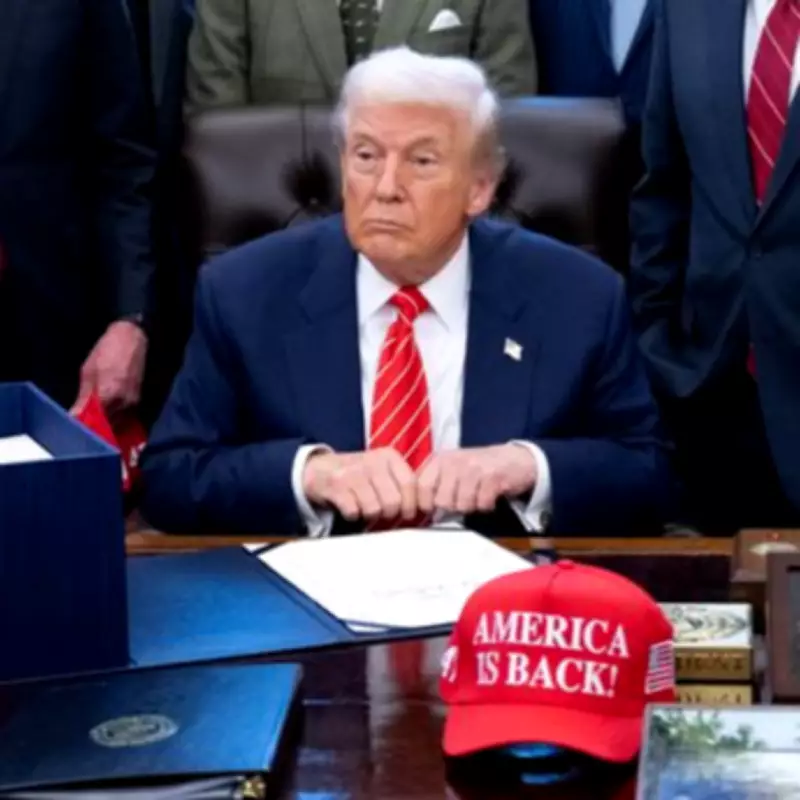
Beyond the Mandelson affair, Trump's Oval Office activities revealed a series of contentious positions. He hosted House Republicans to sign a budget bill, distributing "AMERICA IS BACK" hats, while also reiterating controversial plans for election oversight. Trump argued that states act merely as "agents" for the federal government in electoral matters, a claim that contradicts constitutional norms. He cited unsubstantiated allegations of corruption in Detroit, Pennsylvania, and Atlanta to justify potential federal intervention, despite a lack of evidence for widespread misconduct in the 2020 election.
Bannon's Inflammatory Comments and Media Confrontation
Steve Bannon, Trump's former advisor and another Epstein associate, escalated tensions by advocating for aggressive poll monitoring. Meanwhile, Trump's exchange with CNN's Caitlin Collins turned hostile when she questioned him about redactions in the Epstein files. Trump criticised her demeanour, stating, "I've never seen you smile," and accused CNN of dishonesty, diverting attention from the substantive issue of justice for survivors.
Clinton Testimonies and Trump's Self-Defence
In a related development, Bill and Hillary Clinton agreed to testify before Congress regarding Epstein, with depositions scheduled for late February. Trump responded by proclaiming his own innocence, declaring himself "very innocent" and "the most honest person anywhere in the world." He recounted an anecdote from a "streetwise" friend who praised his integrity, despite historical context showing that every modern president except Trump has voluntarily released tax returns.
Policy Shifts and International Diplomacy
On the policy front, Trump ordered the withdrawal of a quarter of ICE agents from Minnesota following local backlash, citing new agreements with county jails. Internationally, he engaged with Chinese President Xi Jinping on Iran, while Xi separately conversed with Vladimir Putin. This diplomatic activity occurs against the backdrop of the impending expiration of the New START nuclear treaty, which could leave the world's largest nuclear arsenals without constraints for the first time in five decades.

The convergence of these events underscores a turbulent political landscape, where personal loyalties, diplomatic vetting, and constitutional boundaries are increasingly blurred. The Mandelson episode, in particular, highlights the enduring ramifications of the Epstein scandal on high-level appointments and international relations.