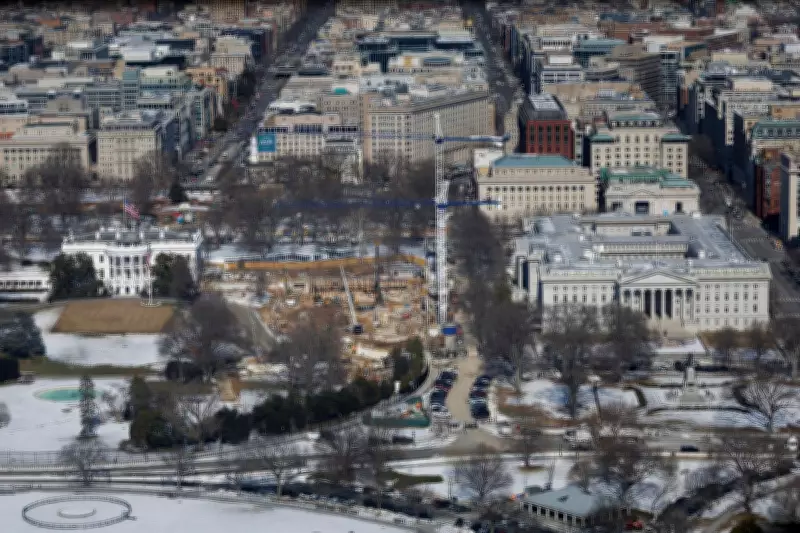
A newly released White House memo asserts that demolition crews "excellently preserved" the White House residence while tearing down the East Wing to facilitate President Donald Trump's planned ballroom, according to an administration official on Friday, 13 February 2026. The document, made public by Joshua Fisher, director of the White House Office of Administration, details the meticulous efforts undertaken to safeguard the historic structure during the controversial demolition process.
Preservation Efforts Amid Demolition
In the memo addressed to the National Capital Planning Commission, Fisher explained that contractors employed careful measures to protect the White House residence. Heavy equipment was kept at a safe distance, and some sections of the building were removed by hand to minimize damage. Additionally, certain areas were stabilized in advance, with continuous monitoring of vibration and crack movement to ensure structural integrity.
Public and Legal Backlash
The demolition of the East Wing, which commenced last fall with minimal advance notice, has sparked significant public outcry and legal challenges. Critics argue that the project bypassed standard procedures, including independent reviews, congressional approval, and public comment, which are typically required for modifications to historic buildings in Washington, D.C. The National Trust for Historic Preservation has filed a lawsuit to halt construction of the ballroom, citing concerns over the preservation of the site's historical significance.

Historical Justification and Future Plans
The memo provides a historical overview of the East Wing, tracing its origins back to Thomas Jefferson's presidency, and outlines the White House's rationale for its demolition. Fisher stated that preserving the East Wing while meeting Trump's objectives for the ballroom project was not feasible. The completed ballroom is expected to feature an enhanced visitors center for security screening and reduce the need for road closures during major events.
Curators have documented and preserved numerous items of historical value, including the East Wing cornerstone and plaque, movie theater furniture, East Colonnade columns, Porte-cochere columns, interior wood paneling, chandeliers, historic windows and doors, and other hardware and fixtures. Fisher emphasized that the goal is to integrate some of these preserved elements into the new structure, maintaining a connection to the site's heritage.
Architectural Considerations and Renderings
Engineers are currently assessing whether the West Colonnade, which links the White House residence to the West Wing offices, can support an additional story. This modification would enhance visual symmetry with plans for a larger East Colonnade connected to the ballroom. No final decisions have been made regarding this aspect of the project.
The White House has also submitted the most detailed renderings of the ballroom to date, revealing a massive new building that significantly exceeds the size of the demolished East Wing and matches the height of the historic White House mansion. These plans are scheduled for discussion during a meeting of the National Capital Planning Commission on 5 March, where further approvals may be sought.
The memo underscores the administration's commitment to balancing modernization with preservation, even as legal and public scrutiny continues to surround the project's execution and compliance with regulatory standards.