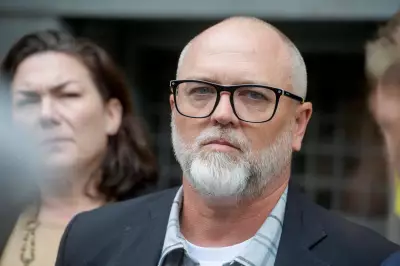
Widow Accuses Lords of 'Killing' Assisted Dying Bill After Husband's Swiss Death
Louise Shackleton, a grieving widow from North Yorkshire, has launched a scathing attack on the House of Lords, accusing peers of having effectively 'killed' legislation that would legalise assisted dying in England and Wales. Mrs Shackleton made a solemn promise to her late husband, Antony, that she would continue fighting for a change in the law so that British citizens would not have to endure what she describes as 'grotesque' and unregulated deaths.
A Promise to Fight for Change
Antony Shackleton, aged 59, was diagnosed with motor neurone disease and chose to end his life at the Dignitas clinic in Switzerland, where he experienced what his widow calls a 'beautiful death'. In stark contrast, Emma Bray, a 41-year-old mother also suffering from motor neurone disease, felt compelled to starve herself to death in the United Kingdom to escape unbearable pain and protect her children from witnessing her prolonged suffering.
Louise Shackleton spent ten months under police investigation for assisting a suicide after accompanying her husband to Switzerland, though the Crown Prosecution Service eventually decided not to prosecute her. She now describes the Lords' handling of the assisted dying bill as 'an insult' to both her husband and Emma Bray, arguing that the current system forces terminally ill people into taking their own lives in unsafe and undignified ways.
Legislative Gridlock in the Lords
The Terminally Ill Adults (End of Life) Bill was passed by the House of Commons in June last year but has been stalled in the House of Lords for months, with peers now considering it 'unlikely' to pass before the end of the current parliamentary session. So far, only half of the 1,200 proposed amendments have been debated after eleven days of scrutiny, with just three more days scheduled to consider the remaining 600 amendments.
Opponents of the legislation have been accused of attempting to 'talk out' the bill through procedural tactics, prompting more than 150 Members of Parliament from across party lines to write to Prime Minister Sir Keir Starmer. The cross-party group, which includes approximately 100 Labour MPs alongside Conservatives, Liberal Democrats, Greens, Plaid Cymru, and Reform UK representatives, has urged the government to intervene and ensure Parliament can reach a decision in the next session.
Public Support and Political Pressure
A public petition on Parliament's website has gathered more than 97,000 signatures calling for progress on the bill, reflecting what Louise Shackleton describes as overwhelming public support. She cites polling indicating that 87% of the public want the choice of assisted dying, with 52% of doctors in agreement and 32% willing to provide the service.
Lord Falconer, the Labour former minister sponsoring the bill through the Lords, has warned that the upper chamber risks being seen as an 'irrelevant talking shop' if it fails to make progress. He has vowed to use rare parliamentary procedures to override peers if necessary, though the government maintains a neutral position, stating that changing the law should remain a matter of individual conscience for parliamentarians.
Religious Objections and Democratic Concerns
Mrs Shackleton has been particularly critical of what she describes as 'religious dogma' influencing the debate, accusing a small number of peers of 'fibbing for God' to block legislation. She argues that every peer has the choice and financial means to travel to countries like Switzerland or Belgium for assisted dying, while ordinary citizens are denied that option.
'The people have spoken,' she declared. 'A massive 87 per cent of the public want the choice. We need to look at other countries and realise that allowing assisted death shows humanity, compassion, and an understanding that sometimes a journey with illness can have such a devastating effect on the person and their family members.'
The joint letter from MPs, coordinated by Peter Prinsley, the Labour MP for Bury St Edmunds and Stowmarket, emphasises that while the government maintains neutrality on the principle of assisted dying, it cannot be neutral on the 'fundamental democratic principle' that the elected House of Commons should decide the matter. With public frustration mounting and parliamentary time running short, the battle over assisted dying legislation appears poised to continue into the next parliamentary session.