From Ankle Sprains to Shoulder Pain: Expert Recovery Tips for Common Injuries
There is nothing quite like a persistent ache or pain to disrupt your daily life and dampen your spirits. Whether it is a recurring twinge in your lower back or an acute injury from an accident, most physical issues stem from imbalance – when one area of the body compensates for weakness elsewhere. Personal trainer Luke Worthington explains, "Our bodies are inherently asymmetrical – no one's left and right sides are exactly the same. Problems arise when we inadvertently force symmetry, trying to make both sides move identically. It disrupts our natural equilibrium and leads to overuse, strain or injury."
Understanding the Root Causes of Injuries
Physiotherapist Florence Penny emphasises that an injury is often more complex than the immediate event that caused it. "The visible injury is just the tip of the iceberg. Behind it are often muscle imbalances, poor joint stability, fatigue, improper movement patterns or insufficient conditioning." These underlying factors reduce the body's resilience, making it more prone to injury under stress, whether that is from playing with your children or training for a marathon.
Proper diagnosis is key to successful recovery. Worthington advises, "Identify how the injury happened – was it a sudden force or gradual overload from poor movement or planning? Understanding the underlying cause is essential for lasting recovery." A physiotherapist, doctor, osteopath or other trained practitioner can help uncover those root issues.

Prevention and the Basics of Recovery
Prevention is better than cure. Respect rest days – "they're part of training, not a break from it", says professional marathon runner and Lululemon ambassador Anya Culling – and give your body time to absorb the effects of your workouts. Recovery begins with the fundamentals: quality sleep, good nutrition and hydration. Worthington adds, "It's easy to believe that staying still will help you recover faster, but the real secret is targeted movement, performed consistently and built up over time. The goal is to restore confidence, control and capacity – not just wait for pain to fade."
Targeted Recovery Strategies for Specific Injuries
Ankle Sprain
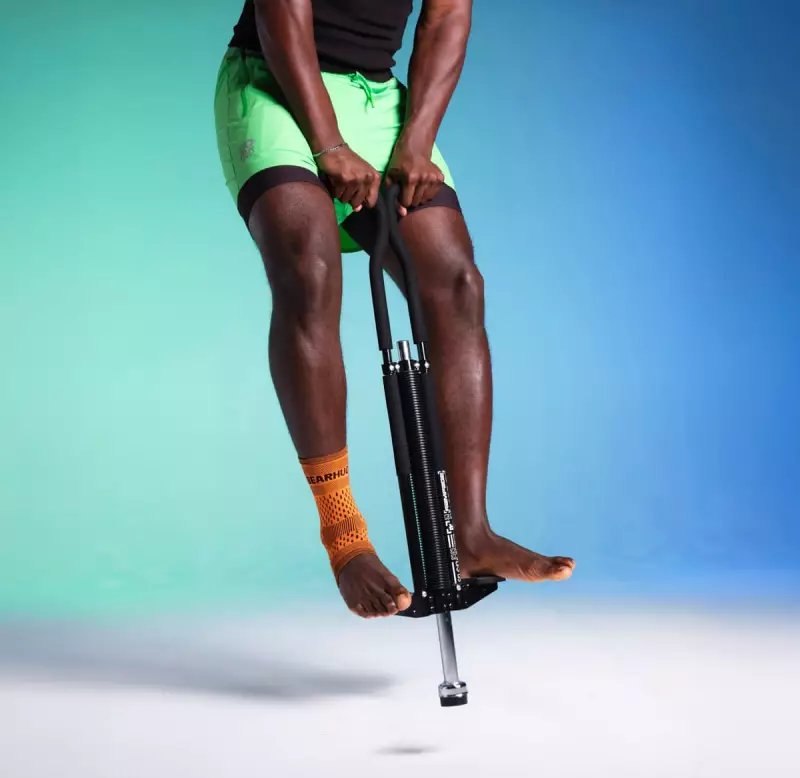
Mostly caused by rolling or twisting on uneven ground, ankle sprains are just as common on the morning commute as in a game of sport. If you are dealing with pain, swelling or bruising, or finding it hard to bear weight, start by elevating the ankle above heart level and apply ice to reduce swelling. After that, Worthington advises rebuilding strength gradually. Start with balance work – holding one leg off the floor, then progressing to standing on tiptoe – before adding calf-strengthening exercises such as calf raises and, eventually, low-level jumping drills. "Everything should be done progressively," he says. Train both your injured and healthy sides to avoid making that "good" ankle the next injury.
Achilles Tendinitis
Named after the mythical Greek hero, the term "achilles heel" has long symbolised weakness – and the body's largest and strongest tendon is also one of the most injury-prone. Achilles tendinitis, a painful inflammation marked by heat, swelling and stiffness, often strikes when people suddenly ramp up their training or lifting load. Penny notes, "Tendons love consistency, so don't alternate between inactivity and intense exercise. The goal isn't rest but smart load-management. Gradual, slow, heavy loading helps the tendon remodel and rebuild strength and resilience." Begin with light tension exercises and progress to standing and seated heel raises.
Lower Back Pain

Often associated with being of a "certain age", lower back pain can be incredibly debilitating and occur at any point in life. Penny explains, "It's usually caused by too much sitting followed by sudden lifting or exercise, poor movement techniques and weakness in the deep stabilising muscles – the core and glutes – combined with tight hip flexors." While you might feel tempted to rest, experts agree that the right exercises are essential. Osteopath Olivia de Maigret recommends improving mobility with simple movements like drawing a figure of eight with your hips. A kneeling hip-flexor stretch also helps, and should be a staple if you sit for long periods.
Plantar Fasciitis
Having recently battled a foot tendon injury, Culling knows just how testing recovery can be. "It felt like one step forward, two steps back," she admits. One of the most common running-related issues is plantar fasciitis – inflammation of the thick band of tissue that supports the arch of the foot. Alongside switching to low-impact exercise such as cycling or swimming, De Maigret recommends loosening the tight connective tissue by rolling the arch of the foot over a tennis ball for two or three minutes a day. Culling also swears by ice baths to reduce inflammation, but if they do not appeal, applying an ice pack for 10 minutes works, too.
Shoulder Pain or Impingement
If you feel a pinch or pain in your shoulder when lifting or rotating your arm, overuse or poor posture could be to blame. Nearly 41% of women report persistent shoulder tension, according to recent research. Alongside strength work – think push-ups, reverse-flies and resistance band pull-aparts – improving mobility in the thoracic spine and strengthening the scapular stabilisers is essential, says Penny. For thoracic mobility, try a cat-cow stretch. To strengthen the scapular stabilisers, perform a serratus punch with a light dumbbell.
Knee Injuries
Whether it is patellar tendinitis or a tear to the meniscus or anterior cruciate ligament, knee injuries are prevalent, particularly in those doing contact sports or movements that require a lot of pivoting. According to Worthington, knee pain is often "a hip or ankle issue in disguise", since both joints influence how much force the knee absorbs. Strengthening and improving control through the hips and ankles can therefore help ease strain and prevent injury. He recommends exercises like a single-leg glute bridge for hip stability and an ankle mobility drill.
Hamstring Strains
Worthington explains, "The hamstring works as part of a chain of muscles, and if other links are underperforming, it ends up doing double duty and becomes more vulnerable." He advises working with a physiotherapist to assess any alignment issues. Once alignment is restored, perform gradual pace repetitions. Lotti Benardout, founder of pilates and strength centre Studio Anatomy, emphasises the value of eccentric exercises, such as slow bridge lowers or hamstring sliders, which strengthen the muscle as it lengthens.
Delayed Onset Muscle Soreness
While not technically an injury, anyone who has pushed themselves in a workout will know the tell-tale ache of delayed onset muscle soreness – that stiff, tender feeling that hits a day or two after exercise. It occurs when intense or unfamiliar activity causes microscopic tears in the muscle fibres, which then repair and rebuild stronger – so it is actually a sign of progress. Benardout says, "The best remedy is more movement, just at a lower intensity. Gentle stretching, walking or even time in an infrared sauna can work wonders – the heat boosts circulation, eases stiffness and speeds up recovery."