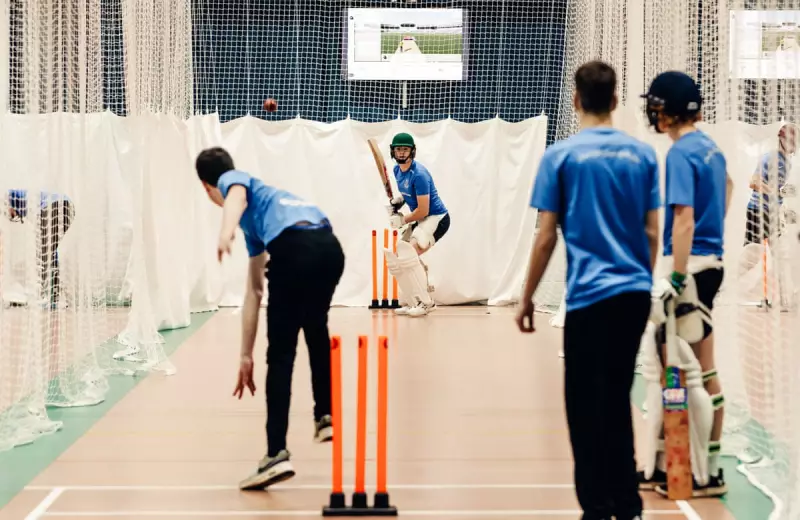
In a repurposed tennis hangar just off the A27 near Brighton, a quiet revolution is taking place in English cricket. The Square One facility in Falmer, now the second-largest indoor cricket hall in the world, is more than just an impressive sports centre; it's a bold experiment designed to dismantle the sport's long-standing barriers of language, culture, and access.
Breaking the Wheel: A New Philosophy for Cricket
The driving force behind Square One is a trio of innovators: former Kent and Nottinghamshire spinner Rob Ferley, Brighton University sports science lecturer Dr James Wallis, and entrepreneur Rod Aldridge. Their mission stems from a blunt assessment. "Cricket is shit if you’re shit at cricket," Ferley states, highlighting how the sport often loses newcomers who aren't instantly proficient. Their goal is to stop that exodus by fundamentally rethinking the environment and coaching.
"You’ve got to break the bloody wheel, or it just keeps rolling on," says Dr Wallis, criticising the ECB's decades of reports on racism, sexism, and elitism with little transformative action. "To keep going back there with the same processes... it’s the definition of insanity." Square One, physically connected to the Brighton Aldridge Community Academy (BACA), embeds cricket into the state school curriculum, offering daily enrichment to all pupils, not just a privileged few.

Colour, Chips, and a Common Language
Step inside the Falmer centre, and the differences from traditional, often intimidating, cricket nets are immediately apparent. The space is deliberately welcoming. Two key innovations stand out. First, the bowling surface features a colour-coded rainbow mat, designed by Wallis to replace vague jargon like "good length" with a clear, universal visual language. The nets are also marked with coloured targets for batters, training the brain without relying on inherited knowledge.
Secondly, the centre employs groundbreaking technology. Bowlers use microchipped cricket balls that feed data to a simulator tablet, displaying speed, trajectory, and where the virtual shot lands. This gamified, data-rich experience makes practice addictive and provides comparable metrics that could help identify talent from any postcode, not just traditional cricketing heartlands.
"If you’re 22 years old and bowling 85mph in a cricket silo in Staffordshire or Swansea, you have the comparable data for everyone to see," Ferley notes, challenging the uneven geographic opportunities within the current county system.
From Grassroots to Bazball: A Challenge to Orthodoxy
The Square One philosophy extends to challenging sacred cows. Ferley is particularly vocal about hard-ball cricket for children, calling it a barrier that can be "catastrophic" for newcomers. "Would you do it like that? If you just took away everything and started again, would it still exist?" he asks.
This ethos of questioning extends to the elite game. While admiring the player autonomy and positive environment created by Ben Stokes and Brendon McCullum's 'Bazball', Ferley sees a limitation. "The fact that they don’t seem to be open to ideas, for me is the part that’s missing," he suggests, arguing that true world-beating innovation requires constant challenge and diverse thinking.
The ambition for Square One is vast. The Falmer site is a prototype, with the goal of creating 150 similar centres nationwide, often repurposing existing community spaces. While the ECB has shown interest, the project is fundamentally entrepreneurial, born from impatience with the pace of institutional change.
As Ferley summarises, referencing the damning ICEC report: "We’re accepting that as truth. And that’s our mission. It needs to get better." In a bright, tech-filled hangar in Falmer, a group of thinkers and doers are attempting to write cricket's next chapter, starting from Square One.