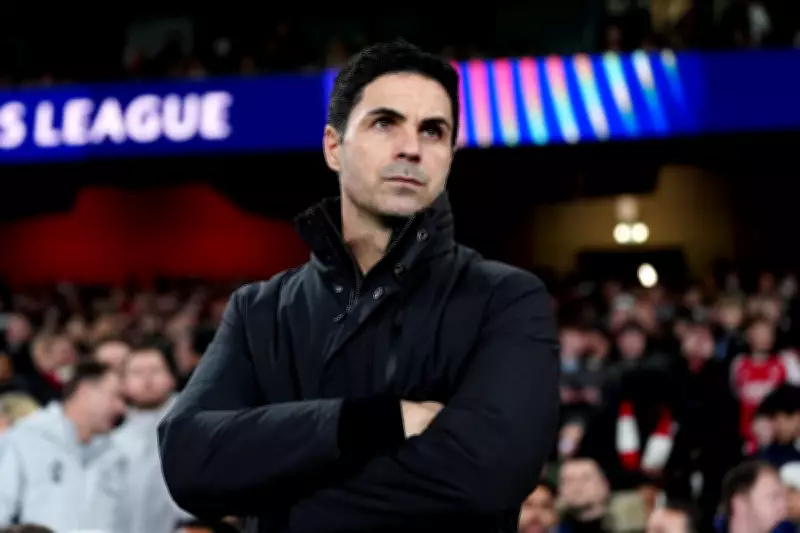
Arteta's Psychological Intervention at Arsenal
In the wake of Arsenal's 3-2 defeat to Manchester United, manager Mikel Arteta recognised his squad required a specific psychological intervention. The Basque coach gathered his players to discuss a fundamental principle: "you can't lose something you haven't won, so leave all that behind." This message formed the cornerstone of Arteta's strategy to prevent a recent blip in their Premier League title challenge from developing into something more damaging.
Creating Space for Open Dialogue
Players were actively encouraged to vocalise their feelings and concerns, creating what insiders described as a necessary emotional release. Arteta and his coaching staff have become acutely aware of the "fear of failure" narrative surrounding the team, prompting the manager to reframe this psychological challenge for his squad.
"Let's enjoy it," Arteta emphasised, speaking about how the intense pressure cannot sustain itself week-to-week across four gruelling months. This represented a progression from his immediate post-United dressing room address, where he reminded players: "This is the journey you're on if you're going to win the title. It's not always going to go your way."
The Psychology of Setbacks
Arteta's message acknowledges that setbacks are inevitable, particularly for a team seeking their first championship in years. Despite perceptions of Manchester City's smooth dominance, title races rarely follow linear paths. The Arsenal manager reportedly pitched his speech at precisely the right psychological tone, a notable achievement given his tendency toward increased intensity following disappointing results.
By stepping back rather than leaning in, Arteta recognised something deeper than a normal footballing setback was affecting his squad. His intervention brought about a tangible shift in training atmosphere, further aided by a forgiving Champions League victory over Kairat Almaty.
The Challenge of Sustained Change
Whether this psychological reset fully takes root remains the crucial question. Arsenal could travel to Leeds United pumped to make amends, only for an early Karl Darlow save or Pascal Struijk challenge to trigger the same negative thought patterns from the United defeat. Saturday's fixture carries particular significance as a potential hinge moment in their season, with many insiders questioning whether "the biggest game is in their own heads."
Even if Arsenal lost at Leeds, they would mathematically remain top, yet nobody would consider this perspective. The conversation would immediately shift to lost momentum and diminishing belief, highlighting why Arteta knows he must restore his team's conviction - particularly the confidence they display in every competition outside the Premier League.
Navigating the Pressure Bubble
This psychological work proves easier said than done, given what Arteta's staff describe as the "pressure bubble" surrounding the team. This environment has been expanded by fan expectations and relentless social media scrutiny - natural consequences of a long title drought as a club approaches the finishing line.
One complication lies in Arteta's own intensity, which has fundamentally shaped Arsenal's resurgence. While nobody should overlook how crucial his energy was in restoring Arsenal as a competitive force, questions now emerge about whether this strength requires tempering to finally cross the championship line. Not a complete reassessment, but a subtle psychological tweak.
The Process Versus Human Edge
Arteta's coaching philosophy centres on "trying to control every element of play," an approach that has taken Arsenal to the Premier League summit. Described as "a probabilities man," Arteta believes that executing this process across 35 of 38 matches should deliver the title. Yet the final gap between process and victory raises questions about whether he's overlooking the essential human edge required for championship success.
Some observers question whether Arsenal have become overcoached to the point where attackers are no longer optimally geared for scoring, reflected in recent individual goals and assists statistics. The 0-0 draw against Nottingham Forest illustrated this tension - Arsenal executed their gameplan and generated an expected goals (xG) figure of 2.37, yet failed to convert chances into actual goals.
Balancing Structure and Creativity
This arguably demonstrates the difference between process and the true end product necessary to win titles. Insiders note how decisions on shape and structure have recently taken precedence over creativity, while Arteta's pursuit of Eberechi Eze's signing aimed to introduce more risk-taking - only for the playmaker to find himself sidelined after defensive lapses.
As a Pep Guardiola disciple, Arteta may face similar psychological challenges to his mentor's Champions League experiences - becoming so fixated on a gameplan that a vacuum emerges when it falters. The United match revealed this pattern: Arsenal controlled proceedings through their plan to neutralise Bruno Fernandes, processing a first goal before control gave way to conservative meekness following Bryan Mbuemo's equaliser.
Potential Tactical Adjustments
Sources suggest this dynamic has made certain players overly conscious of defensive mistakes, compounded by perceptions of "a Premier League team" and "a cup team" with significant psychological barriers between these identities. If Arteta seeks to shake things up, changes could come this weekend, with Martin Odegaard's duel struggles potentially making way for Mikel Merino against physical Leeds opposition.
Kai Havertz is viewed as psychologically transformative for how his pressing elevates Arsenal's defensive line, while questions persist about whether fixture monotony - particularly midweek matches - affects pressing intensity. Arsenal's recent seasons have featured December-January slumps, with their 89-point 2023-24 campaign notably reviving after a mid-season break, suggesting another reason for mental reset.
Learning from Sporting Psychology
Arteta, an avid tennis fan, has referenced Roger Federer's 2024 Dartmouth speech, where the tennis legend revealed he lost 46 percent of all shots during his career, reminding himself each was merely one shot. Federer emphasised: "When you're playing a point, it has to be the most important thing in the world... But when it's behind you, it's behind you. This mindset frees you to fully commit to the next point with intensity, clarity and focus."
Arteta appears to have absorbed this psychological lesson. Arsenal remain arguably the country's best team, capable of achieving significant success this season. The challenge now is psychological: they must start performing like a team that can win everything rather than one fearing they might lose anything.