Sonia Bompastor's Touchline Explosion Overshadows Chelsea's Champions League Exit
In her pre-match programme notes, Chelsea manager Sonia Bompastor promised her team would leave everything on the pitch to fight their way back into their Champions League quarter-final tie against Arsenal. Her players delivered on that commitment with a spirited performance, but few could have anticipated the dramatic manner in which their European campaign would ultimately unravel.
Least of all Bompastor herself, who found herself unable to watch her team's final moments from the touchline after being shown a red card in stoppage time at Stamford Bridge. The composed French coach, who prides herself on promoting respect within the women's game, was left fuming as she headed down the tunnel with the match official's decision burning in her rear-view mirror.
Controversial Decisions Spark Touchline Fury
The seeds of this dramatic conclusion were sown during the first leg at the Emirates Stadium, where Chelsea felt harshly treated by officiating decisions. Veerle Buurman's first-half goal was controversially ruled out after the referee judged she had pushed her defender, with VAR upholding the decision despite widespread consensus that the call was excessively harsh.

Bompastor expressed her frustration after that match, stating emphatically: "You need to respect the players. They work hard every week to put a good performance on the pitch. For sure, the first goal is a goal. I don't see, with the VAR, how you can disallow that goal."
Her sentiments found support from prominent figures in the women's game, with former England captain Steph Houghton describing the decision as "outrageous" and ex-striker Ellen White urging officials to show greater composure in such critical moments.
Stamford Bridge Flashpoint
The tension from that first-leg controversy carried over to the return fixture under the lights at Stamford Bridge, where another pivotal moment would ultimately prove Bompastor's undoing. After Sjoeke Nusken bundled home a 94th-minute goal to reduce Arsenal's aggregate lead to just one, Chelsea had momentum and belief flowing through their veins.
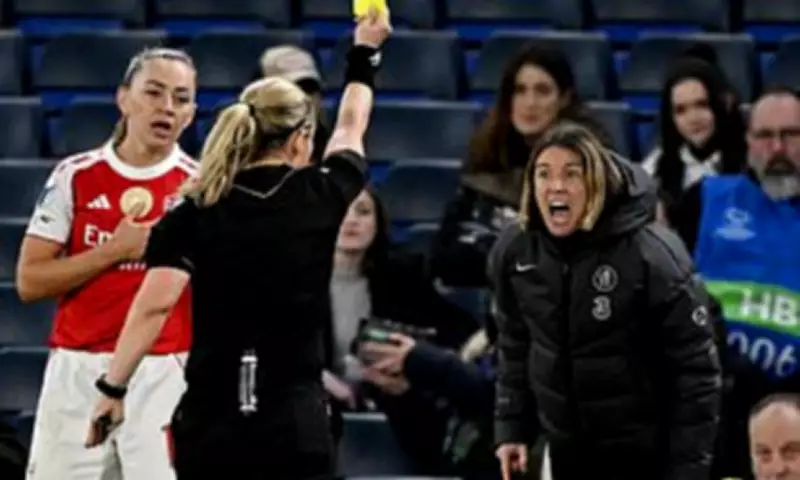
The game's decisive flashpoint arrived moments later when Alyssa Thompson charged toward the Arsenal penalty area, only to be brought down by Katie McCabe. Replays clearly showed McCabe pulling Thompson's hair during the challenge, though the Irish defender would later claim this was unintentional. Crucially, referee Frida Klarlund waved play on, triggering an explosive reaction from the Chelsea bench.
Bompastor's frustration boiled over as she shouted and gesticulated toward the assistant referee and fourth official. Klarlund sprinted to the touchline to issue a yellow card, but this failed to calm the incensed coach. Moments later, a second yellow followed, then red, sending Bompastor to an early exit.
Post-Match Fallout and Refereeing Concerns
Speaking after the match, Bompastor remained defiant about her dismissal while questioning the officiating standards that have plagued both legs of this quarter-final tie. "In the end I'm the one who received a red card, but it should be the Arsenal player who received a red card," she asserted. "What is the VAR doing in these games? If we have the VAR, I don't understand why they're not checking it. It's not good enough."
The Chelsea manager pointedly questioned why the same officiating team had been appointed for both legs after the controversy of the first encounter. "Why are these referees coming into these games after what happened in the first leg? I don't think it's good enough," she added. "For me the intention is clear – she tried to pull her hair."
These latest incidents have reignited concerns about refereeing standards in women's football, with many feeling that critical decisions in both legs could have shifted the momentum of the entire tie. The persistent "what ifs" continue to haunt a competition striving for professional credibility.
Arsenal's Gritty Triumph
Despite the controversy, Arsenal ultimately deserved their progression to the semi-finals where they will face either Wolfsburg or Lyon. The Gunners displayed greater clinical finishing in the first leg and demonstrated remarkable resilience during a scrappy, attritional second encounter at Stamford Bridge.

Lotte Wubben-Moy was outstanding in the heart of Arsenal's defence, living up to her pre-match declaration that she was "made for games like this." The match threatened to boil over even before Bompastor's dismissal, with Lauren James fortunate to escape with only a yellow card after leaving a leg in on McCabe.
Arsenal thought they had sealed victory when Stina Blackstenius found the net in the 79th minute, only for the Swede to be ruled offside in the build-up. Chelsea responded with increased urgency, with James testing Daphne van Domselaar from distance before Sam Kerr struck the post from the rebound.
Van Domselaar produced a world-class save minutes later, tipping Nusken's header onto the post before scrambling the ball to safety. The Dutch goalkeeper's heroics proved crucial as Arsenal held on during the chaotic final moments to secure their semi-final berth.
Broader Champions League Landscape
Arsenal now stand as the only English representative remaining in the competition after Manchester United's elimination by Bayern Munich earlier in the day. Melvine Malard's early strike had given United hope at the Allianz Arena, but their profligacy proved costly as Glodis Viggosdottir and Linda Dallmann struck late to secure Bayern's progression.
The result leaves United without silverware this season, having already exited the FA Cup and lost the League Cup final. They now trail league leaders Manchester City by eleven points with just three games remaining, raising questions about their ability to compete with the elite given their comparatively smaller squad.
United manager Marc Skinner pointed to energy levels as the decisive factor, noting: "Bayern rested seven players at the weekend and then came into this game fresh. You could see energy was the difference. If we had our freshness and our fit players, we could have gone toe-to-toe with them."
For Chelsea and Bompastor, however, the focus remains firmly on officiating standards that they believe cost them dearly in a competition where fine margins determine progression. As the women's game continues its rapid growth, ensuring consistent and competent refereeing remains one of its most pressing challenges.