Champions League Goal Explosion: Analysing the Sudden Surge in Knockout Scoring
The recent Champions League knockout stages have delivered a remarkable spectacle of attacking football, with a staggering 68 goals scored in the last 16 matches alone. This represents a significant departure from recent trends, sparking intense debate among analysts and fans about the underlying causes of this goal rush.
Statistical Anomaly in European Football
With an average of 4.25 goals per game, this season's Champions League knockout phase has broken from established patterns. For context, the four previous campaigns saw averages never exceeding 2.72 goals per game, with the 2022-23 season dipping as low as 2.34. The sudden jump to over four goals per game across 32 matches represents a dramatic statistical shift that demands explanation.
The playoff round this season produced 3.94 goals per game without any Premier League involvement, suggesting this phenomenon extends beyond English football's specific circumstances. This challenges initial theories that focused exclusively on Premier League defensive issues.

Premier League Defensive Questions
One prominent theory examines whether Premier League clubs have developed specific vulnerabilities against continental opposition. The evidence suggests English sides may be struggling against teams that attack effectively from open play rather than relying primarily on set pieces.
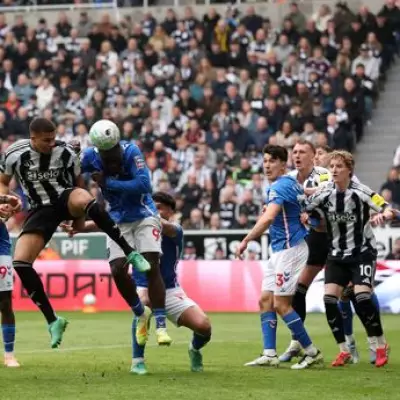
Newcastle's 7-2 defeat to Barcelona and Chelsea's 8-2 aggregate loss to Paris Saint-Germain highlight potential defensive frailties when Premier League sides face technically gifted European opponents. These results become particularly intriguing when contrasted with domestic performances where the same clubs demonstrated greater resilience.
Tactical Evolution and Managerial Influence
The tactical landscape of European football appears to be undergoing significant transformation. There's growing consensus that the positional play philosophy popularised by Pep Guardiola may be losing its dominance, yet no clear alternative has emerged to replace it.
This uncertainty has created what analyst James Horncastle describes as the "shit-at-the-back-stick era" in Premier League football – characterised by cautious approaches, emphasis on set pieces, and defensive organization. This tactical conservatism may leave English sides unprepared for opponents employing more direct, counter-attacking approaches.
Structural Factors in Knockout Football
Several structural elements specific to knockout competitions contribute to higher scoring. Teams trailing by multiple goals have little incentive to protect goal difference and must commit to attacking regardless of comeback probabilities. The possibility of extra time also encourages attacking intent, with two recent matches producing additional goals during extended periods.
The abolition of the away goals rule in 2021 was initially thought to reduce scoring, but this season's data suggests any such effect has been temporary. The rule change appears to have had less lasting impact on goal production than anticipated.
Individual Circumstances and Mismatches
Specific match situations have contributed to the goal tally. Several fixtures featured significant disparities in quality, with teams like Atalanta and Galatasaray facing superior opponents in Bayern Munich and Liverpool respectively. Tottenham's early collapse against Atlético Madrid, stemming from specific selection crises, added to the goal count.
These individual cases remind us that broader conclusions must be drawn cautiously, as not all high-scoring matches reflect the same underlying causes.
Looking Forward: Implications for European Football
The recent goal explosion raises important questions about tactical evolution and competitive balance in European football. If Premier League sides have indeed become less equipped to handle direct, counter-attacking football, this could signal a shift in continental power dynamics.

As the competition progresses, observers will watch closely to see whether this scoring trend continues or represents a temporary anomaly. The data suggests we may be witnessing a genuine tactical shift rather than mere statistical fluctuation, potentially heralding a new era of attacking emphasis in European club football's premier competition.