Almost a decade ago, Formula 1 placed a monumental bet on the American dream. After decades under Bernie Ecclestone's stewardship, with an emphasis on tradition and exclusivity, Liberty Media acquired the sport for $8 billion, intent on rewriting the rulebook. The focus shifted from the Middle East to North America, from strict media control to Netflix's unfiltered lens, and from a private members' club atmosphere to an influencer's playground.
Fast forward to last weekend's Miami Grand Prix, and that wager appears to be yielding substantial returns. Conservative estimates now value the sport at over $20 billion. The paddock has become a magnet for A-list celebrities, and a new US television deal with Apple has unlocked vast revenue streams. The Daily Mail was present at Hard Rock Stadium to witness the transformation firsthand and capture the essence of a race weekend in this dazzling new era.
A Festival Atmosphere Beyond Sunday
Formula 1 is no longer confined to Sundays. These Grands Prix, particularly those in the United States, have evolved into week-long festivals. Entire cities shut down for parties from Monday to Sunday as the billionaire circus rolls in. Early in the week, Alpine driver Pierre Gasly mingled with fans at the 'Kickoff Party' on The Roof at The Moore. Each night, different activations lit up various corners of the city.

Lewis Hamilton and Fernando Alonso brought Aventura Mall to a standstill on Thursday. Alix Earle and Braxton Berrios reunited at Sports Illustrated's star-studded party at the Four Seasons hotel, alongside Kevin Hart, Serena Williams, and Hailey Bieber. At Carbone Beach, Ludacris, Snoop Dogg, and John Summit headlined a three-night lineup, with Carlos Sainz attending post-race. Super-club E11even featured late-night performances by Nelly and Diplo.
Drivers Embrace the Glitz
While some drivers might complain about the grueling media commitments, many have embraced Miami's allure. Several have recently invested in luxurious waterfront residences. The celebrity-heavy parties, however, should not overshadow the fans who have wholeheartedly embraced the sport in its more accessible form.
Attending races is an expensive hobby, and the long queues at merchandise stands all weekend underscored the sport's growing popularity. A simple T-shirt costs upwards of $100. Not even the threat of heavy thunderstorms and a last-minute rescheduling of the start time could deter the thousands of fans who packed the grandstands around Miami Gardens.
Innovative Fan Engagement
The Miami race introduced a new Apple-led fan initiative, allowing those unable to attend to experience the race at IMAX locations across the US. Early social media reviews were glowing, and events sold out well before lights out. In Times Square, a giant advertising board live-streamed the race to New York City crowds on Sunday lunchtime.
High-end clientele paid a minimum of $12,000 for a three-day VIP experience. The MSC Yacht Club, built at turns 6, 7, and 8, offered fans a poolside view of the action. At turns 1 and 2, the Casa Tua Trackside Club provided an intimate lounge with live music and a secret sushi bar.
Paddock Club Expansion
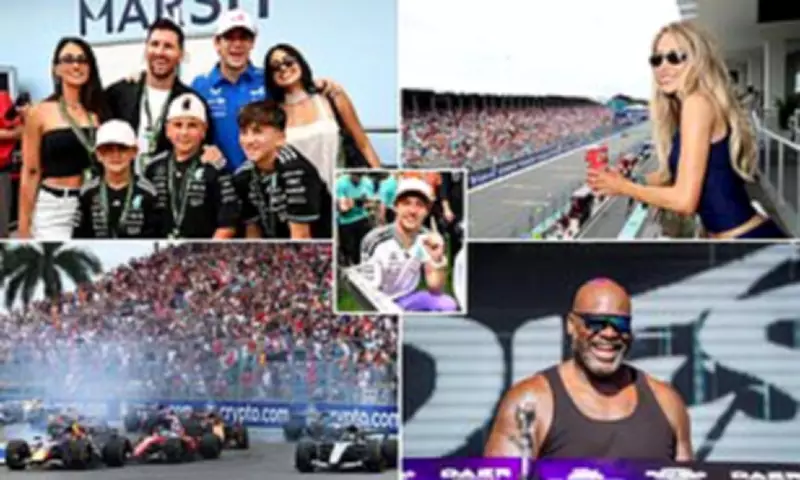
Next year, Casa Tua will be replaced by a massive new 115,000-square-foot permanent extension to the iconic Paddock Club, announced over the race weekend. This upgrade will accommodate over 9,000 guests, offering the most premium hospitality in the sport. Celebrities like Serena Williams, Tom Brady, and Lionel Messi watched the race from the Paddock Club, with Messi's presence causing a stir as even drivers sought photos with the soccer legend.
Messi's attendance epitomizes Formula 1's incredible boom in popularity. Hours earlier, he had played in a remarkable 4-3 defeat for Inter Miami at their new stadium just down the road, yet the race weekend overshadowed that event. President Trump attended a PGA Tour event at his Doral course, but it was anonymous compared to the monster production of Formula 1. To be in Miami was to be part of the race weekend, whether one liked it or not.