German Football Official Urges World Cup Boycott Over Trump's Greenland Demands
A senior German football federation executive has publicly declared that a boycott of the upcoming FIFA World Cup should be seriously considered in response to actions by former US President Donald Trump. Oke Göttlich, who serves as president of Bundesliga club St. Pauli and holds one of the ten vice presidential roles within the German football association, made the provocative statement in an interview published on Friday.
Time to Consider a Boycott
Göttlich told the Hamburger Morgenpost newspaper that "the time has come" to "seriously consider and discuss this." His comments come amid escalating tensions between the United States and its European allies, primarily driven by Trump's controversial bid to acquire Greenland—a semi-autonomous territory of Denmark, a fellow NATO member. This was followed by threats to impose tariffs on eight European nations that opposed the proposed takeover, actions that have prompted warnings from America's closest allies about a potential rupture in transatlantic relations.
Drawing Parallels with Olympic Boycotts
The football official drew direct comparisons to historical sporting boycotts, questioning the justifications used for the Olympic Games boycotts in the 1980s. "By my reckoning the potential threat is greater now than it was then," Göttlich asserted. "We need to have this discussion." The United States is scheduled to co-host the World Cup from June 11 to July 19 alongside Canada and Mexico, but the tournament has already been clouded by concerns about high ticket prices and travel restrictions imposed by the Trump administration that could prevent supporters from certain competing nations from attending.

Defending Values and Setting Boundaries
Göttlich, who has consistently advocated for the defense of ethical values in sport, acknowledged that his call for a boycott would likely face resistance from both German federation president Bernd Neuendorf and FIFA president Gianni Infantino. He expressed particular frustration with what he perceives as hypocrisy within football's governing bodies, referencing the previous World Cup in Qatar. "Qatar was too political for everyone and now we're completely apolitical? That's something that really, really, really bothers me," he said, alluding to the German federation's opposition to that tournament's host nation.
The executive emphasized the importance of maintaining ethical standards in sport, stating: "As organizations and society, we're forgetting how to set taboos and boundaries, and how to defend values." He posed pointed questions about where lines should be drawn: "Is a taboo crossed when someone threatens? Is a taboo crossed when someone attacks? When people die? I would like to know from Donald Trump when he has reached his taboo, and I would like to know from Bernd Neuendorf and Gianni Infantino."
St. Pauli's Political Stance and Player Considerations
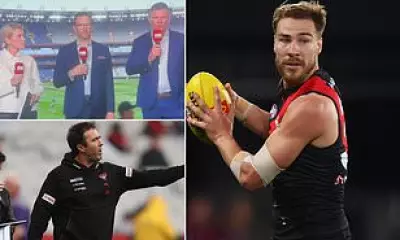
Göttlich's club, Hamburg-based St. Pauli, is renowned for its distinctive approach to mixing sport with politics, particularly its left-wing orientation near the city's red-light district. The club's famous pirate skull-and-crossbones symbol originated with local squatters and was later adopted by punk-identifying fans, reflecting its counter-cultural heritage. When questioned about how a potential boycott might affect St. Pauli's own national team players—Australia's Jackson Irvine and Connor Metcalfe, and Japan's Joel Chima Fujita—Göttlich dismissed such concerns as secondary to broader ethical considerations.
"The life of a professional player is not worth more than the lives of countless people in various regions who are being directly or indirectly attacked or threatened by the World Cup host," he stated firmly, reinforcing his position that sporting considerations should not override fundamental human values and international diplomacy concerns.