

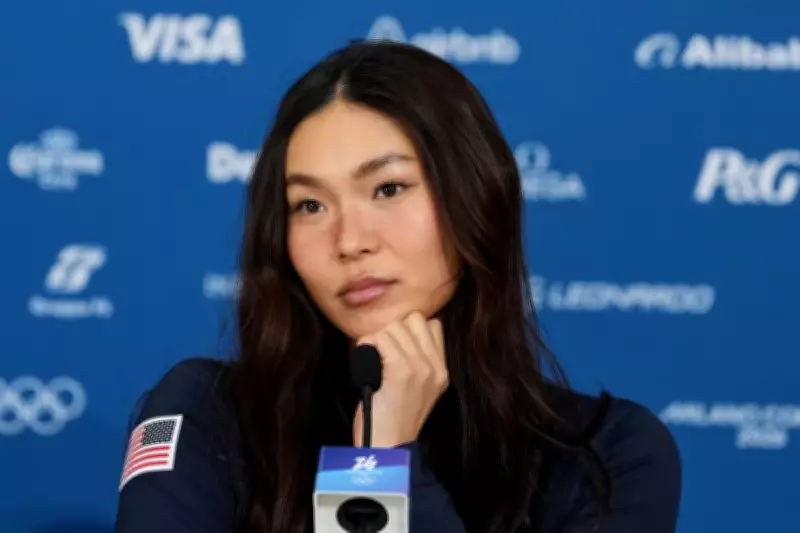
American snowboarding champion Chloe Kim has issued a powerful call for unity following former President Donald Trump's public criticism of her teammate, freeskier Hunter Hess, over his stance on immigration. The incident has sparked a significant response from athletes competing at the Winter Olympics in Italy, highlighting tensions between sports and politics.
Olympic Athletes Respond to Political Controversy
Chloe Kim, a two-time Olympic gold medalist whose parents are South Korean immigrants, addressed the situation directly on Monday. "I think in moments like these, it is really important for us to unite and kind of stand up for one another for all that's going on," Kim stated. She has personally faced racism throughout her career due to her Asian heritage, making the immigration debate particularly poignant.
Hunter Hess's Comments Draw Presidential Ire
The controversy began when Hess was asked by reporters about Trump's heightened immigration crackdown, which has reportedly claimed the lives of two protestors in Minnesota and disrupted thousands of lives. Hess responded, "Just because I'm wearing the flag doesn't mean I represent everything that's going on in the U.S."

The following day, Trump lashed out at Hess on his Truth Social account, calling him "a real Loser" and stating he would be hard pressed to root for him at the Games. This public rebuke has created an unwelcome distraction during the premier winter sports event.
Support from Fellow Competitors
Eileen Gu, the American-born freeskier who competes for China and won silver in slopestyle, revealed she had been in touch with Hess. "As someone who's been caught in the crossfire before, I feel sorry for the athletes," said Gu, whose decision to compete for China has previously made her a lightning rod for controversy.
Gu described the situation as "an unwinnable press war" for Hess and expressed regret that the controversy could overshadow the Olympic spirit. "I'm sorry that the headline that is eclipsing the Olympics has to be something so ... unrelated to the spirit of the Games," she lamented. "It really runs contrary to everything that the Olympics should be."
Wider Athlete Perspectives on Representation and Diversity
Other American snowboarders preparing to compete in Livigno this week have also voiced their opinions on the matter. Kim, who begins defense of her title on Wednesday, emphasized her pride in representing the United States while acknowledging the complexity of the situation.
"I'm really proud to represent the United States," she said. "The U.S. has given my family and I so much opportunity, but I also think that we are allowed to voice our opinions of what's going on and that we need to lead with love and compassion."
Diversity as National Strength
Snowboarder Bea Kim addressed the broader context of division in the United States. "I think there are a lot of different opinions in the U.S. right now. Obviously we're very divided," she observed. "I personally am very proud to represent the United States. That being said, I think diversity is what makes us a very strong country and what makes that so special."
Teammate Maddie Mastro added her perspective, stating, "I'm also saddened with what's happening at home. It's really tough and I feel like we can't turn a blind eye to that. But at the same time, I represent a country that has the same values as mine of kindness and compassion. And we come together in times of injustice."
The Personal Impact of Immigration Debates
For Chloe Kim, the issue carries deep personal significance. "My parents being immigrants from Korea, this one definitely hits pretty close to home," she revealed. Her comments underscore how political discussions about immigration directly affect athletes with immigrant backgrounds, adding emotional weight to their Olympic preparations.
The collective response from these elite athletes demonstrates how sports figures are increasingly engaging with social and political issues, even as they compete on the world's biggest winter sports stage. Their calls for unity, compassion, and recognition of diversity reflect broader conversations occurring within American society, now amplified through the platform of the Winter Olympics.






