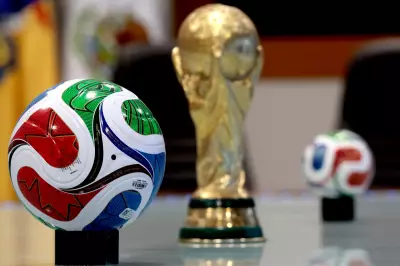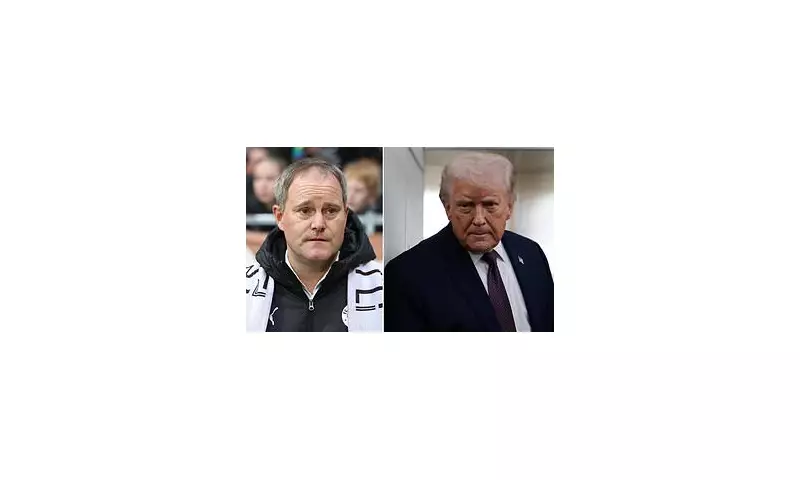
A senior German football official has called for national teams to seriously consider boycotting the 2026 FIFA World Cup in response to the recent political antagonism displayed by former United States President Donald Trump toward European nations.
Political Tensions Spark Football Boycott Discussion
Oke Göttlich, one of ten vice presidents at Germany's football federation (DFB) and president of Bundesliga club FC St. Pauli, believes "the time has come" to openly discuss a mass withdrawal from the tournament scheduled to take place across the United States, Mexico, and Canada. His comments come amid escalating political tensions between the US and European allies.
Trump's Actions Toward Europe
In recent weeks, Trump has openly questioned the strength and value of the NATO alliance while simultaneously targeting European nations with unprecedented political maneuvers. Most notably, he has threatened to impose tariffs on eight European countries that opposed his attempt to acquire Greenland - a territory belonging to NATO member Denmark.

"What were the justifications for the boycotts of the Olympic Games in the 1980s?" Göttlich asked in an interview with Hamburg's Morgenpost newspaper. "By my reckoning the potential threat is greater now than it was then. We need to have this discussion."
Football's Political Responsibility
Göttlich, who leads one of world football's most recognizably left-wing clubs, criticized what he perceives as inconsistent political stances within football governance. He pointed to the German federation's opposition to Qatar hosting the previous World Cup while appearing more accepting of the 2026 tournament in North America.
"Qatar was too political for everyone and now we're completely apolitical? That's something that really, really, really bothers me," Göttlich stated. "As organizations and society, we're forgetting how to set taboos and boundaries, and how to defend values. Taboos are an essential part of our stance."
Questioning Boundaries and Values
The FC St. Pauli president posed challenging questions about where football organizations should draw their political lines. "Is a taboo crossed when someone threatens? Is a taboo crossed when someone attacks? When people die? I would like to know from Donald Trump when he has reached his taboo, and I would like to know from Bernd Neuendorf and Gianni Infantino."
Göttlich's reference to DFB president Bernd Neuendorf and FIFA president Gianni Infantino suggests he anticipates resistance to his boycott proposal from football's governing bodies.
FC St. Pauli's Political Heritage
The club Göttlich leads has long embraced political expression within football. Located near Hamburg's red light district, St. Pauli matches were historically frequented by squatters and punk scene participants before the club's famous skull and bones flag became a global symbol of leftist politics.
This political heritage informs Göttlich's perspective on football's broader social responsibilities beyond mere sport.
Player Considerations and Moral Priorities
Addressing potential concerns about how a boycott might affect professional players, Göttlich specifically mentioned St. Pauli's three regular national team players: Japan's Joel Chima Fujita and Australia's Jackson Irvine and Connor Metcalfe.
He argued that broader ethical considerations should take precedence: "The life of a professional player is not worth more than the lives of countless people in various regions who are being directly or indirectly attacked or threatened by the World Cup host."
Broader Tournament Criticisms
Beyond political concerns, Göttlich noted additional criticisms of the 2026 World Cup organization, including high ticket prices and travel restrictions that could limit fan participation. He believes these factors, combined with recent political developments in the United States, make the tournament deserving of heightened scrutiny from football's governing bodies.
The call for boycott consideration represents a significant challenge to football's traditional separation of sport and politics, particularly regarding major international tournaments that have historically proceeded despite political controversies surrounding host nations.