German Football Official Urges World Cup Boycott Over Trump's Actions
A senior figure within the German football federation has publicly called for a serious discussion about boycotting the upcoming FIFA World Cup, citing the actions and policies of United States President Donald Trump. Oke Göttlich, who serves as both president of Bundesliga club St. Pauli and as one of the German Football Association's (DFB) ten vice presidents, made the provocative statement in an interview published on Friday.
"The Time Has Come" for Serious Discussion
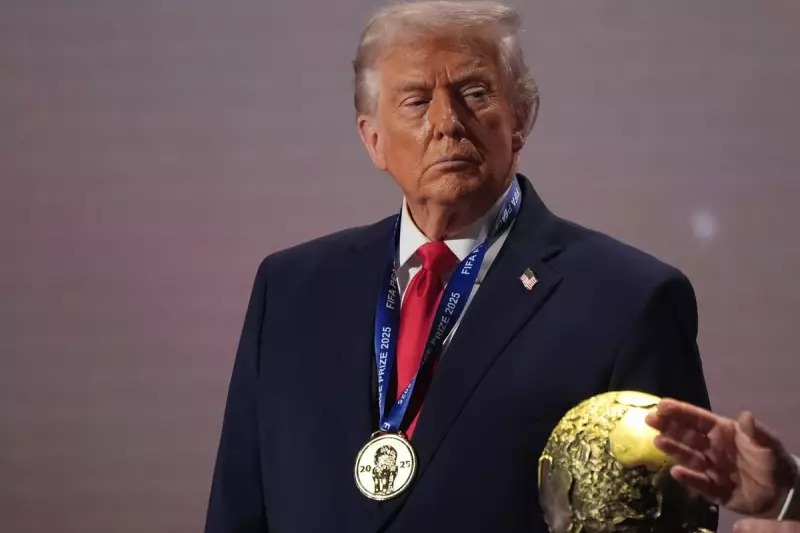
Speaking to the Hamburger Morgenpost newspaper, Göttlich declared that "the time has come" to "seriously consider and discuss this" potential boycott. His comments come amid heightened tensions between the United States and several European nations, following President Trump's controversial bid to acquire Greenland and subsequent threats to impose tariffs on eight European countries that opposed the move.
Göttlich drew a direct comparison to historical sporting boycotts, notably referencing the Olympic Games of the 1980s. "What were the justifications for the boycotts of the Olympic Games in the 1980s?" he asked rhetorically. "By my reckoning the potential threat is greater now than it was then. We need to have this discussion."

Broader Concerns Beyond Politics
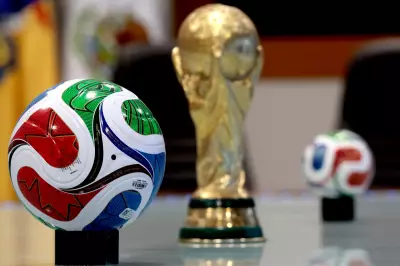
The 2026 FIFA World Cup is scheduled to be co-hosted by the United States, Canada, and Mexico from June 11 to July 19. Beyond the political friction, the tournament already faces significant logistical and ethical challenges from fans and officials alike. These include:
- Exceptionally high ticket prices causing concern among supporters.
- Travel bans implemented by the Trump administration that could prevent fans from certain competing nations from attending matches in the US.
- Ongoing debates about the ethical stance of global football following the controversial 2022 World Cup in Qatar.
Göttlich expressed frustration with what he perceives as a hypocritical approach from football's governing bodies. "Qatar was too political for everyone and now we're completely apolitical? That's something that really, really, really bothers me," he stated, referencing the German federation's previous opposition to the Qatar host nation.
A Call to Defend Values and Set Boundaries
The St. Pauli president, whose club is renowned for its left-wing political activism and iconic pirate skull emblem, framed his argument around the defence of core values. He criticised what he sees as a failure within organisations and society to establish and uphold necessary boundaries.
"As organizations and society, we're forgetting how to set taboos and boundaries, and how to defend values," Göttlich asserted. "Taboos are an essential part of our stance. Is a taboo crossed when someone threatens? Is a taboo crossed when someone attacks? When people die? I would like to know from Donald Trump when he has reached his taboo, and I would like to know from [DFB president] Bernd Neuendorf and [FIFA president] Gianni Infantino."
Potential Resistance and Player Impact
Göttlich's controversial stance is expected to meet significant resistance from within the football establishment. Both DFB president Bernd Neuendorf and FIFA president Gianni Infantino are likely to oppose any formal move towards a boycott, which would represent an unprecedented political intervention in the world's most popular sporting event.
When questioned about the potential impact on St. Pauli's own international players—Australian duo Jackson Irvine and Connor Metcalfe, and Japan's Joel Chima Fujita—Göttlich was dismissive of the concern. He argued that the welfare of professional athletes should not outweigh broader ethical considerations.
"The life of a professional player is not worth more than the lives of countless people in various regions who are being directly or indirectly attacked or threatened by the World Cup host," he concluded, reinforcing his belief that political and humanitarian concerns must take precedence over sporting spectacle.