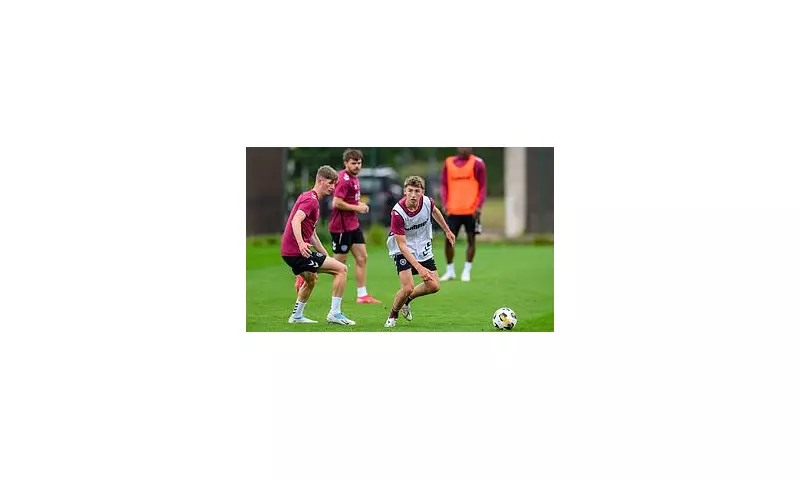
The impending transfer of Hearts teenager Keir McMeekin to Manchester City this summer represents both a dream opportunity for the player and a sobering reality for Scottish football. The highly-regarded 16-year-old midfielder, who turns 16 next month, will see out the season in Edinburgh before completing his move after the clubs agreed a compensation package.
A Talent Poised for the Top
Keir McMeekin is yet to make a first-team appearance for Hearts, but his potential is unquestioned. Capped by Scotland at Under-17 level, he is described by those at Tynecastle as a prodigious talent destined for the top. His move follows strong interest from other English giants, including Manchester United and Liverpool.
Few would criticise McMeekin for seizing this life-changing chance at one of the world's biggest clubs. It is an inherently Scottish trait to cheer on homegrown talent making their mark abroad, as evidenced by the successes of Andy Robertson, John McGinn, and Scott McTominay. The nation will wish him well.
Brexit's Game-Changing Impact on Recruitment
However, McMeekin's transfer is not an isolated case. It is the latest example of a systemic issue: the draining of Scotland's best young football talent to English academies. The root cause can be distilled into one word: Brexit.
Before the UK left the European Union, English clubs frequently scoured Europe for teenage stars like Cesc Fàbregas and Paul Pogba. Now, regulations prevent the signing of under-18 players from overseas. This has fundamentally altered the recruitment landscape for Premier League clubs.
English clubs now employ multiple full-time scouts in Scotland, viewing the SPFL as a cost-effective and accessible market. Development fees and compensation packages are often negligible, making Scottish academies vulnerable feeder pathways.
A Pathway Paved with Uncertainty
The list of young Scots making similar moves is extensive, but the success rate is worrying. Liam Morrison and Barry Hepburn left Celtic for Bayern Munich; Morrison now plays for QPR in the Championship, while Hepburn has fallen out of professional football. Rory Wilson joined Aston Villa from Rangers nearly four years ago and, now 20, is yet to play a senior minute.
Other examples include Brodie Dair (St Johnstone to Fulham), Charlie McArthur (Kilmarnock to Newcastle), and Alfie Hutchison (Rangers to Newcastle). The question remains: how many of these moves truly benefit the player's long-term development?
Scottish clubs are not blind to the threat. They have attempted legal manoeuvres, such as contracts expiring in the December after a player's 16th birthday, to retain control. Yet, the allure of clubs like Manchester City often proves irresistible.
Can Scottish Football Fight Back?
The solution lies partly in self-reflection. A 2024 SFA report concluded that Scottish clubs fail young players by not providing enough first-team minutes compared to similar leagues. If a clearer, accelerated pathway to senior football existed, youngsters might be less eager to jump ship.
There are nascent efforts to improve. This season has seen a near 50% increase in opportunities for young players at senior level. Initiatives like the KDM Evolution Trophy, featuring Premiership B teams, and a new 'co-operation' system for players aged 16-21 aim to bridge the gap.
Nevertheless, the number of Premiership clubs consistently bringing through their own academy prospects remains dishearteningly low. Until that changes, and until young players can visualise a tangible future at home, the exodus of talent like Keir McMeekin will continue. Everyone wishes him success, but his departure underscores a profound challenge for the game in Scotland.