Italy's World Cup Absence Puts Scotland's Friendly Losses in Perspective
Italy's World Cup Absence Puts Scotland Losses in Perspective

Italy's World Cup Absence Puts Scotland's Friendly Losses in Perspective

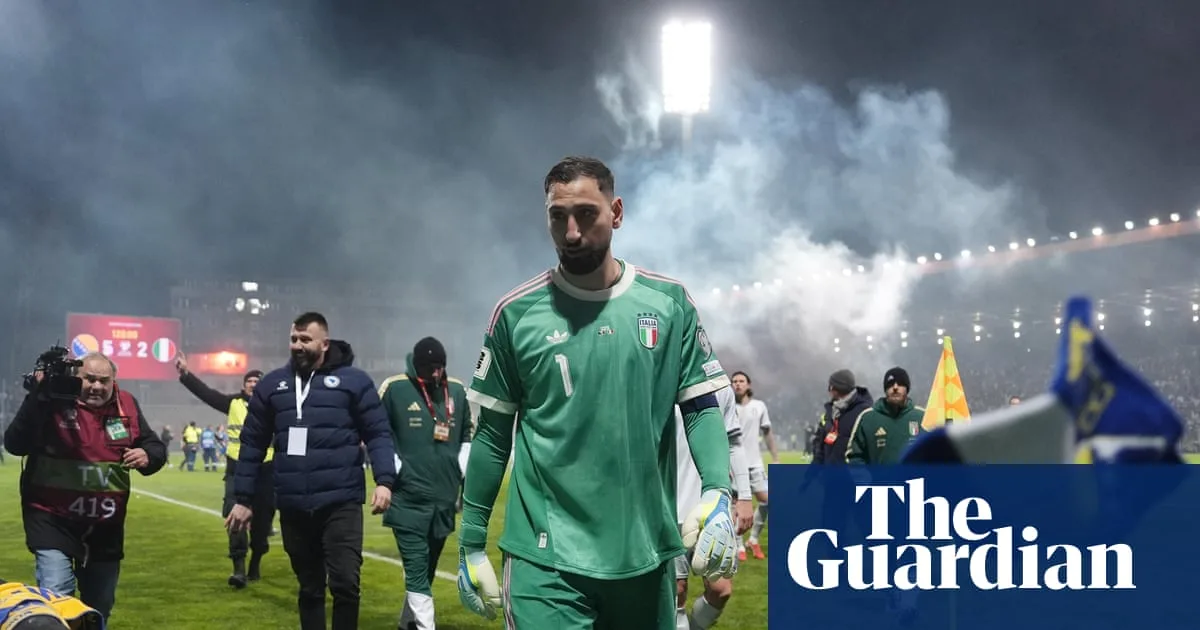
Deep within the Hill Dickinson Stadium, shortly after Steve Clarke concluded his post-match media duties, news of Italy's dramatic exit flashed across the television screens. The four-time world champions had been eliminated in the play-offs, losing a penalty shootout to Bosnia and Herzegovina. Their exile from the World Cup now extends to a third consecutive tournament, sparking headlines in Italian newspapers declaring 'apocalypse', 'scandal', and 'disaster'.

National Mourning for a Football Giant

In the bars and cafes of Rome, Milan, Turin, and beyond, the reaction was one of profound disappointment. The boos and jeers from Italian fans would likely drown out any discontent expressed by a small, disgruntled section of the Tartan Army in recent days. Italy, a football giant, finds itself in a state of national mourning once again. This latest failure certainly provides context for Scotland's current challenges.

Suddenly, Scotland's two 1-0 friendly defeats to Japan and the Ivory Coast did not seem so catastrophic in the grand scheme of international football. Ultimately, Scotland still have a World Cup to anticipate, having earned their place through qualification. Many other teams, including larger and more prestigious nations, will be watching from home this summer after failing to qualify.

Wide Pickt banner — collaborative shopping lists app for Telegram, phone mockup with grocery list

Italy, for instance, would give anything to be involved in the tournament. Images of their players slumped on the pitch, some in tears, offered a stark reminder of perspective. Scotland were booed off the pitch on Tuesday night after losing by a solitary goal to the Ivory Coast, following a similar 1-0 defeat to Japan at Hampden the previous weekend.

The Danger of Snap Judgments

In an age of instant snap judgments, where social media often acts as judge, jury, and executioner, it is easy for such reactions to be blown out of proportion. However, no one should naively believe that booing is a fair barometer of a team's performance level. Against Japan, the criticism was perhaps justified, as Scotland were poor and offered little. Against the Ivory Coast, however, the booing seemed excessive, as the performance was not that bad.

Clarke's Contract Situation Lingers

Beyond the fan reaction, Steve Clarke's contract situation has become a central talking point. When asked if his future would be decided before Scotland's next match, a World Cup send-off against Curacao on May 30, Clarke responded bluntly, stating he did not want it to overshadow the campaign. He declared, 'It's finished. I don't want to talk about my contract any more.'

Yet, the issue is far from resolved. If no decision is made by the Curacao game, Clarke will undoubtedly face questions again. He may grow frustrated, but the inquiry remains valid. Alternatively, the Scottish Football Association could take proactive steps to address it. Clarke and several players have spoken about his future multiple times in recent weeks, but the SFA has remained largely silent.

This vacuum allows the topic to drift, creating unnecessary distraction. Clarke is highly regarded by SFA chief executive Ian Maxwell and the hierarchy, making a contract extension plausible. Providing clarity, such as stating an intention to assess his performance based on World Cup results, would be a smart move. This would give Clarke a clear goal—earning a new contract by leading Scotland into the knockout stages—and end the persistent questions.

On-Field Performance Analysis

Returning to on-field matters, some reactions to the recent friendlies have been excessive. Scotland faced two capable opponents in Japan and the Ivory Coast, both ranked higher globally and demonstrating technical and physical prowess that challenged Clarke's side. Japan's ability was further highlighted by their 1-0 victory over England at Wembley on Tuesday night.

Scotland lacked attacking ambition against Japan, an issue Clarke must address. The performance against the Ivory Coast showed improvement, especially given nine changes to the lineup and a new system. However, shortcomings in the final third, particularly a lack of creativity and goal threat, remain concerning.

Pickt after-article banner — collaborative shopping lists app with family illustration

This is not a new problem for Scotland. Throughout Clarke's tenure, the team has relied on midfielders like John McGinn and Scott McTominay for goals, lacking a consistent striker. George Hirst performed decently against the Ivory Coast, but the No 9 jersey is still up for grabs. Lawrence Shankland, though unused in these friendlies, remains Scotland's most natural finisher and best bet for goals if fit.

Additionally, players like Ben Gannon-Doak and Aaron Hickey are set to return, offering significant threat from wide positions. Gannon-Doak, in particular, provides an x-factor that can make a difference in attack.

Maintaining Perspective

While these friendly defeats did not inspire, they are no cause for panic. Scotland have much to look forward to, with key players returning who can genuinely impact the World Cup. By the time the tournament arrives, these friendlies will be a distant memory. It is an event to embrace and anticipate—a luxury not afforded to all. Just ask Italy.