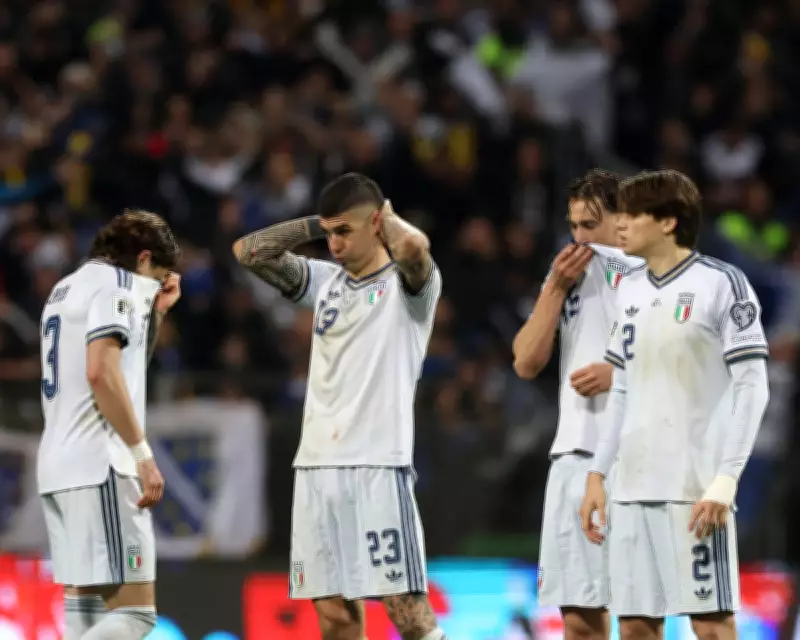
Italian football has been plunged into despair once again after the national team's dramatic failure to qualify for the upcoming World Cup. In a tense playoff match against Bosnia and Herzegovina, Italy squandered their chance to reach the global tournament for the third consecutive time, falling victim to a heartbreaking penalty shootout defeat.
Deja Vu for Italian Football
The scenes of devastation among Italian players following the final penalty kick in Zenica evoked painful memories of past failures. This latest disappointment marks a continuation of Italy's recent struggles in crucial qualification matches, raising serious questions about the direction of the national team program.
A Match of Twists and Turns
The playoff encounter began promisingly for Italy, who took an early lead through determined attacking play. However, the momentum shifted dramatically when defender Alessandro Bastoni received a red card, reducing Italy to ten men for much of the match. Despite this disadvantage, Italy created several opportunities to extend their lead but failed to capitalize on their chances.

Bosnia and Herzegovina demonstrated remarkable resilience, equalizing with just eleven minutes remaining in normal time. The match proceeded to extra time and eventually penalties, where Esmir Bajraktarevic converted the decisive spot-kick past Italian goalkeeper Gianluigi Donnarumma, sealing Italy's fate.
Media Fury and Managerial Regret
The Italian press reacted with predictable fury to the national team's elimination. Front pages across the country featured dramatic headlines and emotional photographs of distraught players. Tuttosport captured the national mood with their stark "VIA TUTTI!" (Everyone out!) headline above an image of Francesco Esposito lying defeated on the pitch.
Outgoing head coach Rino Gattuso expressed profound disappointment while defending his players' effort. "The boys didn't deserve this beating for their performance, their commitment, their love," Gattuso lamented. "We had three chances to score. It's a shame, that's football. I'm proud of my boys. It hurts because this World Cup was important for us, for our families, for all of Italy."
Historical Patterns Repeating
This latest failure echoes Italy's elimination from the 2002 World Cup, when commentator Barry Davies famously criticized Italian football's inability to learn from past mistakes. While controversial refereeing decisions contributed to that earlier exit, Italy's tendency toward excessive caution has remained a persistent weakness in crucial matches.
The contrast between Italian despair and Bosnian celebration could not have been more stark. While Italian supporters mourned their team's elimination, Bosnian veteran Edin Dzeko led jubilant celebrations, posting social media footage of late-night revelry in Sarajevo.
Broader Football Context
Elsewhere in international football, Sweden secured their World Cup qualification with a thrilling 3-2 playoff victory over Poland. Swedish manager Graham Potter described the achievement as "the best night of my life" following what has been a challenging period in his coaching career.
The football community continues to debate various aspects of the modern game, including:
- Proposed changes to offside regulations
- The impact of VAR technology on match officiating
- Historical connections between football and popular culture
- The evolving nature of international football rivalries
As Italy begins another period of introspection following their World Cup failure, questions will inevitably focus on systemic issues within Italian football development, tactical approaches in crucial matches, and the psychological factors that seem to undermine the national team in decisive moments. For Bosnia and Herzegovina, however, this victory represents a historic achievement and a chance to compete on football's biggest stage.