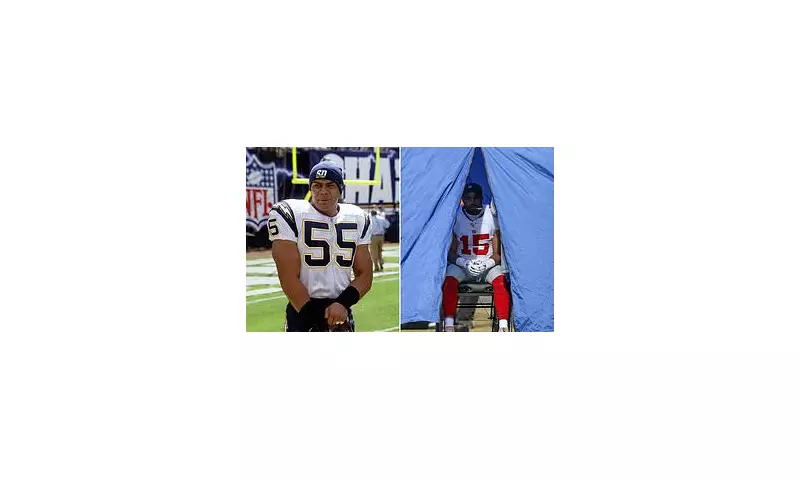
A landmark study from Harvard University has uncovered a disturbing trend, revealing that former American football professionals from the NFL died by suicide at a significantly higher rate than their counterparts from basketball and baseball over a recent decade.
A Disturbing Disparity in Suicide Rates
Published in the Journal of Neurotrauma, the extensive Football Players Health Study tracked deaths among former NFL, MLB, and NBA athletes over a 40-year span starting in 1979. While 101 suicides were recorded across all three leagues in that time, the data shows a stark and disproportionate surge among ex-NFL players in the final years analysed.
From 2011 through 2019, the suicide rate for former NFL players was found to be 2.6 times higher than that of former NBA and MLB players. This tragic list includes high-profile names such as legendary San Diego Chargers linebacker Junior Seau, former Chicago Bears safety Dave Duerson, and Atlanta Falcons' Ray Easterling. All three were later diagnosed posthumously with chronic traumatic encephalopathy (CTE), a degenerative brain disease linked to repeated head trauma.
Multiple Factors Beyond Head Trauma
Study co-author Rachel Grashow was careful not to identify head trauma as the sole potential cause. She emphasised that a constellation of factors likely contributes and requires deeper investigation. Grashow pointed to a separate 2024 study indicating that a third of former NFL players struggle with health issues including low testosterone, depression, and sleep apnoea.
Intriguingly, the research suggested that players grappling with these specific health problems were more prone to thoughts of self-harm than those who believed they might be suffering from CTE, which can only be definitively diagnosed after death.
Grashow proposed that the rise in suicides around 2011 may coincide with heightened public and professional awareness about CTE and its devastating consequences. "We believe 2011 was a pivotal year for that conversation," she told the Harvard School of Public Health, noting an acceleration in published studies on brain injury and a series of high-profile suicides that sparked public discussion.
A Call for Support and Further Research
Co-author Marc Weisskopf stressed the complexity of the findings, noting several possible contributing factors. He suggested that greater awareness of head trauma issues after 2010 may have led medical examiners to classify ambiguous deaths differently. He also referenced the potential for a 'copycat' or Werther effect following highly publicised suicides.
In response to the study's publication, both the NFL and the NFL Players Association (NFLPA), which funded the independent research, urged former players to seek help. They highlighted the mental and physical health resources available to them.
The NFLPA stated it takes a "science-first, data-driven approach" to member health, while NFL vice president of wellness Dr. Nyaka NiiLampti said the study underscores the importance of available support systems, adding: "The hope is that no one — especially within the NFL family — ever feels alone or unsupported."